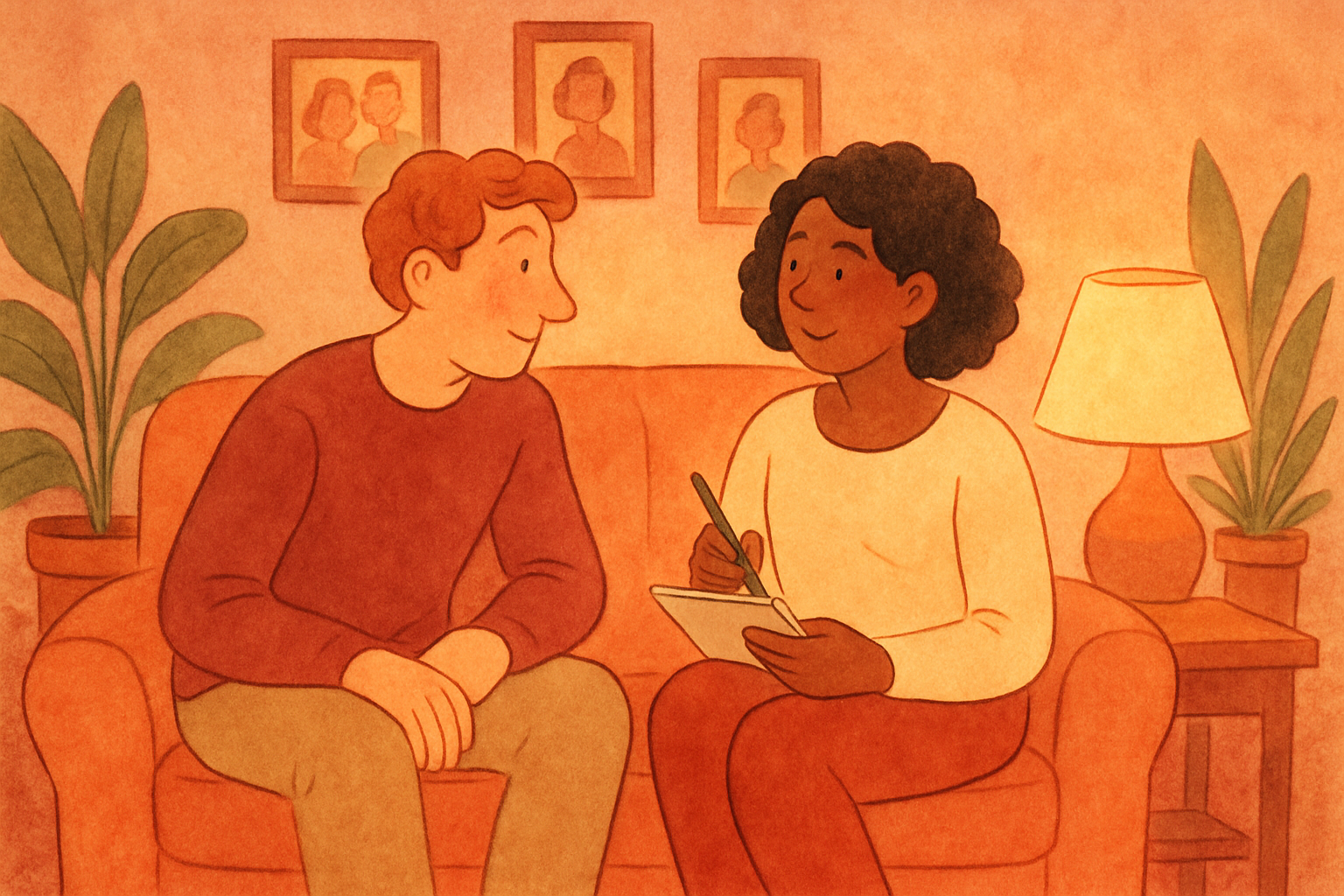
There's a version of "staying together" that looks a lot like compatibility from the outside. You text each other good morning. You split the grocery list. You've met each other's families. But somewhere underneath all the routine, one or both of you has started quietly wondering: are we actually right for each other, or are we just... comfortable?
That question is more common than most people admit — and it deserves a more honest answer than "well, we haven't broken up yet."
This checklist isn't about testing whether your relationship is perfect. No relationship is. It's about helping you tell the difference between two people who are genuinely growing alongside each other and two people who've simply gotten very good at coexisting. The signs you are compatible run deeper than shared Netflix queues and holiday traditions. They show up in how you handle disagreement, how you talk about the future, and whether you still feel curious about each other.
Let's get into it.
Are You Still Curious About Each Other?
One of the quietest signs of real relationship compatibility is ongoing curiosity. Not the butterflies-in-your-stomach newness of early dating, but a genuine interest in who your partner is becoming — not just who they were when you met.
Research from psychologist Arthur Aron suggests that couples who regularly engage in novel, challenging activities together report significantly higher relationship satisfaction. The mechanism makes sense: when you learn something new about your partner — a fear you didn't know about, a dream they've never said out loud, an opinion that surprises you — it signals that there's still more to know. That's a good thing.
Ask yourself: When's the last time my partner said something that genuinely surprised me? If the answer is "I can't remember," that doesn't mean you're doomed — it might just mean you've both stopped asking the kinds of questions that open real conversations.
This is exactly where structured conversation tools, like the ones built into Pairloom's getting-to-know-your-partner games, can quietly do a lot of heavy lifting. Sometimes we need a prompt to go somewhere we wouldn't wander on our own.
Do You Fight, or Do You Just Avoid?
Here's a counterintuitive one: healthy conflict is actually a sign of compatibility, not a warning sign against it. Couples who never argue aren't necessarily harmonious — they might just be conflict-avoidant, which tends to create slow-building resentment rather than resolution.
Dr. John Gottman's decades of research identified what he called the "Four Horsemen" of relationship breakdown: contempt, criticism, defensiveness, and stonewalling. Notice that disagreement itself isn't on the list. The issue isn't whether you argue — it's how you argue.
If you and your partner can navigate healthy conflict in your relationship — meaning you can actually get through a hard conversation, repair afterward, and not carry it into the next week — that's a genuine sign of compatibility. Compatible couples don't avoid hard topics; they develop their own language for handling them.
So the checklist question here isn't "do we fight?" It's:
- Do we come back to each other after a conflict?
- Do we repair without scorekeeping?
- Can we disagree without contempt — without making each other feel small?
If learning how to argue without fighting is something you're actively working on, you might find our piece on navigating conflict styles in relationships useful as a starting point.
Does Your Vision of the Future Overlap — Or Are You Hoping It Will Eventually?
This is the one people most often avoid because the stakes feel high. But alignment on the big stuff — kids, location, finances, lifestyle pace, career ambitions — isn't a romantic nicety. It's foundational.
Here's the honest version of the question: do you actually want the same future, or are you each privately hoping the other person will eventually come around?
That's not compatibility. That's a situationship with better furniture.
Real compatibility doesn't mean identical life blueprints. It means that when you talk about your futures, there's genuine overlap — and where there isn't, you've actually had the conversation (not the hypothetical one in your head). Dealbreakers in a relationship are only useful information if you're honest about what they are.
A few questions worth sitting with:
- Have you explicitly talked about whether you want children — not hinted, actually talked?
- Do you both want to live in the same kind of place, with the same kind of lifestyle?
- Are your financial philosophies compatible, even if your incomes differ?
- Does your partner's ambition energize you or quietly exhaust you?
None of these are "must be identical" requirements. But they need to be discussed, not assumed. Compatible couples aren't people who never have to negotiate — they're people who can.
Do You Feel Like Yourself Around Them — Or a Curated Version?
This one is subtle and it matters enormously. Think about who you are when you're with your partner versus who you are with your closest friends or alone. Is there a meaningful gap?
Some adjustment is normal and healthy — we all have social selves. But if you find yourself consistently softening your opinions, hiding your interests, or managing your personality to avoid a reaction, that's worth paying attention to. Vulnerability in relationships — real vulnerability, not performed openness — requires feeling safe enough to be genuinely yourself.
The check here is less about what you share and more about what you hold back and why. Hiding something because you're still processing it is human. Hiding something because you're afraid of your partner's response is a different thing entirely. Trust in a relationship grows from those moments of showing up authentically and being met with acceptance — not agreement necessarily, but acceptance.
Ask yourself:
- Do I say what I actually think, or do I edit myself first?
- Have I told my partner about the things I'm genuinely embarrassed or uncertain about?
- Does being around them expand me, or contract me?
Are You Growing Individually, Too?
Compatible partners tend to have an interesting quality: they make each other more themselves, not less. That's different from codependence, where two people fuse into a unit and stop developing as individuals.
Research on self-expansion theory — developed by psychologists Arthur and Elaine Aron — finds that people are happiest in relationships when they feel their sense of self is growing. That means your relationship should be contributing to who you're becoming, not just who you are right now.
This shows up in small ways. Does your partner encourage your ambitions, even when they're inconvenient? Do you feel like you've grown since being with them — picked up new interests, developed better habits, become more self-aware? Self-awareness in dating and relationships is one of the less-discussed markers of long-term compatibility, but it's a significant one.
Conversely: do you feel like you've shrunk? Like certain parts of you have gone quiet since you got together?
Neither answer is a verdict — relationships go through phases, and there are seasons of consolidation alongside seasons of expansion. But the overall arc should be one of growth, not stagnation.
Do Your Attachment Styles Work Together?
You've probably heard of attachment styles in dating — the idea, rooted in decades of psychological research, that the way we bonded with early caregivers shapes how we behave in adult relationships. Broadly: secure, anxious, avoidant, and disorganized.
The reason attachment styles matter for compatibility isn't that you need matching styles. It's that you need enough self-awareness to understand your own patterns — and enough curiosity to understand your partner's.
An anxious-avoidant pairing, for example, can create a painful push-pull dynamic where one person reaches for closeness and the other instinctively creates distance — not because they don't care, but because closeness feels threatening. This isn't incompatibility in a fixed, forever sense. But without awareness, it tends to calcify into resentment.
The compatibility question here is:
- Do you understand why your partner pulls away (or moves in) the way they do?
- Do they understand the same about you?
- Are you working with each other's wiring, or constantly fighting it?
The Honest Checklist: Growing Together vs. Staying Together
Let's put it all together. Read through these and answer honestly — not the answer you want to give, the one that's actually true.
Signs you are compatible and growing together:
- You're still genuinely curious about each other
- You can disagree without contempt
- Your big-picture futures are openly discussed and meaningfully aligned
- You feel like yourself — maybe even a better version — around them
- You're both growing as individuals within the relationship
- You understand each other's emotional patterns and work with them, not against them
- Vulnerability feels possible, even when it's uncomfortable
- You bring out something real in each other, not just the best performance of yourselves
Signs you might be staying together rather than growing together:
- You avoid hard conversations because it's easier
- Your futures are assumed rather than discussed
- You edit yourself significantly around them
- Conflict gets buried, not resolved
- You feel stuck — personally, professionally, emotionally — since being together
- The relationship feels safe, but small
- You're together largely because leaving feels harder than staying
If you found yourself checking more of the second list than the first, this isn't a breakup prescription. But it is a signal that there are conversations worth having — and probably some deeper knowing of each other that hasn't happened yet.
What Do You Do With This?
The honest answer is: you talk about it. Not in the "we need to talk" way that makes everyone's stomach drop, but in the kind of structured, low-stakes conversation that actually produces insight rather than defensiveness.
This is where Pairloom's couples games come in — not as a novelty, but as a way to make those deeper conversations feel approachable. Questions about values, future, conflict styles, love languages, and emotional needs become a lot easier to navigate when they're framed as a game rather than an interrogation. It's the kind of thing that works equally well for couples who feel solid and want to go deeper, and for couples who sense something is off and need a gentle way in.
Compatibility isn't a fixed thing you either have or don't. It's something you discover, maintain, and build — through honest conversations, genuine curiosity, and the willingness to keep showing up as yourself.
The couples who last aren't the ones who never doubt. They're the ones who keep asking the good questions.
Stop wondering. Start playing.
Pairloom turns the conversations that matter into games you'll actually enjoy. Invite your partner and discover how you really connect — in minutes, not months.
Stop wondering. Start playing.
Pairloom turns the conversations that matter into games you'll actually enjoy. Invite your partner and discover how you really connect — in minutes, not months.