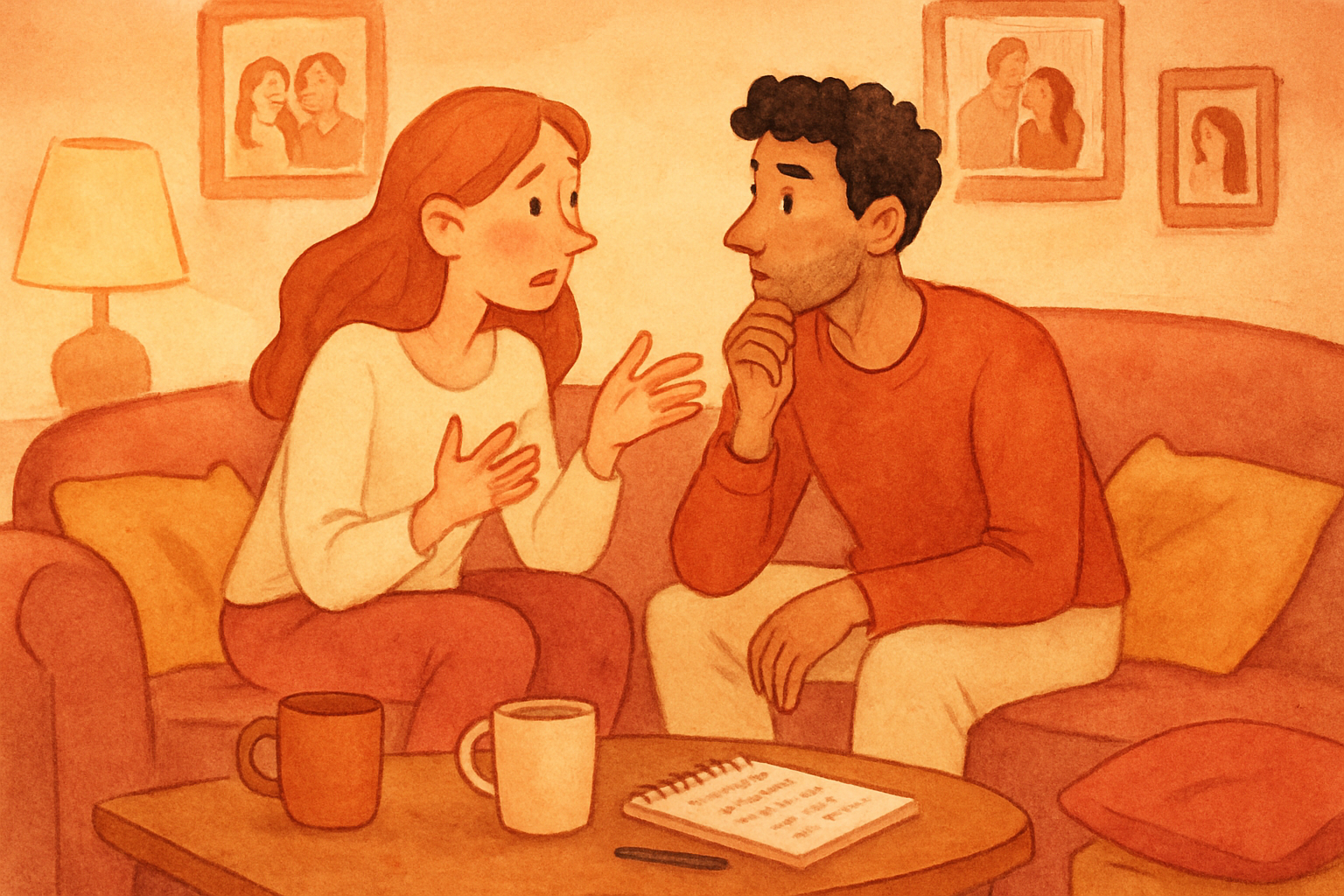
Ever wonder why you check your phone obsessively after sending that "good morning" text, while your friend seems genuinely unbothered when their partner doesn't respond for hours? Or why some people dive headfirst into relationships while others keep everyone at arm's length? The answer might lie in something psychologists call attachment styles — invisible relationship blueprints that shape how we connect, communicate, and handle intimacy.
Understanding your attachment style isn't just fascinating psychology trivia. It's relationship GPS, helping you navigate why certain patterns keep showing up in your dating life and what you can do about it.
What exactly are attachment styles?
Back in the 1960s, British psychologist John Bowlby noticed something crucial: the way we bonded with our primary caregivers as infants creates lasting templates for how we approach relationships throughout our lives. His colleague Mary Ainsworth then developed the famous "Strange Situation" experiment, observing how toddlers reacted when their mothers left and returned.
What they discovered revolutionized our understanding of human connection. These early experiences wire our nervous systems to expect certain patterns in relationships — patterns that show up decades later in how we text potential partners, handle conflict, and navigate intimacy.
In the 1980s, researchers Cindy Hazan and Phillip Shaver made the brilliant connection: if attachment shapes how infants relate to caregivers, it probably influences how adults relate to romantic partners too. They were right. The same patterns that emerge in childhood show up in our dating lives, just with different players and higher stakes.
The beautiful thing? These aren't permanent labels or excuses. They're insights that can help you understand your relationship patterns and, if you want, change them.
How do the four attachment styles show up in dating?
Secure Attachment: The relationship goldilocks
About 60% of adults have secure attachment, and they've essentially won the relationship lottery. These are the people who make dating look easy — not because they don't face challenges, but because they handle them with remarkable emotional maturity.
How it develops: Secure attachment typically forms when caregivers are consistently responsive, emotionally available, and attuned to a child's needs. The child learns that relationships are generally safe, that their needs matter, and that other people can be trusted.
Dating behaviors you'll notice:
- They communicate directly about needs and feelings without drama
- Comfortable with both intimacy and independence
- Don't spiral when their partner needs space or takes time to respond
- Handle conflict by focusing on solutions rather than blame
- Trust comes naturally, but they're not naive about red flags
What they need from a partner: Honestly? Not much beyond basic respect and genuine connection. They're not looking for someone to complete them or fix their emotional wounds. They want a teammate for life's adventure.
Texting style: Responsive but not anxious. They'll reply when they can, don't read hidden meanings into delayed responses, and communicate clearly about plans or feelings.
Anxious-Preoccupied: The relationship overthinkers
If you've ever analyzed a three-word text for hidden meaning or felt your heart race when someone takes longer than usual to respond, you might have anxious attachment. About 15-20% of adults fall into this category, and their dating lives often feel like emotional roller coasters.
How it develops: Usually stems from inconsistent caregiving — sometimes attentive and loving, sometimes distracted or emotionally unavailable. The child learns that love requires hypervigilance and that relationships are precious but precarious.
Dating behaviors you'll notice:
- Constant need for reassurance about the relationship's status
- Tendency to interpret neutral behaviors as rejection
- Difficulty enjoying time alone, preferring constant contact
- May become clingy or demanding when feeling insecure
- Prone to relationship anxiety and catastrophic thinking
- Often attracts avoidant partners (more on this later)
What they need from a partner: Consistent reassurance, clear communication about feelings and intentions, and patience during anxious moments. They thrive with partners who are emotionally expressive and available.
Texting style: Responds immediately, sends multiple follow-ups if you don't reply quickly, often reads emotional subtext that isn't there. May send long, emotionally heavy texts requiring immediate response.
Dismissive-Avoidant: The independent operators
These are the people who seem mysteriously unbothered by dating drama because they've mastered the art of emotional self-protection. Representing about 20-25% of adults, dismissive-avoidant types value independence above almost everything else.
How it develops: Often results from caregivers who were emotionally distant, rejected emotional needs, or emphasized self-reliance over connection. The child learns that emotions are burdensome and that depending on others leads to disappointment.
Dating behaviors you'll notice:
- Comfortable being single and often prioritize other life areas over relationships
- May seem emotionally unavailable or struggle with vulnerability
- Tendency to deactivate the attachment system when things get "too close"
- Often end relationships when they start feeling too dependent
- May have a pattern of dating people they're not fully compatible with to maintain distance
What they need from a partner: Space to maintain their independence, patience with their emotional processing speed, and partners who won't take their need for autonomy personally.
Texting style: Takes their time responding, keeps messages brief and factual, may not initiate emotional conversations via text. Can seem disinterested when they're just processing internally.
Fearful-Avoidant: The push-pull dancers
Perhaps the most complex attachment style, fearful-avoidant (also called disorganized attachment) affects about 5-10% of adults. They simultaneously crave and fear close relationships, creating a confusing pattern for both themselves and their partners.
How it develops: Usually stems from caregiving that was both needed and feared — perhaps a caregiver who was sometimes loving but also frightening, unpredictable, or traumatizing. The child develops conflicting internal working models: "I need love" alongside "love is dangerous."
Dating behaviors you'll notice:
- Intense desire for close relationships coupled with fear of getting hurt
- May sabotage relationships when they get "too good"
- Pattern of hot-and-cold behavior that confuses partners
- Highly sensitive to rejection but also terrified of engulfment
- May have a history of tumultuous, on-again-off-again relationships
What they need from a partner: Extraordinary patience, consistency even during their push-pull phases, and ideally someone with secure attachment who can provide steady reassurance without taking their fears personally.
Texting style: Highly variable — may text constantly when feeling close, then disappear when feeling overwhelmed. Messages can be emotionally intense followed by periods of withdrawal.
Why do anxious and avoidant people keep finding each other?
Here's one of attachment theory's cruelest ironies: anxious and avoidant types are magnetically attracted to each other, despite being potentially toxic combinations. Psychologists call this the "anxious-avoidant trap," and it's responsible for countless relationship casualties.
Why the attraction happens:
- Anxious types are drawn to avoidant partners' initial confidence and independence
- Avoidant types are attracted to anxious partners' emotional expressiveness and pursuit
- Both styles mistake intensity for compatibility
- The push-pull dynamic creates intermittent reinforcement, which is psychologically addictive
Why it becomes problematic: The anxious partner's need for closeness triggers the avoidant partner's need for distance, which triggers more anxiety, which triggers more avoidance — creating a destructive cycle that leaves both people feeling misunderstood and frustrated.
The anxious partner thinks: "If they loved me, they'd want to spend more time together and communicate more."
The avoidant partner thinks: "If they loved me, they'd give me space and stop being so needy."
Both are right according to their attachment style, but they're speaking different emotional languages.
Can you change your attachment style?
Here's the hopeful news: attachment styles aren't personality traits or permanent destinies. They're learned patterns, which means they can be unlearned and replaced with healthier ones.
Psychologists call positive change "earned security" — developing secure attachment patterns through corrective relationship experiences, therapy, or conscious self-work. Research shows it's absolutely possible, though it requires awareness, patience, and often some challenging inner work.
Signs you're developing earned security:
- You can identify your attachment triggers without being overwhelmed by them
- You communicate needs directly rather than through behavioral patterns
- You can self-soothe during relationship stress instead of relying entirely on your partner
- You're comfortable with both intimacy and independence
- You can handle conflict without shutting down or becoming consumed by anxiety
What helps the process:
- Therapy, especially approaches focused on attachment or trauma
- Relationships with securely attached people who model healthy patterns
- Mindfulness practices that help you notice and interrupt attachment reactions
- Self-compassion during the messy process of change
How do attachment styles affect your communication patterns?
Understanding attachment styles becomes incredibly practical when you look at communication patterns. Each style has distinct ways of expressing needs, handling conflict, and interpreting partner behavior.
During disagreements:
- Secure: Focus on the specific issue, communicate feelings clearly, seek win-win solutions
- Anxious: May become emotional quickly, fear the conflict means relationship doom, need immediate reassurance
- Dismissive-Avoidant: Likely to shut down, minimize the importance of the issue, or need space to process
- Fearful-Avoidant: May escalate quickly then withdraw, struggle between wanting to resolve and wanting to escape
Expressing needs:
- Secure: Direct, clear requests with emotional context
- Anxious: May hint, test, or use emotional appeals rather than direct requests
- Dismissive-Avoidant: Often struggle to identify needs, may minimize their importance when sharing
- Fearful-Avoidant: Needs may be expressed inconsistently or contradictorily
This is where tools like Pairloom's communication games become invaluable. Rather than trying to decode your partner's attachment style through confusing behaviors, the games create structured opportunities to practice healthy communication patterns regardless of your starting point.
What does this mean for your dating life?
Understanding attachment theory isn't about excusing problematic behaviors or finding the "perfect" attachment match. It's about developing emotional intelligence around your own patterns and learning to communicate across different attachment styles.
If you have anxious attachment:
- Practice self-soothing techniques for relationship anxiety
- Work on maintaining your own interests and friendships
- Communicate needs directly rather than testing your partner
- Look for partners who are emotionally available and responsive
If you have avoidant attachment:
- Challenge yourself to share emotions and vulnerabilities gradually
- Practice staying present during conflict instead of shutting down
- Recognize that your partner's need for closeness isn't necessarily "clingy"
- Work on identifying and expressing your own emotional needs
If you have fearful-avoidant attachment:
- Focus on building self-awareness around your push-pull patterns
- Practice grounding techniques during emotional overwhelm
- Work with a therapist to address underlying fears about relationships
- Be patient with yourself as you navigate the healing process
If you have secure attachment:
- You can be a healing presence for partners with insecure styles
- Model healthy communication and conflict resolution
- Be patient with partners who are working on their attachment patterns
- Don't take on the responsibility of "fixing" someone else's attachment style
The goal isn't to find someone with the same attachment style, but to develop enough security that you can build healthy relationships regardless of the combination.
Stop wondering. Start playing.
Pairloom turns the conversations that matter into games you'll actually enjoy. Invite your partner and discover how you really connect — in minutes, not months.
Stop wondering. Start playing.
Pairloom turns the conversations that matter into games you'll actually enjoy. Invite your partner and discover how you really connect — in minutes, not months.