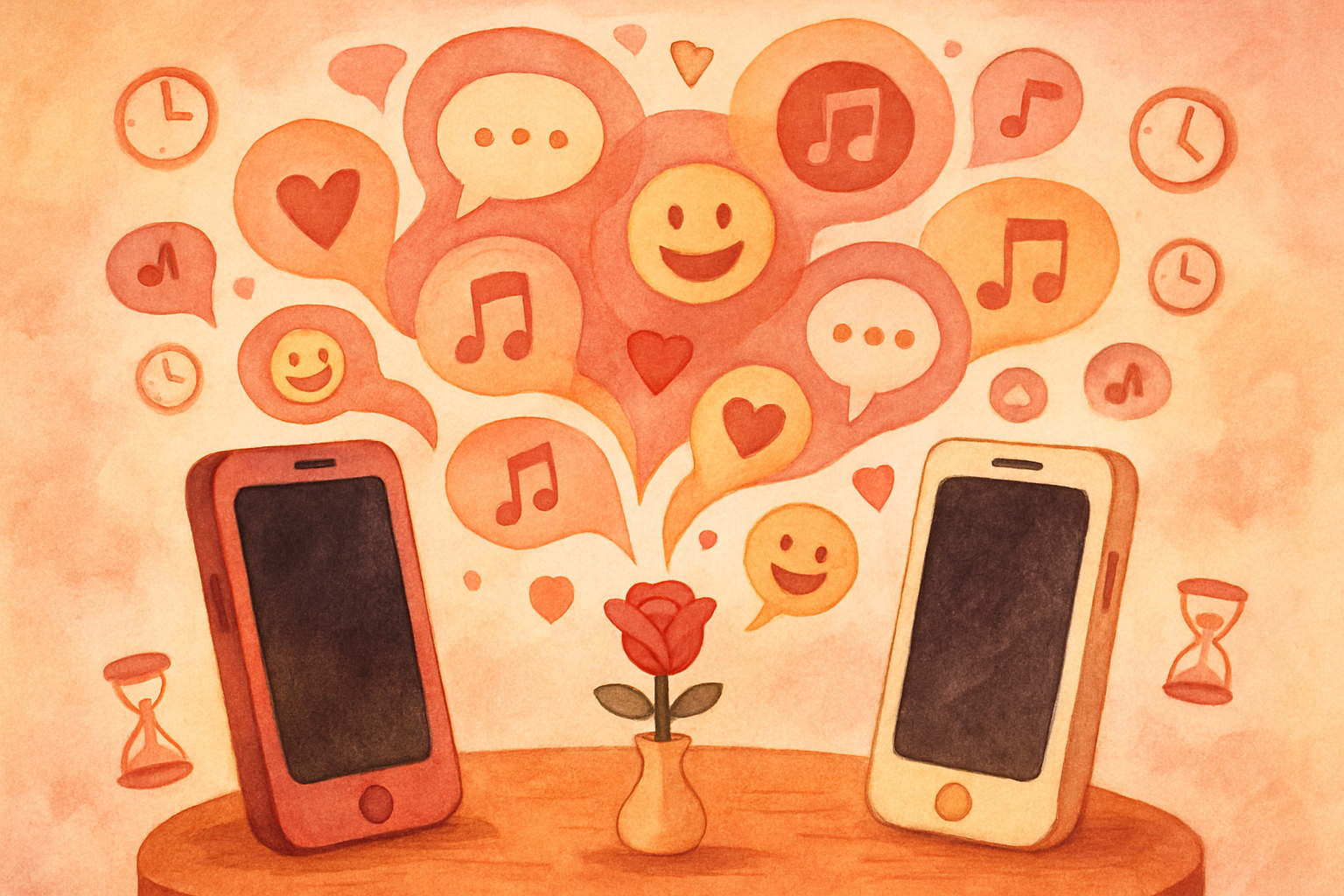
Digital Body Language: What Your Texting Style Reveals About You
Picture this: You send a text to someone you're dating, and you immediately see those three dots appear. Then they disappear. Then they appear again. Your heart starts racing. What are they typing? Why did they stop? Are they overthinking their response as much as you're overthinking their typing pattern?
Welcome to the world of digital body language—where every emoji choice, response time, and punctuation mark carries weight in our modern relationships. Just as we read physical cues in face-to-face interactions, we've developed an entirely new vocabulary of digital signals that reveal surprising truths about our personalities, attachment styles, and relationship priorities.
The way you text isn't just about communication preference; it's a window into how you connect, commit, and show care in the digital age. Let's decode what your texting style might be saying about you—and what you can learn from the patterns you've probably never consciously noticed.
Why do those three dots make your heart race?
Those bouncing dots—officially called "typing indicators"—might be one of the most anxiety-inducing innovations in modern communication. Research from the University of California, Irvine found that the anticipation created by typing indicators can trigger the same stress response as waiting for medical test results.
But why do some people experience this more intensely than others? It often comes down to attachment style. If you have an anxious attachment style, those dots represent a moment of vulnerability where you're waiting to see if your emotional bid will be accepted or rejected. The dots mean someone is crafting a response to you, which feels intensely personal.
People with secure attachment styles tend to view typing indicators more neutrally—simply as information that a response is coming. Meanwhile, those with avoidant attachment might feel relieved by the dots because it means they don't have to immediately engage; someone else is doing the emotional work of responding.
Your reaction to typing indicators also reveals how you handle uncertainty in relationships. Do you put your phone face down to avoid the anxiety? That might indicate you prefer to manage emotional regulation by controlling information flow. Do you watch intently, reading meaning into how long the dots persist? You might be someone who seeks security through information gathering.
Does response time really signal how much someone cares about you?
We've all been there: crafting the "perfect" response time. Not too fast (don't want to seem desperate), not too slow (don't want to seem uninterested). But what does research actually say about response time and relationship investment?
A study published in Cyberpsychology, Behavior, and Social Networking found that faster response times are indeed correlated with stronger romantic interest—but only up to a point. The sweet spot seems to be responding within a few hours, showing you prioritize the conversation without appearing to be constantly monitoring your phone.
However, your natural response time patterns reveal deeper personality traits:
Immediate responders often score higher on measures of agreeableness and anxiety. They might struggle with boundaries or fear that delayed responses will harm relationships. They're often people-pleasers who prioritize others' emotional needs over their own rhythm.
Considered responders (those who consistently take 30 minutes to a few hours) tend to be more introverted or conscientious. They're processing not just what to say, but how to say it. This isn't disinterest—it's emotional intelligence in action.
Sporadic responders might be dealing with ADHD, high stress, or avoidant attachment patterns. Their inconsistent timing often reflects internal emotional states rather than feelings about the recipient.
The key insight? Response time patterns are more about the sender's emotional regulation style than about their feelings toward you. Understanding this can reduce a lot of unnecessary relationship anxiety.
What's behind the great emoji divide?
Your emoji usage is like a personality fingerprint. Research from the University of Rochester found that people who use more emoji score higher on measures of agreeableness and are perceived as more emotionally intelligent by their conversation partners.
But the generational emoji gap reveals fascinating differences in digital native behavior:
Gen Z and younger Millennials use emoji as punctuation and mood indicators. A simple "ok" feels harsh; "ok 😊" feels supportive. They've developed nuanced emoji vocabulary where 😭 doesn't mean crying—it means "I'm dying laughing" or feeling overwhelmed with emotion.
Older Millennials and Gen X often use emoji more literally or sparingly. They might use 😊 to actually indicate happiness rather than as emotional buffering.
Boomers and Gen X sometimes avoid emoji entirely or use them in ways that seem "off" to younger users (like ending serious messages with 😂).
Your emoji style also reveals your comfort with emotional expression. Heavy emoji users tend to be more comfortable with vulnerability and emotional openness. Emoji avoiders might prefer verbal clarity or feel that symbols dilute their message's authenticity.
Interestingly, couples who develop their own emoji language—inside jokes, specific meanings for certain symbols—show higher relationship satisfaction. These digital rituals create intimacy through shared meaning.
What does your preference for voice notes vs. text reveal?
The voice note vs. text preference might be one of the most revealing digital communication choices you make. Your preference taps into fundamental differences in how you process and express emotion.
Voice note enthusiasts typically score higher on extraversion and emotional expressiveness. They're comfortable with the vulnerability that comes with vocal tone, breathing patterns, and spontaneous speech. Voice notes allow for emotional nuance that text can't capture—the slight laugh in your voice, the way you emphasize certain words.
People who prefer sending voice notes often:
- Process emotions verbally rather than internally
- Value authentic, unfiltered communication
- Feel more connected through auditory cues
- Are comfortable with imperfection (you can't edit a voice note)
Text devotees often prefer the control and precision that written communication offers. They might be more introverted, preferring to craft their thoughts before sharing them. Text allows for editing, reconsideration, and emotional regulation before sending.
Text preferrers often:
- Process emotions internally before expressing them
- Value clarity and precision in communication
- Feel anxious about being misunderstood
- Prefer asynchronous communication that doesn't demand immediate response
The preference split often causes friction in relationships. Voice note lovers feel that text responses to their voice messages seem cold or dismissive. Text lovers feel overwhelmed by the emotional immediacy of voice messages and the pressure to respond in kind.
Research from the Massachusetts Institute of Technology found that couples who match their preferred communication modality report higher satisfaction. The key isn't changing your preference—it's understanding what your partner's preference reveals about their emotional processing style.
Why do small digital rituals like goodnight texts matter so much?
The "goodnight text" has become a modern relationship milestone, and there's solid psychological reasoning behind why these small digital rituals carry such weight.
Dr. John Gottman's research on successful relationships emphasizes the importance of "bids for connection"—small attempts to engage your partner's attention and affection. Digital rituals like goodnight texts, good morning messages, or "thinking of you" photos throughout the day are modern versions of these connection bids.
People who consistently engage in digital rituals tend to:
- Score higher on relationship satisfaction measures
- Have more secure attachment styles
- View relationships as requiring active maintenance rather than passive existence
But the specific ritual you gravitate toward reveals personality differences:
Good morning texters are often optimistic, forward-thinking people who like to start the day with connection. They might be natural caregivers who feel energized by nurturing relationships.
Goodnight texters might be more reflective, wanting to process the day with someone important. They often value closure and emotional wrapping-up.
Random throughout-the-day texters are often spontaneous, present-moment focused people who share experiences as they happen. They're typically good at maintaining connection without rigid structure.
Photo sharers tend to be visual processors who feel connected through shared experiences, even when apart.
The absence of digital rituals isn't necessarily problematic—some people show love through quality time rather than consistent contact. But when digital ritual patterns suddenly change, it often signals shifts in emotional availability, stress levels, or relationship priorities.
When texting patterns change—what it means (and what it doesn't)
One of the most anxiety-inducing relationship moments is when someone's texting pattern suddenly shifts. They used to text you good morning every day, and now they don't. They used to respond within an hour, and now it takes six. What's happening?
Research from the Pew Research Center shows that texting pattern changes can indicate several things:
Temporary factors (most common):
- Work stress or life changes affecting phone usage
- Mental health fluctuations (depression often decreases communication frequency)
- Physical illness or exhaustion
- Family or friend drama requiring emotional energy elsewhere
Relationship factors (less common than we fear):
- Decreased romantic interest
- Feeling overwhelmed by the relationship pace
- Conflict avoidance
- Testing your reaction to reduced contact
Growth factors (often overlooked):
- Becoming more secure in the relationship and feeling less need for constant reassurance
- Developing better boundaries with technology
- Learning to be comfortable with their own company
The key insight from relationship research is that one person's texting pattern change usually reflects their internal state more than their feelings about you. Secure relationships can weather communication pattern changes because both partners assume positive intent and communicate directly about concerns rather than spiraling about digital clues.
If texting patterns change dramatically and consistently, the healthiest approach is direct communication: "I noticed we've been texting differently lately. How are you feeling about things?" This approach gathers actual information instead of making assumptions based on digital breadcrumbs.
How does "technoference" affect real intimacy?
"Technoference"—technology interference in relationships—has become a major focus in relationship research. A study from Brigham Young University found that 70% of women in committed relationships report that technology interferes with their relationship satisfaction.
But technoference isn't just about phone usage during dinner. It's about how digital communication patterns can create barriers to deeper intimacy:
The illusion of connection: Couples can text all day and feel "connected" while avoiding meaningful conversation about emotions, future goals, or relationship concerns.
Emotional avoidance: It's easier to send a heart emoji than to say "I love you" face-to-face. Digital communication can become a way to express care while avoiding vulnerability.
Assumption-making: We read so much into digital communication patterns that we stop checking our assumptions with direct communication.
Presence dilution: When couples are together but both engaged with their phones, neither person feels fully seen or heard.
Research shows that couples who create boundaries around technology use—like phone-free meals or bedtime routines—report higher relationship satisfaction. They also develop better skills for reading actual (rather than digital) emotional cues.
The healthiest approach to digital communication in relationships isn't elimination—it's intention. Using texting, voice notes, and emoji to enhance intimacy rather than replace it.
What does your texting style say about your relationship potential?
Your overall texting style creates a digital personality that potential partners read as much as your dating profile. Research from the dating app Hinge found that message response rates correlate with certain texting characteristics:
High response rate characteristics:
- Questions that show genuine curiosity about the other person
- Messages that reference specific details from the person's profile
- Appropriate use of humor (not trying too hard, not too serious)
- Length that matches the other person's message style
Low response rate characteristics:
- Generic messages that could be sent to anyone
- Overwhelming length or intensity early in conversations
- No questions or engagement hooks
- Emoji overuse or underuse relative to the recipient's style
But beyond dating apps, your texting style in established relationships reveals your capacity for:
Emotional attunement: Do you notice and respond to emotional cues in messages? Do you check in when someone seems off?
Consistency: Are you reliable in your communication patterns, or do people never know what to expect?
Boundary respect: Do you respect response time differences, or do you take them personally?
Growth mindset: Can you adapt your communication style based on what works for your specific relationship?
People with secure attachment styles tend to be naturally good digital communicators—they assume positive intent, communicate directly about concerns, and maintain consistent-but-flexible patterns that make others feel valued without being overwhelmed.
How can structured digital interactions go deeper than casual texting?
While casual texting serves important relationship functions, it often keeps conversations at surface level. The constant stream of "How was your day?" and "What are you up to?" can create connection without fostering genuine discovery.
This is where intentional, structured digital interactions become powerful. Instead of hoping that casual texting will eventually lead to deeper understanding, couples who engage in purposeful conversation games and guided questions report faster emotional intimacy development.
Research from Dr. Arthur Aron's laboratory at Stony Brook University shows that couples who engage in structured self-disclosure activities develop intimacy faster than those who rely only on organic conversation. The key is creating safe containers for vulnerability—spaces where both people know they're going to share something meaningful.
Pairloom's approach recognizes that modern couples need bridges between casual digital communication and deep emotional intimacy. Instead of trying to decode the hidden meanings in each other's texting patterns, couples can engage in games specifically designed to foster understanding, empathy, and genuine discovery.
The platform creates digital interactions that go beyond the anxiety-inducing guesswork of traditional texting. Rather than wondering if your partner's shorter messages mean they're losing interest, you can engage in structured conversations that reveal how they actually think, feel, and connect.
This shift from interpretive texting to intentional interaction helps couples move beyond digital body language analysis into actual emotional intelligence development. You learn your partner's communication style not through mysterious texting clues, but through guided conversations that reveal their authentic thoughts and feelings.
Stop wondering. Start playing.
Pairloom turns the conversations that matter into games you'll actually enjoy. Invite your partner and discover how you really connect — in minutes, not months.
Stop wondering. Start playing.
Pairloom turns the conversations that matter into games you'll actually enjoy. Invite your partner and discover how you really connect — in minutes, not months.