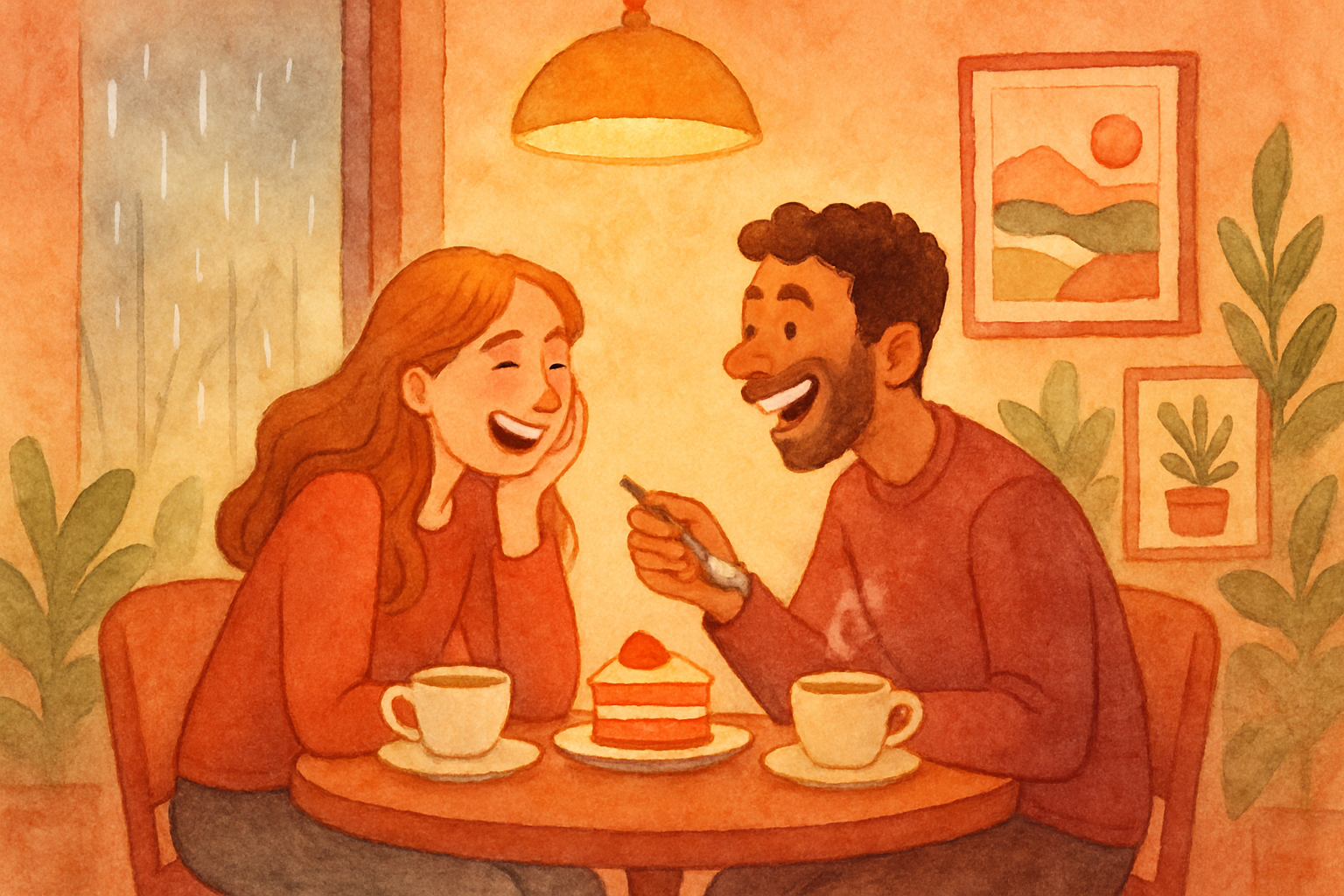
The typical first date—two people sitting across from each other at a candlelit table, nervously cutting into overpriced salmon while making small talk about their jobs—is arguably one of the worst ways to figure out if you're actually compatible with someone. Yet somehow, we keep defaulting to this high-pressure, low-revelation setup that's better suited for a job interview than discovering whether you'd actually enjoy spending time with this person.
If you're tired of first dates that feel more like performance art than genuine connection, it's time to rethink your approach. The best first dates aren't just about having fun (though that's important too)—they're designed to reveal the real person behind the dating profile. Let's explore why the dinner date fails so spectacularly and what science tells us about better alternatives.
Why Does the Classic Dinner Date Fall Short of Revealing True Compatibility?
The dinner date has become the default first date for one simple reason: it's safe. You sit, you eat, you talk, you leave. But "safe" often translates to "surface-level," and surface-level doesn't tell you much about long-term compatibility.
Research in social psychology shows that we learn more about someone's character through observing their behavior in varied contexts than through conversation alone. Dr. Samantha Joel's work on relationship formation at the University of Western Ontario found that couples who engaged in novel, challenging activities together during early dating reported stronger initial connections and more accurate assessments of each other's personalities.
The dinner date suffers from several fundamental flaws:
High performance pressure, low authenticity. When you're sitting face-to-face with nowhere to hide, the pressure to be "on" is intense. You're both curating your responses, telling your best stories, and avoiding controversial topics. This performative dynamic makes it nearly impossible to see how someone behaves when they're relaxed and unselfconscious.
Limited behavioral data. At dinner, you can observe table manners and conversation skills—that's about it. You don't see how they handle unexpected situations, work with others, make decisions under pressure, or respond to new experiences. These are the behaviors that actually predict relationship success.
Conversation can be misleading. People can tell you they're adventurous, kind, or easygoing, but actions speak louder than words. A 2019 study in the Journal of Personality and Social Psychology found that what people say about their values on dates correlates poorly with their actual behavior in relationships.
What Makes a First Date Idea Actually Reveal Compatibility?
The most revealing first dates share a few key characteristics: they're novel enough to break people out of their practiced social scripts, involve some element of collaboration or shared experience, and create natural opportunities to observe how your date handles different situations.
Psychologists call this "experience sampling"—the idea that you learn more about someone by doing things with them than by talking about doing things. When you're engaged in an activity together, people's true personalities emerge more naturally because they're focused on the task at hand rather than managing their image.
The ideal compatibility-revealing first date should:
- Present mild challenges that require problem-solving
- Involve multiple micro-decisions that reveal values and preferences
- Create opportunities for both planned and spontaneous moments
- Allow you to observe how they interact with others (waitstaff, strangers, etc.)
- Generate shared experiences you can reference later
Let's dive into specific first date ideas that actually accomplish these goals.
How Can a Museum or Gallery Walk Reveal Someone's True Interests?
A museum or gallery date might sound pretentious, but it's actually one of the most revealing first date options available. Here's why: when you're walking through exhibits together, you get to see what genuinely captures someone's attention when they think you're not looking.
What it reveals: Their curiosity patterns, how they process new information, whether they're interested in your perspective or just waiting for their turn to talk, and what they find genuinely engaging versus what they think they should find engaging.
What to notice: Do they gravitate toward the same types of exhibits as you? When they stop to read something, do they share interesting details or keep discoveries to themselves? How do they respond when you're excited about something they find boring? Do they ask thoughtful questions or make snap judgments?
The beauty of this date is that it's naturally conversational without the pressure of constant eye contact. You're walking, looking at things together, and responding to shared stimuli. This creates a much more authentic interaction pattern than sitting across from each other with nowhere else to focus your attention.
Why Does a Cooking Class Test Real Partnership Skills?
If you want to see how someone handles collaboration under mild pressure, few activities beat a couples' cooking class. This isn't just about whether they can follow a recipe—it's about how they communicate, problem-solve, and handle stress when things don't go according to plan.
What it reveals: Their communication style under pressure, how they handle mistakes, whether they're willing to take direction or need to be in control, and how they respond when teamwork is required rather than optional.
What to notice: Are they encouraging when you mess up the sauce, or do they get frustrated? Do they naturally divide tasks fairly, or do they take over? How do they treat the instructor and other participants? When something goes wrong (and it will), do they laugh it off or get stressed?
Cooking together also reveals practical compatibility markers. Do they clean as they go or leave chaos in their wake? Are they adventurous about trying new flavors? Do they consider your dietary restrictions or preferences? These small behaviors often predict larger relationship patterns.
What Does an Outdoor Adventure Reveal About Someone's Character?
An outdoor activity—hiking, rock climbing, kayaking, or even just a challenging walk through the city—reveals how someone handles discomfort, uncertainty, and physical challenges. This doesn't mean you need to plan an extreme adventure; even a moderately challenging walk can be revealing.
What it reveals: Their relationship with discomfort, how they handle unexpected situations, whether they're safety-conscious or reckless, and how they respond when things don't go perfectly.
What to notice: Do they complain constantly about minor discomforts, or do they roll with inconveniences? Are they prepared (water, appropriate shoes) or do they wing it and expect you to solve problems? How do they treat the environment and other people you encounter? Do they push through challenges or give up easily?
Outdoor activities also reveal attitudes toward planning and spontaneity. Someone who brings snacks and checks the weather forecast approaches life differently than someone who shows up in flip-flops for a hike.
How Does Volunteering Together Show Someone's Values in Action?
If you really want to see someone's character, watch how they treat people who can't do anything for them. Volunteering together—whether it's serving at a soup kitchen, walking dogs at an animal shelter, or helping with a community cleanup—shows values in action rather than just in conversation.
What it reveals: Their genuine compassion levels, how they interact with people from different backgrounds, whether they're comfortable with service or see it as beneath them, and how they handle emotionally challenging situations.
What to notice: Are they genuinely engaged with the people you're helping, or are they just going through the motions? Do they follow through on commitments, or do they try to leave early? How do they talk about the experience afterward—with genuine care or with virtue-signaling language?
This type of date also reveals practical compatibility around values and life priorities. If volunteering together feels natural and energizing, you've discovered shared values that predict long-term compatibility.
Why Does Shared Laughter at a Comedy Show Predict Relationship Success?
Humor compatibility is a surprisingly strong predictor of relationship satisfaction, but it's hard to assess through conversation alone. A comedy show gives you a shared experience and lets you see what actually makes them laugh, not just what they say is funny.
What it reveals: Their actual sense of humor (versus their described sense of humor), how they handle inappropriate or unexpected content, and whether your humor styles complement each other.
What to notice: Do you laugh at the same moments? How do they respond to humor that makes them uncomfortable? Are they generous about laughing at jokes you find funny, even if they don't love them? Do they make witty observations during the show, or do they just consume entertainment passively?
Research shows that couples who laugh together have stronger relationships and better conflict resolution skills. A comedy show date gives you immediate data about this crucial compatibility factor.
What Does Someone's Decision-Making Style Reveal at a Food Market?
A trip to a farmers market, food hall, or international market might seem casual, but it's actually a masterclass in observing decision-making styles, openness to new experiences, and social skills in unstructured environments.
What it reveals: How they make decisions, their openness to new experiences, how they interact with strangers, and their relationship with spontaneity versus planning.
What to notice: Do they research vendors beforehand or explore spontaneously? Are they decisive about food choices or agonize over options? How do they treat vendors and other customers? Are they willing to try things you suggest, or do they stick to familiar choices?
This type of date also reveals practical compatibility around food, money, and social situations. Someone who's comfortable chatting with vendors and trying new foods approaches life differently than someone who finds these interactions stressful.
What Does Research Tell Us About Doing vs. Talking on First Dates?
The psychological research is clear: shared experiences trump conversation for early relationship bonding. Dr. Arthur Aron's famous study on relationship acceleration found that couples who engaged in novel, challenging activities together reported feeling closer after just a few hours than couples who spent the same amount of time in conventional conversation.
This happens because of something called "misattribution of arousal." When you're engaged in an exciting or mildly challenging activity with someone, your brain can mistake the physiological arousal from the activity for attraction to the person you're with. More importantly, shared experiences create what psychologists call "we-ness"—a sense of being a team rather than two individuals evaluating each other.
Experience sampling also bypasses our social scripts. We all have practiced ways of talking about ourselves that make us sound good, but it's much harder to fake your behavior when you're focused on an activity. This is why you learn more about someone's patience, kindness, and problem-solving abilities from doing something together than from hearing them describe these qualities.
How Can You Start Building Connection Before You Even Meet?
Here's where modern dating gets interesting. While shared experiences are powerful, you don't have to wait until you're physically together to start building real connection. Tools like Pairloom's relationship games can help you move beyond surface-level texting to discover genuine compatibility markers before you even meet.
Think of it as a "pre-date"—sending someone a thoughtful conversation game shows you're serious about meaningful connection while giving you both a sense of each other's personality, values, and communication style. When you do meet in person, you're already starting from a place of genuine curiosity rather than nervous small talk.
The questions in these games are designed by relationship researchers to reveal the exact compatibility factors that predict long-term success: attachment styles, conflict resolution approaches, life values, and emotional intelligence patterns. It's like having a relationship expert design your first conversation.
Ready to Move Beyond the Dinner Date Default?
The best first dates aren't about impressing someone—they're about discovering whether you actually enjoy each other's company when you're not performing your best selves. Whether you choose a museum walk, a cooking class, or an outdoor adventure, the goal is to create shared experiences that reveal authentic personalities and genuine compatibility.
Remember: compatibility isn't about finding someone perfect; it's about finding someone whose imperfections complement your own, whose problem-solving style meshes with yours, and whose values align with what matters most to you. The right first date will help you discover these deeper patterns while actually enjoying yourselves in the process.
Stop wondering. Start playing.
Pairloom turns the conversations that matter into games you'll actually enjoy. Invite your partner and discover how you really connect — in minutes, not months.
Stop wondering. Start playing.
Pairloom turns the conversations that matter into games you'll actually enjoy. Invite your partner and discover how you really connect — in minutes, not months.