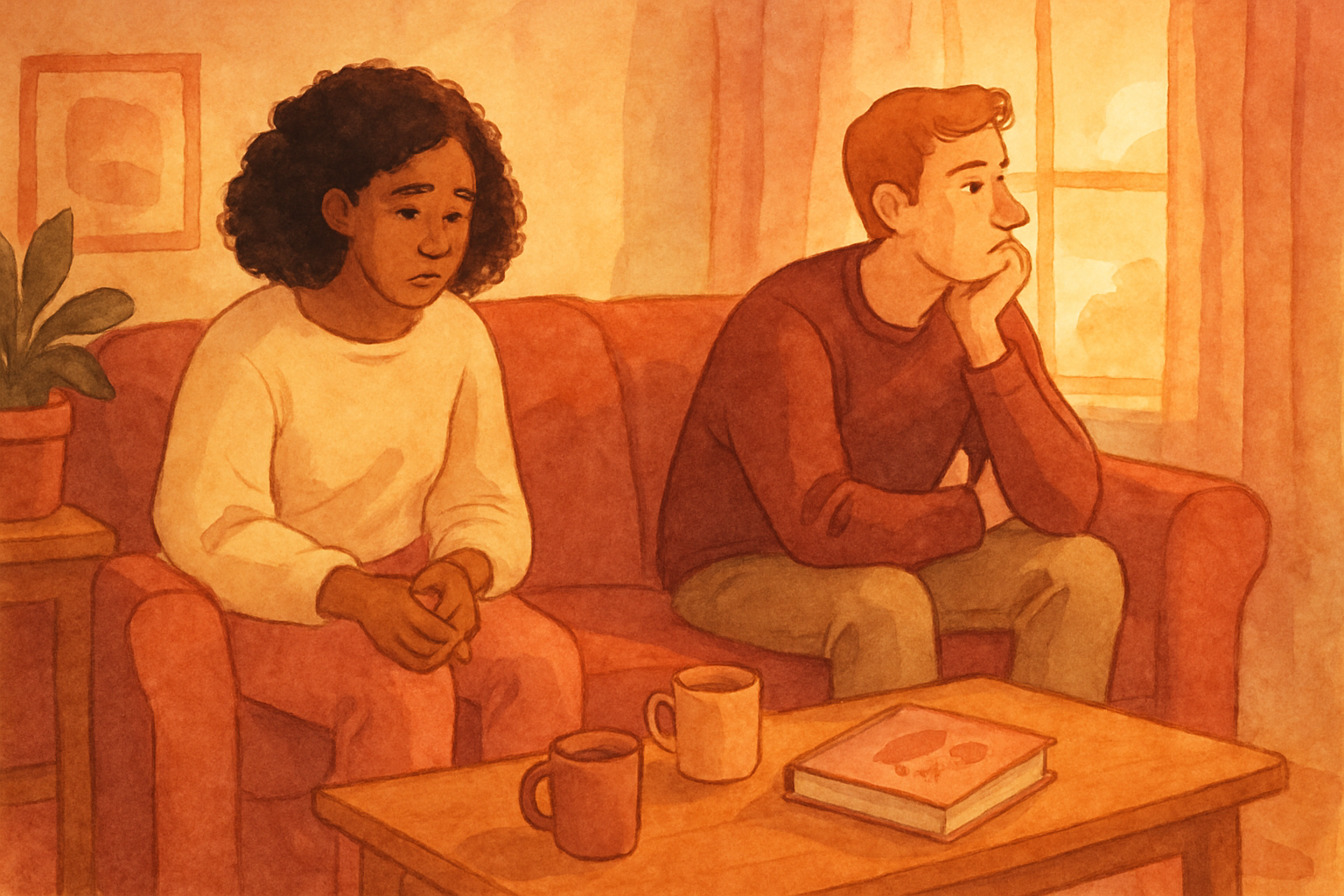
If you've ever found yourself obsessively checking your phone waiting for a text back — or alternatively, feeling the sudden urge to "take space" the moment someone gets a little too close — you've already experienced attachment styles in dating firsthand. These patterns aren't personality flaws or signs that you're "bad at relationships." They're deeply ingrained responses to how safe and seen you felt in your earliest bonds, and they shape nearly every romantic dynamic you'll ever find yourself in.
The good news? Understanding them can change everything.
What Are Attachment Styles, and Why Do They Matter in Dating?
Attachment theory was originally developed by British psychiatrist John Bowlby in the mid-20th century and later expanded by researchers Mary Ainsworth and, more recently, Stan Tatkin and Sue Johnson. The core idea is this: as infants, we develop strategies to stay close to our caregivers — and those strategies follow us into adulthood, especially in our closest relationships.
While there are four recognized styles (secure, anxious, avoidant, and disorganized), two of the most commonly discussed in the context of attachment styles in dating are anxious and avoidant — partly because they're so prevalent, and partly because they're magnetically drawn to each other in ways that can feel equal parts electric and exhausting.
Roughly 20% of adults are estimated to have an anxious attachment style, and about 25% lean avoidant — meaning a significant chunk of the dating pool is made up of people whose core relational needs are essentially in direct opposition to each other.
How Anxious Attachment Actually Feels From the Inside
The anxious attachment style often gets caricatured as being "clingy" or "needy," but that framing misses the real experience. Anxious attachment is fundamentally about hypervigilance to the possibility of abandonment. People with this style tend to read enormous meaning into small signals — a shorter text than usual, a shift in tone, a delayed reply — because their nervous system is running a constant background program asking: Are we okay? Is this person still here? Am I enough?
In practical dating terms, this might look like:
- Needing frequent reassurance that the relationship is solid
- Feeling disproportionately destabilized by conflict or perceived distance
- Overthinking conversations and interactions after they happen
- Struggling during the talking stage of dating because ambiguity feels genuinely threatening
- Finding the situationship dynamic particularly painful, because the lack of definition activates core fears
One important thing to note: anxious attachment doesn't mean a person lacks self-awareness. Many anxiously attached people know, logically, that their partner probably just had a busy day. The anxiety isn't a thought — it's a physiological state. The reassurance-seeking behaviors that follow are attempts to regulate that state.
How Avoidant Attachment Actually Feels From the Inside
Avoidant attachment is often misread as coldness or disinterest, but that's not quite right either. People with avoidant attachment developed their style in environments where emotional needs either went unmet or felt like a burden to others. The survival strategy that emerged was self-sufficiency: don't need too much, and you won't be disappointed.
In dating, avoidant attachment might look like:
- Feeling genuinely suffocated by too much closeness or emotional intensity
- Withdrawing or going quiet during conflict rather than engaging
- Idealizing independence and becoming uncomfortable when a relationship starts to feel "serious"
- Struggling with vulnerability in relationships because opening up feels risky rather than connecting
- Pulling back most intensely at exactly the moments when connection is most needed
Here's something that often surprises people: avoidantly attached individuals feel just as much love as anyone else. They're not emotionally unavailable by choice. Their system simply learned to protect itself by keeping closeness at arm's length — and that system activates automatically, without conscious decision-making.
Why Anxious and Avoidant Pairs Find Each Other (and Why It's So Hard)
There's a reason the anxious-avoidant pairing is sometimes called the "pursuer-distancer dance" in couples therapy. Each person's behavior is both a trigger for and a response to the other's attachment system.
Here's how the cycle usually plays out:
- The anxious partner feels some distance or ambiguity and begins seeking reassurance or closeness.
- The avoidant partner feels the pressure of increased need and pulls back to regulate their discomfort.
- The anxious partner reads the withdrawal as confirmation of their fear (rejection, abandonment) and increases the pursuit.
- The avoidant partner feels even more overwhelmed and withdraws further.
- Eventually one partner either breaks through or breaks down — temporarily resolving the cycle until it repeats.
What makes this particularly tricky is that both partners are genuinely trying to manage their own nervous systems. Neither is the villain. But without awareness of what's happening beneath the surface, the cycle can run indefinitely — and it's one of the most common patterns that sends couples to therapy or leads to painful breakups in otherwise loving relationships.
The anxious-avoidant dynamic is also why relationship red flags vs differences can be so hard to sort out for people caught in this pattern. Is this person genuinely avoidant, or are they a dealbreaker for you? Is this withdrawal a sign of disinterest, or just a different attachment style navigating closeness? These are genuinely hard questions.
What Signs of Compatibility Look Like When Attachment Styles Clash
It's tempting to conclude that anxious and avoidant people just shouldn't be together — but attachment research doesn't actually support that position. What research does support is that earned security is possible. People can and do move toward more secure functioning over time, both through individual growth and through relationships that provide new relational experiences.
That said, some honest signs that an attachment mismatch may be workable include:
- Both partners want to understand the dynamic, not just blame the other
- Conflict leads somewhere — even if it's messy, there's repair and reconnection afterward
- The avoidant partner can articulate that they care, even if closeness is uncomfortable for them
- The anxious partner has (or is building) some ability to self-soothe and tolerate uncertainty
- There's genuine curiosity about each other's inner world, not just frustration with behavior
And some signs it may not be working regardless of how much you care:
- Conflict is either constant or completely avoided, with no middle ground
- One or both partners feel chronically unseen or dismissed
- The anxious partner's baseline anxiety has increased significantly since the relationship began
- The avoidant partner feels genuinely trapped, not just occasionally overwhelmed
Understanding where you and a partner fall on this spectrum is exactly the kind of thing that a well-designed compatibility test for couples can surface — not to diagnose your relationship, but to open a conversation that might otherwise never happen.
How to Communicate Better When Your Attachment Styles Differ
How to communicate better in a relationship when your nervous systems have fundamentally different threat responses is genuinely one of the harder relational challenges — but it's not impossible. Here are some approaches backed by attachment research:
Name the pattern, not the person
Instead of "you always pull away when I need you" or "you're so demanding," try naming what seems to be happening between you: "I notice we get into this cycle where I come toward you and you step back. Can we talk about what that's like for both of us?"
Understand bids for connection
Psychologist John Gottman's research on "bids for connection" is incredibly useful here. When an anxious partner seeks reassurance, they're making a bid. When an avoidant partner goes quiet, they may also be making a bid — just in a different language. Learning to read each other's bids, rather than reacting to their surface behavior, changes the dynamic.
Create a repair ritual
Healthy conflict in relationships isn't about never fighting — it's about what happens after. Couples who last tend to have some version of a repair ritual, whether that's a specific phrase, a physical gesture, or an agreed-upon cool-down period followed by reconnection. This is especially important in anxious-avoidant pairs, where the avoidant partner needs space to regulate and the anxious partner needs reassurance that space doesn't mean abandonment.
Ask better questions
One of the most underrated tools in any relationship is intentional conversation. The right questions to ask your partner — not accusatory, not defensive, genuinely curious — can reveal the inner experience underneath the behavior. "What does it feel like for you when things get intense between us?" gets you somewhere that "why do you always shut down?" never will.
If you're looking for a structured way to explore this kind of dialogue, Pairloom's conversation games are built around exactly this — turning the questions that matter most into something that feels like discovery rather than interrogation. It's a surprisingly low-stakes way to go deeper, especially if direct emotional conversations trigger either partner's system.
Can Attachment Styles Change?
Yes — and this is probably the most important thing to know. Attachment styles are not permanent personality traits. They're learned strategies, which means they can be unlearned and replaced with more secure patterns over time.
The two most reliable pathways to earned security are:
- A corrective relationship — being in a consistently safe, responsive relationship (romantic or therapeutic) that provides experiences that challenge the original attachment model
- Self-awareness and intentional practice — developing the ability to observe your own attachment activation in real time, understand its roots, and respond rather than react
Self-awareness in dating is genuinely one of the most powerful tools available — not just for choosing partners more wisely, but for showing up differently within the relationships you're already in. The person who can say "I'm feeling anxious right now and I want reassurance, but I'm going to give myself ten minutes before I reach out" is someone who's doing real attachment work. Same for the person who can say "I feel the urge to disappear right now, but I'm going to stay present for five more minutes."
For couples trying to understand their patterns together, exercises like structured check-ins, intentional date nights (even date night ideas at home that create low-pressure connection time), and games designed to foster getting to know your partner at deeper levels can all serve as relational laboratories — small experiments in choosing new responses.
The connection between attachment and trust in a relationship is also worth naming directly. Secure attachment is essentially the experience of trust made physical. When both partners learn to offer the signals their partner needs — responsiveness for the anxious partner, space without abandonment for the avoidant partner — trust deepens over time, and the nervous system begins to associate this relationship with safety rather than threat.
The Bottom Line
Attachment styles in dating aren't destiny. They're maps — imperfect, outdated maps drawn in childhood that we've been navigating by ever since. Understanding your own map, and your partner's, doesn't make the terrain disappear. But it makes the journey a whole lot less disorienting.
If you've recognized yourself or someone you love in any of this, that recognition is already doing something. Curiosity about your patterns is the beginning of changing them — and changing them, together, is some of the most meaningful work a relationship can hold.
For more on how to open these conversations with someone you're dating or partnered with, take a look at our guide to questions that build real intimacy — because the right question, asked in the right moment, can move a relationship further than months of guessing.
Stop wondering. Start playing.
Pairloom turns the conversations that matter into games you'll actually enjoy. Invite your partner and discover how you really connect — in minutes, not months.
Stop wondering. Start playing.
Pairloom turns the conversations that matter into games you'll actually enjoy. Invite your partner and discover how you really connect — in minutes, not months.