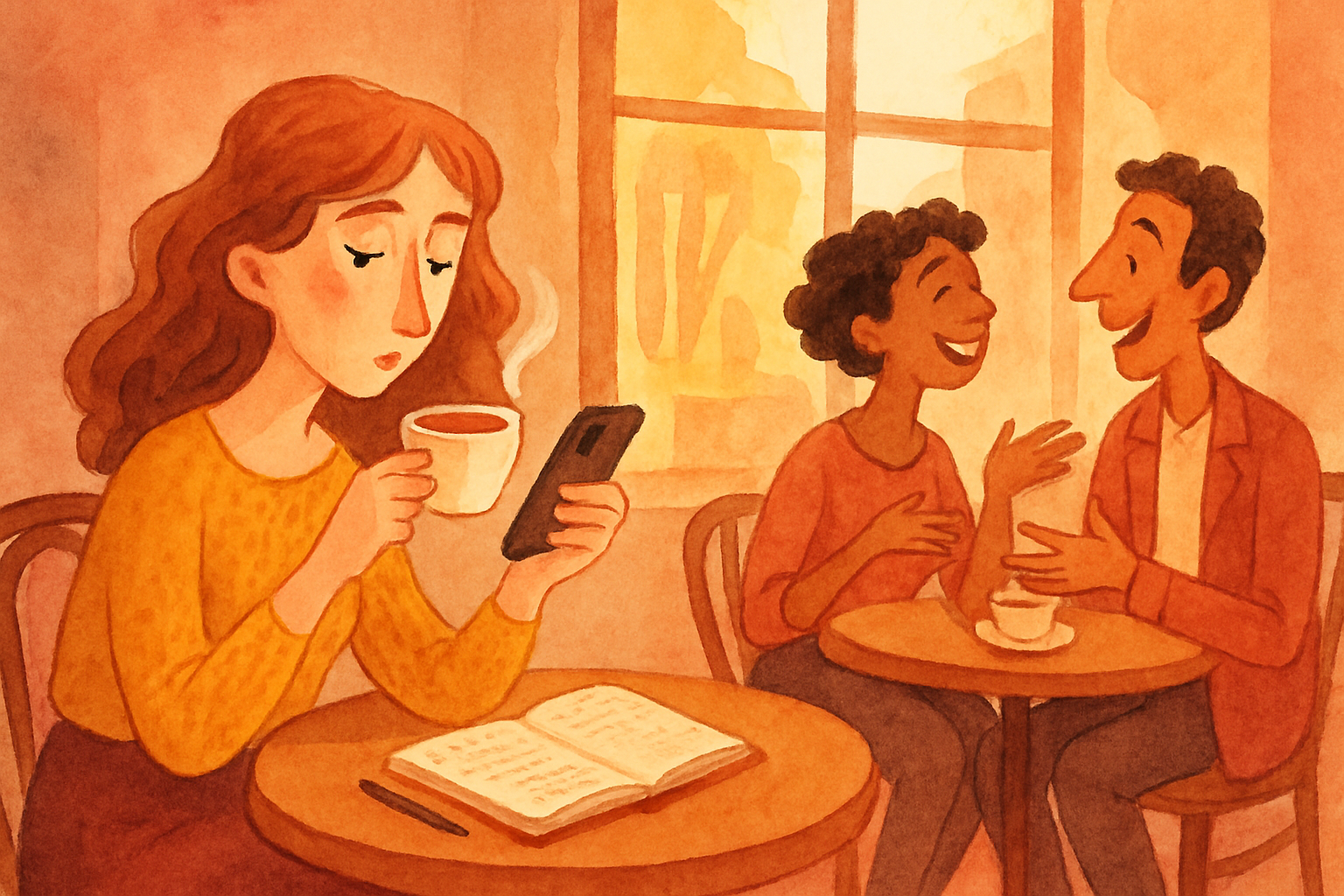
The modern dating dilemma: Everyone knows dating app profiles are carefully curated performances, yet we all participate in the charade anyway.
You've spent an hour crafting the perfect bio. Your photos are strategically selected—that one from your friend's wedding where the lighting hit just right, the hiking pic that shows you're "adventurous," and the group shot that proves you have friends (but you're clearly the attractive one). You hit publish and wait. But deep down, you wonder: if someone actually met you based on this profile, would they recognize the real you?
This is the central paradox of modern digital dating. Research on "strategic self-presentation" in online dating by communication scholars Nicole Ellison, Rebecca Heino, and Jennifer Gibbs reveals that we're all caught in this same performance trap. We know everyone else is curating their best self, so we feel pressure to do the same. The result? A sea of profiles that all start to sound remarkably similar.
But here's what the research also shows: authenticity isn't just the morally superior choice—it's actually the more effective one. Profiles that reveal genuine personality traits, specific interests, and yes, even carefully chosen vulnerabilities, consistently generate more meaningful connections than their polished, generic counterparts.
The question isn't whether to be honest on dating apps. It's how to be honest without feeling like you're serving up your entire emotional history to strangers on the internet.
Why Everyone Lies (And Why It Backfires)
Let's start with the uncomfortable truth: nearly everyone embellishes on dating apps. Studies consistently show that profile deception is widespread—from adding a few inches to height measurements to using photos that are several years old. But this isn't because we're inherently dishonest people. It's because dating apps create an environment where strategic self-presentation feels necessary for survival.
The problem is that this strategy often backfires. When everyone is presenting their "Sunday best" self, profiles become increasingly indistinguishable. How many times have you scrolled through variations of "I love to laugh, travel, and try new restaurants" before your eyes glazed over?
More importantly, when you do match with someone based on a highly curated version of yourself, you've set an impossible standard to maintain. That pressure to live up to your profile creates anxiety that can sabotage even promising connections.
What Does Authentic Actually Mean on a Dating App?
Authenticity doesn't mean oversharing or listing all your flaws in your bio. It means presenting a version of yourself that your friends would recognize—someone with specific interests, genuine personality quirks, and the occasional human imperfection.
Think of it this way: your dating profile should feel like how you'd describe yourself to a friend who's setting you up on a blind date. You'd mention your love of obscure documentaries or your terrible karaoke habit, not just that you "like movies and music."
The research backs this up. Profiles that include specific details and genuine personality markers don't just get more matches—they get better matches. People who are drawn to your authentic quirks are more likely to be compatible with the real you.
How to Share Vulnerabilities Without Oversharing?
One of the trickiest aspects of authentic profile creation is including some vulnerability without crossing into TMI territory. The key is choosing vulnerabilities that are relatable rather than concerning, and that show growth rather than stagnation.
Good vulnerability might be admitting you're terrible at parallel parking, that you ugly-cried during the last season of a show everyone loves, or that you're learning to cook beyond microwave meals. These details humanize you without raising red flags.
Avoid vulnerabilities that suggest unresolved trauma, serious mental health struggles, or relationship baggage. Save deeper emotional sharing for when you've established trust with someone—not for your public profile.
The sweet spot is sharing something that makes you slightly embarrassed but also makes you laugh. If you can imagine telling the story at a dinner party and getting good-natured laughs, it's probably safe for your profile.
How Do You Replace Clichés With Specific Details?
The difference between a forgettable profile and a memorable one often comes down to specificity. Instead of saying you "love to travel," share a specific travel story. Instead of claiming you're "looking for adventure," describe a recent adventure you actually had.
Compare these examples:
Generic: "I love trying new restaurants and exploring the city." Specific: "Currently on a mission to find the best tacos in town—so far the truck outside the library is winning, but I'm accepting recommendations."
Generic: "Family is important to me." Specific: "My nephews have convinced me that I'm actually pretty good at being the fun uncle, even though I still can't figure out Pokemon cards."
Generic: "I love to travel." Specific: "Got completely lost in a Portuguese flea market for three hours last summer and somehow it was the best day of the trip—found a vintage cookbook and had the most amazing conversation with a vendor about her grandmother's recipes."
Notice how the specific versions give potential matches actual conversation starters while revealing personality. They show rather than tell, and they invite questions rather than just stating facts.
Can You Show Your Personality Through Photos Too?
Your photos are just as important as your bio when it comes to authenticity. The goal isn't to have the most attractive photos possible—it's to have photos that accurately represent who you are and what spending time with you might be like.
Include at least one photo that shows you genuinely laughing or smiling—not a posed smile, but the kind that reaches your eyes. Research shows that authentic expressions of happiness are significantly more attractive than posed ones.
Consider including a photo that shows you doing something you actually enjoy, even if it's not conventionally attractive. Are you genuinely passionate about board games? Show yourself mid-game. Love cooking? Include a photo of you in your actual kitchen, maybe with flour on your apron.
The key is avoiding photos that misrepresent your current reality. That doesn't mean you need to use your worst photos, but use recent ones that show what you actually look like today.
What's the Friend Test and How Do You Use It?
Here's a simple authenticity check: would your best friend recognize you from your profile? Not just your face, but your personality, interests, and way of moving through the world?
Show your profile to a close friend and ask: "Does this sound like me?" If they say yes, you're on the right track. If they say "Well, it's you on your best day after three cups of coffee," you might want to dial it back a bit.
Your friends know your real personality—your sense of humor, your weird interests, your endearing flaws. If your profile would surprise them, it probably needs adjustment.
This test works for photos too. Do your pictures show the version of yourself that your friends would expect to see? If someone met you based on these photos, would they feel like you'd misrepresented yourself?
Why Does Honesty Lead to Better Matches?
When you're authentic in your profile, you're essentially pre-screening for compatibility. Someone who's put off by your genuine interests or personality quirks probably isn't right for you anyway. Someone who's attracted to the real you is much more likely to be a good match.
This principle saves everyone time and emotional energy. Instead of going on dates where you feel pressure to maintain a performance, you can focus on getting to know someone who's already interested in your authentic self.
Research consistently shows that relationships built on accurate self-presentation from the beginning are more satisfying and longer-lasting than those built on idealized versions. When you start with honesty, you don't have to worry about "the reveal" later.
How Do You Handle the Fear of Rejection?
Let's acknowledge the real fear behind inauthentic profiles: what if people don't like the real me? This fear is understandable but ultimately counterproductive. If someone doesn't like your authentic self, they're not rejecting you personally—they're just not compatible with you. And that's valuable information.
Remember that dating apps are a numbers game, but not in the way most people think. The goal isn't to appeal to as many people as possible—it's to appeal strongly to the right people. A hundred matches with people who aren't genuinely interested in you are worth less than ten matches with people who are excited about who you really are.
Rejection based on authenticity actually protects you from wasting time on incompatible connections. Every person who passes on your genuine self is clearing the way for someone who will appreciate it.
What About Professional Boundaries and Privacy?
Being authentic doesn't mean sharing everything. You can be honest about your personality and interests while maintaining appropriate boundaries around personal information.
Avoid sharing details that could compromise your safety or professional reputation. You don't need to mention your workplace, full name, or specific address. You can talk about loving your job in marketing without specifying which company, or mention your neighborhood without giving your exact location.
The goal is to share enough authentic detail that potential matches can get a sense of your personality and lifestyle, while keeping sensitive information private until you've established trust.
When Should You Update Your Profile?
Your authentic self evolves, and your profile should too. If you've developed new interests, gone through significant life changes, or simply grown as a person, update your profile to reflect that growth.
This doesn't mean constantly tweaking your profile, but checking in every few months to make sure it still represents who you are today. If you read your profile and think "that was me six months ago," it's time for an update.
The same goes for photos. Using photos that are more than a year or two old, or that show a significantly different version of yourself, defeats the purpose of authentic representation.
Beyond Profiles: A Different Approach to Connection
While crafting an authentic profile is important, it's worth questioning whether traditional dating app profiles are the best way to find genuine connections at all. The profile-first model forces you to sum up your entire personality in a few sentences and photos—a nearly impossible task that inevitably leads to either oversimplification or overthinking.
What if you could connect with people based on how you actually interact, rather than how you describe yourself? What if potential matches could see your personality in action rather than just reading about it?
This is where games and interactive experiences can reveal aspects of personality that static profiles miss entirely. How someone approaches problem-solving, handles competition, or expresses humor in real-time often tells you more about compatibility than any carefully crafted bio.
The beauty of this approach is that it removes the pressure of self-description entirely. Instead of agonizing over whether you sound interesting enough on paper, you can simply be yourself in interactive moments and let your personality speak for itself.
When conversations grow naturally from shared experiences rather than forced small talk about profile details, they tend to feel more authentic and flow more easily. You're connecting based on genuine compatibility rather than curated presentation.
Stop Wondering. Start Playing.
Pairloom turns the conversations that matter into games you'll actually enjoy. Invite your partner and discover how you really connect—in minutes, not months.
Stop wondering. Start playing.
Pairloom turns the conversations that matter into games you'll actually enjoy. Invite your partner and discover how you really connect — in minutes, not months.