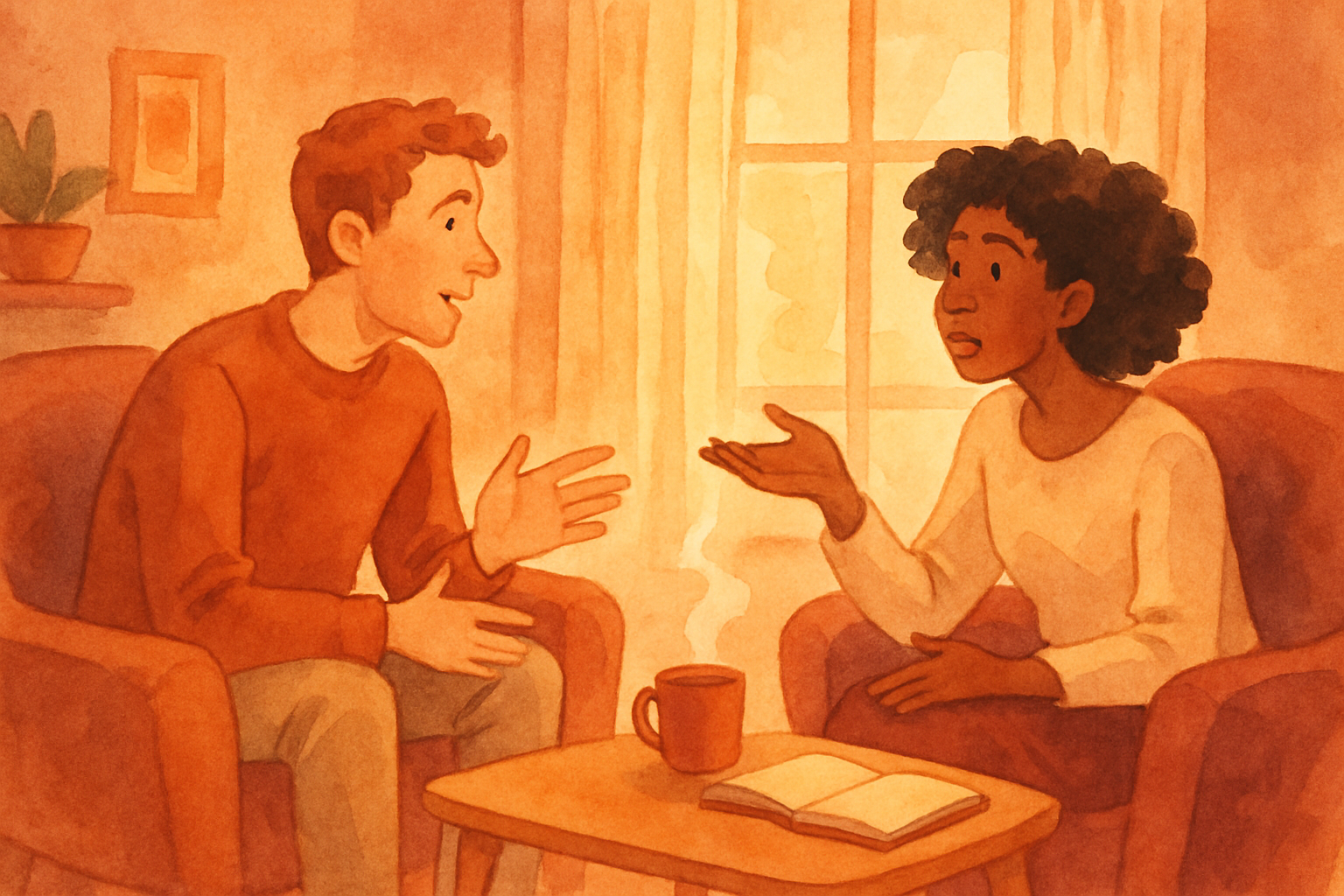
Trust isn't something you build in a crisis. By the time you need it — really need it, in the middle of a hard conversation or a vulnerable moment — it's either already there or it isn't. That's the part most relationship advice skips over.
We talk about trust like it's a problem to solve after something goes wrong. But the couples and partners who seem to navigate conflict with the most ease? They built their trust long before they needed to lean on it. They made small, consistent deposits into an account they didn't plan to spend — and when life got complicated, that account had something in it.
Here's what that actually looks like, and how to start doing it before the stakes get high.
Why Does Trust Feel So Hard to Build — and So Easy to Lose?
The research on trust is pretty humbling. Psychologist John Gottman's decades of work with couples found that trust is built in what he calls "sliding door moments" — small, everyday choices where one person either turns toward or away from their partner. Not grand gestures. Not dramatic apologies. Just: did you notice me, and did you respond?
Those micro-moments compound. When someone consistently shows up — even in small ways — your nervous system learns that this person is safe. When they consistently don't, it learns the opposite. The problem is that our brains are wired with a negativity bias: one breach of trust can undo dozens of positive moments. That asymmetry is worth taking seriously.
And here's where attachment styles in dating come into play. If you grew up with caregivers who were inconsistent or unavailable, your baseline expectation of relationships may already be "people leave" or "I'll be let down." That doesn't mean you're broken — it means your trust-building radar is calibrated to a different frequency. Understanding your own attachment style is one of the most powerful forms of self-awareness in dating, because it helps you see where your responses are coming from and whether they're actually about the present relationship or the echoes of past ones.
What Does Trust Actually Look Like in Practice?
We often mistake trust for the absence of betrayal. But that's the floor, not the ceiling. Real trust in a relationship is active, not passive. It looks like:
- Doing what you say you're going to do. Not just the big commitments — the small ones. "I'll text you when I'm home." "I'll think about that and get back to you." These micro-promises matter more than we realize.
- Being honest when it's uncomfortable. Trust doesn't grow in a room full of white lies and softened truths. It grows when someone tells you something real, even when it costs them something.
- Showing up emotionally, not just physically. Being present in the room isn't the same as being present in the relationship.
- Respecting what your partner tells you in confidence. Vulnerability in relationships is the currency of closeness — how you handle what someone shares with you tells them everything about whether it's safe to share more.
This last one is worth sitting with. Vulnerability in relationships isn't just about sharing your own fears and feelings. It's also about what you do when someone else is vulnerable with you. Do you hold what they've shared carefully? Do you reference it in arguments? Do you use it as ammunition or as a window into their world?
How Can You Build Trust Before There's a Reason To?
This is the proactive part — the part nobody talks about. Building trust before you need it means investing in the relationship during the good times, not just scrambling to repair it during the hard ones.
Be consistent in the small things
It sounds mundane, but consistency is the actual architecture of trust. Answer texts when you say you will. Follow through on plans. Remember what your partner told you last week. These aren't romantic gestures — they're signals that say you are on my radar, and you matter to me when nothing urgent is happening.
Learn how to communicate better in a relationship
Communication in relationships gets talked about constantly, but usually in the context of conflict. What's less discussed is proactive communication — checking in, sharing what's going on with you before you're overwhelmed, asking questions about your partner's inner world when things are calm.
One of the most underused tools here is simply asking better questions. Not "how was your day?" (a question most people answer with "fine") but something that actually invites reflection: What's been on your mind this week that you haven't told me yet? or Is there anything you need from me that I haven't been offering?
Questions like these build trust because they signal genuine interest. And when your partner feels genuinely seen by you, they start to trust that you'll keep seeing them.
If you want a structured way to go deeper with this — and make it feel less like a worksheet — Pairloom's conversation games are built around exactly this kind of meaningful exchange. They take the questions to ask your partner that researchers and therapists actually recommend, and turn them into something you'd actually want to do on a Thursday night at home. Think of it as date night ideas at home that do double duty: fun and trust-building.
Practice healthy conflict before it gets ugly
Counterintuitively, learning how to argue well is one of the best ways to build trust in a relationship. When your partner sees that disagreements don't end in contempt, stonewalling, or cruelty — that conflicts can actually resolve into something better — they start to trust the relationship with harder conversations.
Healthy conflict in relationships isn't about never fighting. It's about what happens during and after. Do you fight fair? Do you come back? Do you take responsibility when you're wrong? These patterns, established early and in lower-stakes moments, become the foundation for navigating the bigger stuff.
Learning how to argue without fighting is a skill, not a personality trait. It involves things like taking breaks before you reach the point of saying things you'll regret, using first-person language ("I felt dismissed" vs. "you never listen"), and being genuinely curious about your partner's perspective even when you disagree. None of these come naturally — they take practice. The good news is that you can practice them proactively, in smaller moments of friction, before the big ones arrive.
What About Trust in the Early Stages — Talking Stage, Situationships, and Dating App Exhaustion?
Here's something worth naming: building trust looks different depending on where you are in the relationship timeline.
If you're in the talking stage dating limbo — texting a lot, maybe seeing each other, but nothing defined — trust is already being formed or eroded. How consistent is this person? Do they do what they say? Are they emotionally available, or do they run hot and cold?
Dating app fatigue is real, and part of what drives it is the erosion of trust — not just in specific people, but in the whole process. When you've been through enough situationships or half-started connections that fizzle for no clear reason, you start to build protective walls. Those walls make sense as a survival mechanism, but they also make it harder to extend the trust that a new relationship actually needs to get started.
One way to counteract this is to bring intentionality back to early connection. Rather than treating early dates as auditions — scanning for relationship red flags vs differences, trying to identify dealbreakers in a relationship before you've even had a real conversation — try to approach them as genuine opportunities to learn about someone. What actually makes them feel safe? What do they bring to a relationship? What's their conflict style?
This isn't about ignoring red flags. It's about distinguishing between actual dealbreakers and mere differences — and recognizing that getting to know your partner deeply and honestly is the whole point, not just the preamble.
How Does Distance or Uncertainty Test Trust?
If you're navigating a long distance relationship, trust becomes even more front-and-center because the usual channels for building it — physical presence, shared routines, spontaneous connection — are reduced. Long distance relationship tips often focus on logistics (schedule calls! surprise each other!), but the deeper challenge is maintaining emotional intimacy when you can't be in the same room.
The couples who do this well tend to communicate proactively rather than reactively. They check in not just about logistics but about emotional state. They're honest when they're struggling with the distance rather than performing "fine." And they find creative ways to keep getting to know each other — because when you can't share physical experiences, the quality of your conversation carries almost all the weight.
What Makes Couples Last? (And What Does Trust Have to Do With It?)
Researchers who study what makes couples last consistently point to something beyond compatibility tests or love languages or personality matches. They point to something more foundational: felt security. The sense that your partner has your back. That you could be honest with them without losing them. That they'll be there when things get hard.
This is trust in a relationship — not as a romantic concept, but as a structural one. It's the foundation everything else is built on. Relationship compatibility matters. How to communicate better in a relationship matters. Even understanding the science of attraction matters. But none of those things can carry their full weight if the foundation of trust isn't solid underneath them.
The good news is that trust is built in ordinary moments. You don't need a grand plan or a perfect relationship. You need consistent, genuine attention to the person in front of you — and the willingness to do the small things before they become urgent.
Start there. Before you need it.
Want to Go Deeper Together?
If you're looking for a concrete starting point, we've written about how meaningful questions can open up conversations you didn't know you needed, and how structured play can lower the guard enough to let real connection happen. Whether you're in the early stages of dating or several years in, there's always more of your partner to discover — if you're asking the right questions.
Stop wondering. Start playing.
Pairloom turns the conversations that matter into games you'll actually enjoy. Invite your partner and discover how you really connect — in minutes, not months.
Stop wondering. Start playing.
Pairloom turns the conversations that matter into games you'll actually enjoy. Invite your partner and discover how you really connect — in minutes, not months.