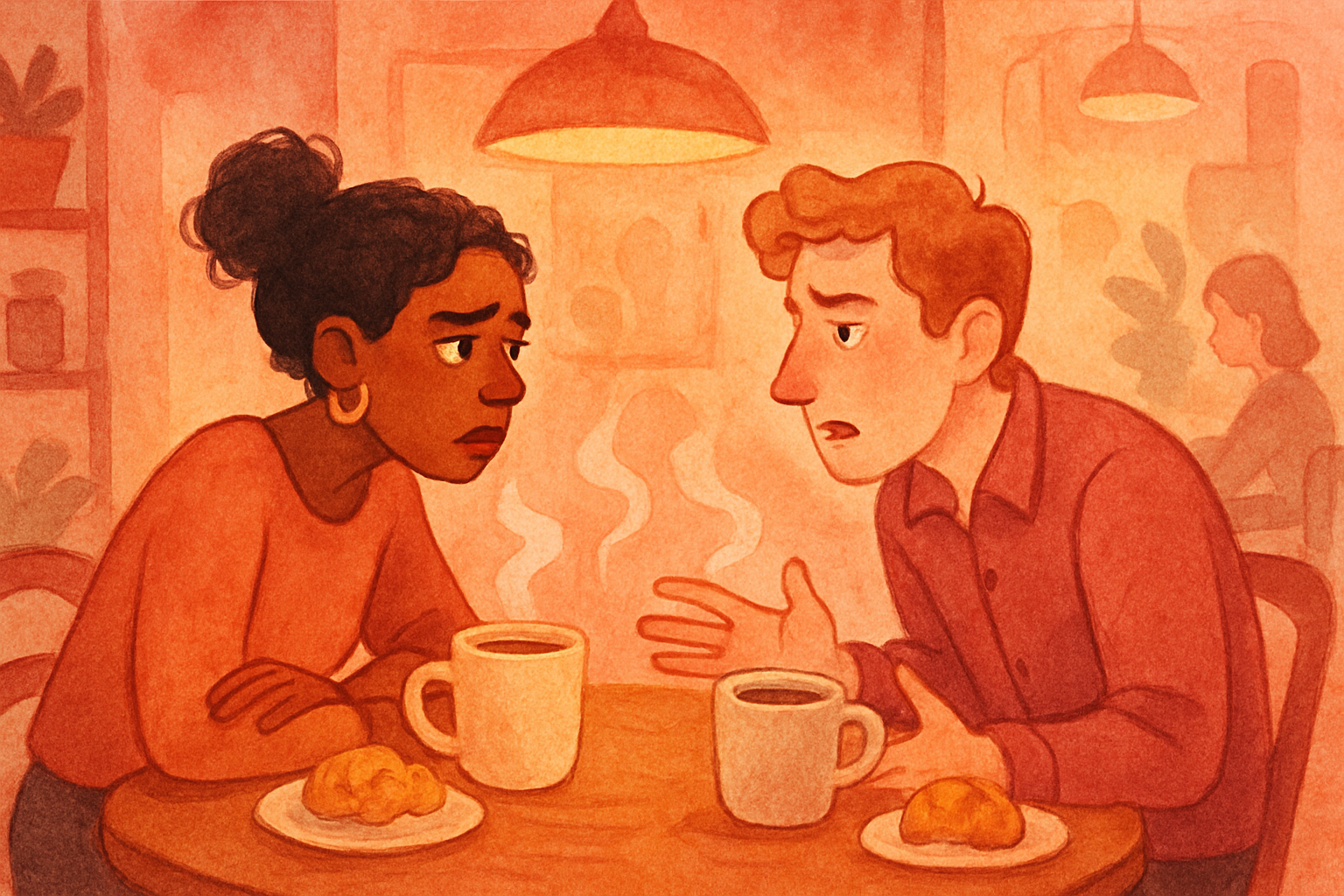
There's a moment most of us know well. You're a few months into something that feels almost right, and a small voice in the back of your head keeps whispering that something is off. But you're already emotionally invested, the good times are genuinely good, and dismantling everything feels like too much. So you file away the concern and keep going.
That voice, it turns out, deserves a lot more credit than we usually give it.
Understanding dealbreakers in a relationship — what they actually are, how to identify them early, and how to tell them apart from normal incompatibilities — is one of the most underrated relationship skills there is. And yet, most of us never really learn it. We just... accumulate experience the hard way.
Let's change that.
What Actually Qualifies as a Dealbreaker?
The word gets thrown around loosely. Someone says their dealbreaker is that a partner doesn't like dogs. Someone else says they can't be with someone who votes differently. And while both of those things might matter, lumping them together muddles the concept pretty quickly.
A genuine dealbreaker is a value, behavior, or life circumstance that is fundamentally incompatible with who you are — not just inconvenient or unfamiliar. The distinction matters because relationship research consistently shows that couples with different tastes, different hobbies, even different communication styles can thrive. But couples with misaligned core values — around things like honesty, family, money philosophy, or how conflict gets handled — tend to struggle in ways that even love and effort can't always fix.
Psychologist John Gottman's decades of research identified what he called the "Four Horsemen" of relationship breakdown: contempt, criticism, defensiveness, and stonewalling. What's notable is that none of these are topics — they're behaviors. That's a clue. Real dealbreakers tend to be about how someone moves through the world, not just what they happen to believe on a given Tuesday.
So before you write off someone for liking a genre of music you hate, ask yourself: is this actually about character, values, or life direction? Or is it about preference?
Why We Miss Dealbreakers Until It's Too Late
Here's the uncomfortable truth: we often see dealbreakers early. We just explain them away.
There's a well-documented psychological phenomenon called motivated reasoning — our brain's tendency to work backwards from a conclusion we already want to reach. In early romance, when attraction is high and everything feels exciting, we're highly motivated to see the best in someone. So we interpret red flags as quirks. We assume things will change. We tell ourselves we're being too harsh.
Dating app fatigue doesn't help. When you've been through the exhausting cycle of swiping, ghosting, and situationship ambiguity, finding someone who actually wants to show up can feel rare enough that you'll subconsciously lower your standards to hold onto it. The talking stage has a way of creating false intimacy quickly — you share a lot, you feel connected, and by the time you're actually spending real time together, the emotional investment is already there.
This is exactly why identifying your dealbreakers before you're emotionally entangled is so valuable. Not as a rigid checklist that disqualifies humans for being human — but as a kind of internal compass that helps you stay honest with yourself.
The Difference Between a Dealbreaker and a Difference
This is where a lot of people go wrong in both directions. Some people have such a long list of dealbreakers that no real human could ever pass. Others have such a short list that they end up staying in genuinely incompatible situations for years.
Relationship red flags vs differences is a genuinely useful lens here. A difference is something like: you're a morning person, they're a night owl. You love adventure travel; they prefer quiet weekends. These things require negotiation, curiosity, and sometimes compromise — but they don't predict failure on their own.
A red flag that can become a dealbreaker is something like: when you try to talk about a concern, they immediately turn it back onto you. Or they make financial decisions that reveal a fundamental disrespect for shared resources. Or they talk about wanting kids with you but never actually want to discuss what raising children would look like in practice.
The difference, at its core, is this: differences require adaptation. Dealbreakers require acceptance of something that may genuinely cost you. And some things are too costly.
A helpful exercise: ask yourself whether this issue is something that — if it never changed, not even a little — you could genuinely live with. If the honest answer is no, that's important information.
How to Actually Spot Them Early
The challenge with early dating is that everyone is, understandably, putting their best foot forward. Dealbreakers don't always announce themselves on first dates. But there are ways to move more intentionally.
Pay attention to behavior under pressure
How someone handles inconvenience, frustration, or disappointment tells you far more than how they act when everything is easy. If your server gets the order wrong on a first date, watch how your date responds. It's not about judging them for being human — it's about noticing patterns. Consistent contempt for service workers, habitual lateness without acknowledgment, or the way someone talks about their ex can all be quietly revealing.
Ask real questions, and listen for how they answer
Surface-level questions to ask your partner in early dating are comfortable but often useless for spotting compatibility issues. Try going a level deeper. Not "do you want kids?" but "what does your ideal version of family life actually look like?" Not "are you close with your family?" but "how did you learn to handle conflict growing up?"
The answers matter. But so does how they engage. Someone who gets defensive about questions that weren't accusatory, or who deflects with humor every time a conversation gets real, is showing you something about how emotional depth will work in the relationship.
Notice what's missing, not just what's present
Early-stage charm can be pretty effective at making us focus on the highs. But what isn't happening is often just as telling. Are they curious about your life, or mainly interested in talking about themselves? Do they follow through on small commitments, or do things often just sort of... not happen? Trust in a relationship is built in micro-moments, and the early ones count more than people think.
Talk about the actual big stuff
This sounds obvious, but a lot of couples in the early stages avoid heavy topics because they don't want to "ruin the vibe." The problem is, the vibe eventually ends and real life begins. Vulnerability in relationships is only possible if you create space for it. Things like values around honesty, expectations around how you spend time, financial habits, and how you each handle stress — these aren't third-date conversations necessarily, but they shouldn't be indefinitely avoided either.
Your Attachment Style Shapes What You See
One underappreciated reason we struggle to identify dealbreakers is that attachment styles in dating can cause us to either over-pathologize normal human imperfection or under-respond to genuine incompatibility.
If you have an anxious attachment style, you might interpret any sign of distance as a catastrophe — making it hard to distinguish between someone being emotionally unavailable (potentially a dealbreaker) and someone just being independent (not a dealbreaker). If you're more avoidant, you might intellectualize real compatibility concerns as just "not wanting to be suffocated."
Getting honest with yourself about your own patterns isn't about diagnosing yourself — it's about developing the self-awareness in dating that helps you see your situation more clearly. When you know your tendencies, you can ask: is this actually a dealbreaker, or am I reacting to my own stuff?
If you're working through this with a partner you're already in something with, this is exactly the kind of territory that's worth exploring together. Pairloom has prompts and games built around understanding how you and your partner naturally operate — which can surface these dynamics in a way that feels exploratory rather than confrontational. You can check out how the getting to know your partner process can actually be enjoyable rather than interrogative.
The Dealbreakers Research Actually Finds Matter
A 2023 study published in Personality and Social Psychology Bulletin identified the most commonly reported dealbreakers across single adults: dishonesty, unkindness, closed-mindedness, and an unwillingness to commit. These weren't about appearance or shared interests — they were overwhelmingly character and values-based.
What's interesting is that the study also found we're better at identifying dealbreakers in a potential partner than we are at identifying them in someone we're already dating. Emotional closeness seems to blur our perception. Which brings us back to the central point: the earlier you can have honest conversations, the better positioned you are to make clear-eyed decisions.
That's not about being cold or calculating. It's about respecting both yourself and the other person enough to be real.
So What Do You Actually Do With This?
Here's the practical takeaway: instead of walking into dating with a vague sense of "I'll know it when I see it," get specific — with yourself first.
Write down the three to five things that are genuinely non-negotiable for you. Not preferences, not ideals — actual requirements for your life to work. Then, separately, write down the things you know you can flex on. Keeping these distinct prevents both over-rigidity and under-discernment.
From there, the work is creating the conditions where real information can emerge — early enough to matter. That means:
- Having actual conversations, not just venting sessions or banter
- Paying attention to behavior, not just stated intentions
- Giving yourself permission to take someone's patterns seriously, not explain them away
- Revisiting your own blind spots honestly
If you're already in a relationship and wondering whether what you're experiencing is a dealbreaker or just a rough patch, the same principles apply — but the stakes feel higher. Healthy conflict in relationships looks like two people who can actually disagree and come out the other side still connected. If conflict in your relationship consistently ends with someone feeling shut down, dismissed, or afraid to raise things again, that pattern itself deserves attention.
Learning how to communicate better in a relationship isn't just about the techniques — it's about creating enough safety that the real conversations can actually happen. Pairloom's couples games are designed around exactly that: making it easier to get into meaningful territory together, whether you're newly dating or years in. You can explore more in our post on how to argue without fighting and build some of those tools proactively.
The goal isn't to treat dating like a vetting process or to approach your relationship like a performance review. It's to show up honestly, pay attention, and trust what you see — early enough that you have real choices about what to do with the information.
Stop Wondering. Start Playing.
Pairloom turns the conversations that matter into games you'll actually enjoy. Invite your partner and discover how you really connect — in minutes, not months.
Stop wondering. Start playing.
Pairloom turns the conversations that matter into games you'll actually enjoy. Invite your partner and discover how you really connect — in minutes, not months.