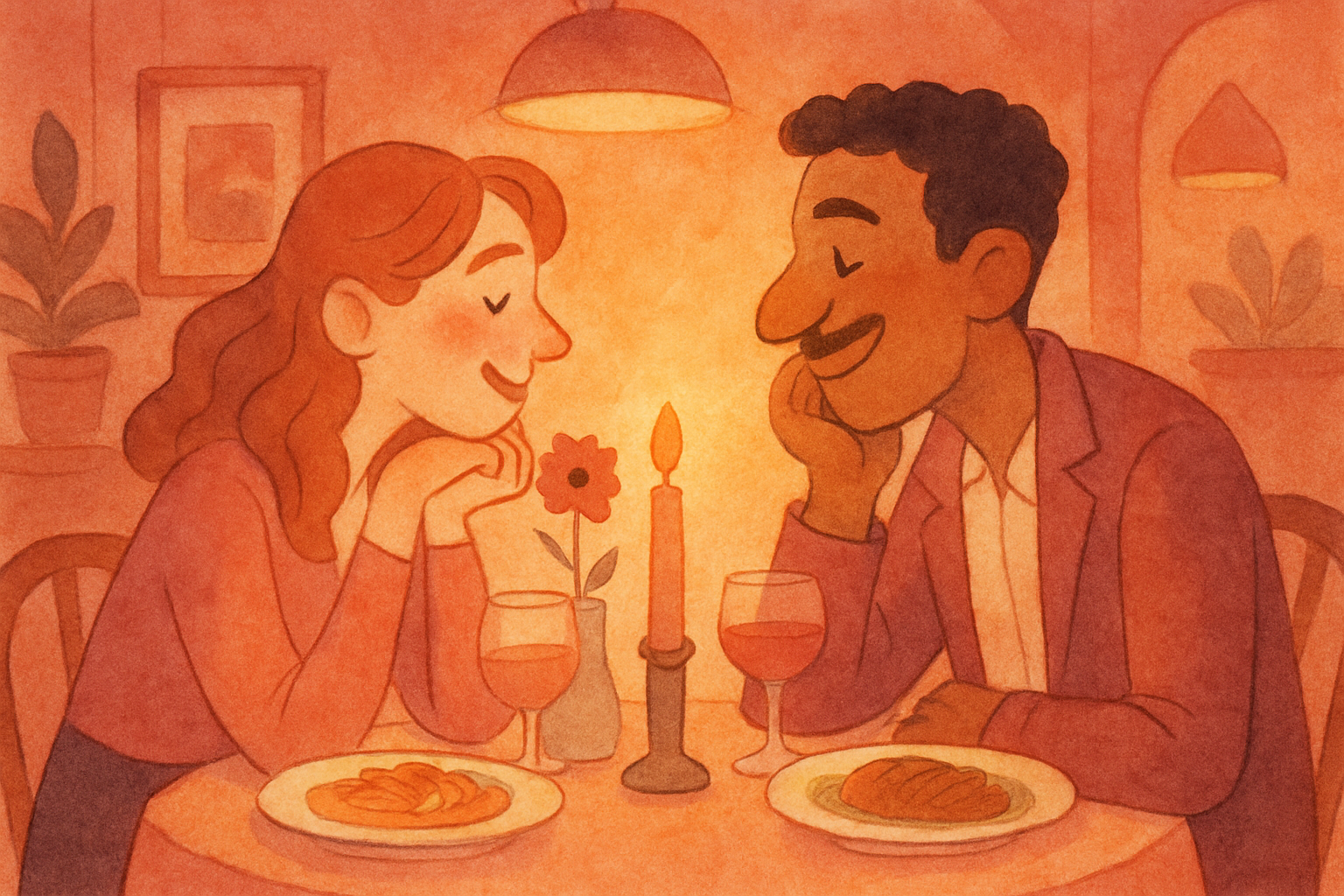
You know that feeling when you're having the perfect date night — good food, great conversation, genuine connection — and then your brain decides it's the perfect time to bring up how you feel about his spending habits? Or whether she wants kids? Or why her family makes you feel invisible?
The timing never feels right for the hard conversations. Wait too long, and resentment builds. Bring it up at the wrong moment, and you've just turned your romantic dinner into a therapy session nobody asked for.
But here's the thing: avoiding difficult conversations doesn't make them disappear. It just makes them bigger, scarier, and more likely to explode at the worst possible moment. The secret isn't finding the perfect time to talk about hard stuff — it's learning how to weave these conversations naturally into your relationship without killing the vibe.
Why Do Important Conversations Feel So Scary?
Research shows we're hardwired to avoid conflict and protect the good feelings in our relationships. When things are going well, bringing up potential problems feels like lighting a match near a gas tank. What if they get defensive? What if it ruins everything? What if we can't come back from it?
Dr. John Gottman's decades of relationship research reveals that it's not the presence of difficult topics that predicts relationship failure — it's how couples handle them. The couples who thrive aren't the ones who never disagree; they're the ones who've learned to navigate disagreement without destroying intimacy.
The problem is that most of us learned conversation skills from watching our parents (yikes) or from romantic comedies (double yikes). We think difficult conversations have to be Big Serious Talks that happen in Big Serious Settings with Big Serious Outcomes. But that approach often backfires because it puts too much pressure on a single conversation to solve everything.
What Is Graduated Disclosure and Why Does It Work?
Think about how you got comfortable sharing your deepest thoughts with your best friend. It didn't happen in one marathon conversation. You started with smaller truths, tested the waters, saw how they responded, and gradually built up to bigger revelations. That's graduated disclosure — the art of sharing increasingly personal information as trust and safety are established.
The same principle applies to difficult conversations in relationships. Instead of dropping a relationship bomb during dessert, you start with lighter versions of hard topics and build depth over time. It's like emotional strength training — you don't start with the heaviest weights.
Here's how it works in practice: Instead of "We need to talk about whether you want kids," you might start with "I was thinking about how different our childhoods were." Instead of "Your spending is out of control," you might begin with "I've been curious about how our families handled money growing up."
This approach works because it removes the pressure. Neither person feels ambushed, and you're both exploring the topic together rather than one person confronting the other. It also gives you multiple chances to gauge your partner's openness and adjust your approach accordingly.
Why Games Change Everything: The Research Behind Playful Honesty
Here's where it gets really interesting. Social psychology research shows that people are dramatically more honest and less defensive when difficult topics arise through structured play rather than direct questioning. It's called the "game frame" effect, and it's revolutionizing how therapists, researchers, and smart couples approach sensitive subjects.
When we're playing a game, our psychological defenses naturally lower. We're not being interrogated or put on the spot — we're just following rules and having fun. That mental shift creates space for honesty that wouldn't exist in a serious sit-down conversation.
Dr. Brian Sutton-Smith's research on play and human behavior found that games create what he calls "safe containers" for exploring potentially threatening topics. The game structure provides just enough distance from real-world consequences to allow people to experiment with vulnerability.
This is why "Never Have I Ever" reveals more than most first-date conversations, why truth-or-dare leads to unexpected confessions, and why couples often have their most meaningful conversations during long car rides (another form of structured, low-pressure interaction).
How to Start Conversations About Money Without Starting Fights
Money conversations are notoriously difficult because they trigger our deepest fears about security, control, and worthiness. But they're also unavoidable if you want a functional adult relationship.
The graduated disclosure approach to money conversations might look like this:
Level 1: Values exploration "What's the best financial advice someone ever gave you?" or "What's something your family taught you about money that you've had to unlearn?"
Level 2: Childhood patterns "How did your parents handle disagreements about spending?" or "What was considered a big purchase in your house growing up?"
Level 3: Current reality "I've been thinking about our financial goals — what does financial security look like to you?" or "How do you like to make big money decisions?"
Level 4: Future planning "How do you think we should handle money decisions together?" or "What are your thoughts on combining finances?"
Notice how each level builds trust and understanding before moving to more vulnerable territory. You're not ambushing your partner with "Here's everything wrong with how you spend money." You're exploring together.
Navigating Past Relationships and Lessons Learned
Talking about exes is a minefield, but understanding each other's relationship history is crucial for building something healthy together. The key is focusing on lessons and growth rather than details and comparisons.
Start with growth stories: "What's something you learned about yourself from a past relationship?" or "How have your priorities in relationships changed over time?"
Move to pattern recognition: "What's a relationship mistake you hope you never make again?" or "What green flags do you look for now that you might have missed before?"
Build to boundaries: "What are some things that are really important to you in how we treat each other?" or "What does respect look like to you in a relationship?"
This approach helps you understand your partner's history without feeling like you're competing with ghosts. You're learning about who they are now based on where they've been.
Family Expectations: The Invisible Third Wheel
Family dynamics affect every relationship, but we rarely talk about them directly. These conversations are especially tricky because they involve people you both love and feel loyalty toward.
Begin with curiosity: "What traditions from your family do you definitely want to continue?" or "What would your ideal holiday season look like?"
Explore differences gently: "I've noticed our families handle conflict really differently — what do you think about that?" or "How do you think our families would get along?"
Address expectations directly: "Are there family expectations about our relationship that feel stressful to you?" or "How do you want to handle it when our families have different opinions about things?"
Build your team: "What kind of family do we want to create together?" or "How can we support each other when family stuff gets complicated?"
Future Dreams and Deal Breakers
These might be the scariest conversations of all because they determine whether you're actually compatible long-term. But they're also the most important.
Start with dreams: "What's something you're excited about in the next five years?" or "What would make you feel like your life was really fulfilling?"
Explore values: "What matters most to you in how you spend your time?" or "What kind of lifestyle makes you feel most like yourself?"
Get specific gradually: "How do you imagine work-life balance in a serious relationship?" or "What role do you see travel playing in your future?"
Address the big stuff: "What are your thoughts on having kids someday?" or "How important is it to live near family?" or "What would you never be willing to compromise on?"
The Art of Timing: When to Go Deep
Even with graduated disclosure, timing matters. The best conversations happen when:
- You're both relaxed and not dealing with immediate stress
- You have privacy and won't be interrupted
- Neither of you is hangry, exhausted, or distracted
- You've recently had positive interactions that build goodwill
- You're doing something mildly engaging (walking, cooking, driving) that keeps your hands busy
Avoid these conversation killers:
- Right before or after sex
- When one of you is dealing with work stress
- During or right after arguments about other things
- In public places where you can't speak freely
- When you're rushing to get somewhere
Making Hard Conversations Feel Like Connection
The goal isn't to eliminate difficulty from difficult conversations — it's to approach them from a place of curiosity rather than judgment, and connection rather than confrontation.
Some mindset shifts that help:
From "You do this wrong" to "I'm curious about your perspective" From "We need to solve this now" to "Let's understand this together" From "This is a test" to "This is exploration"
Remember that you're on the same team. These conversations aren't about winning or being right — they're about understanding each other well enough to build something beautiful together.
The couples who master this approach often find that the hard conversations become some of their most intimate moments. There's something incredibly bonding about being seen and accepted in your complexity, fears and all.
Stop wondering. Start playing.
Pairloom turns the conversations that matter into games you'll actually enjoy. Invite your partner and discover how you really connect — in minutes, not months.
Stop wondering. Start playing.
Pairloom turns the conversations that matter into games you'll actually enjoy. Invite your partner and discover how you really connect — in minutes, not months.