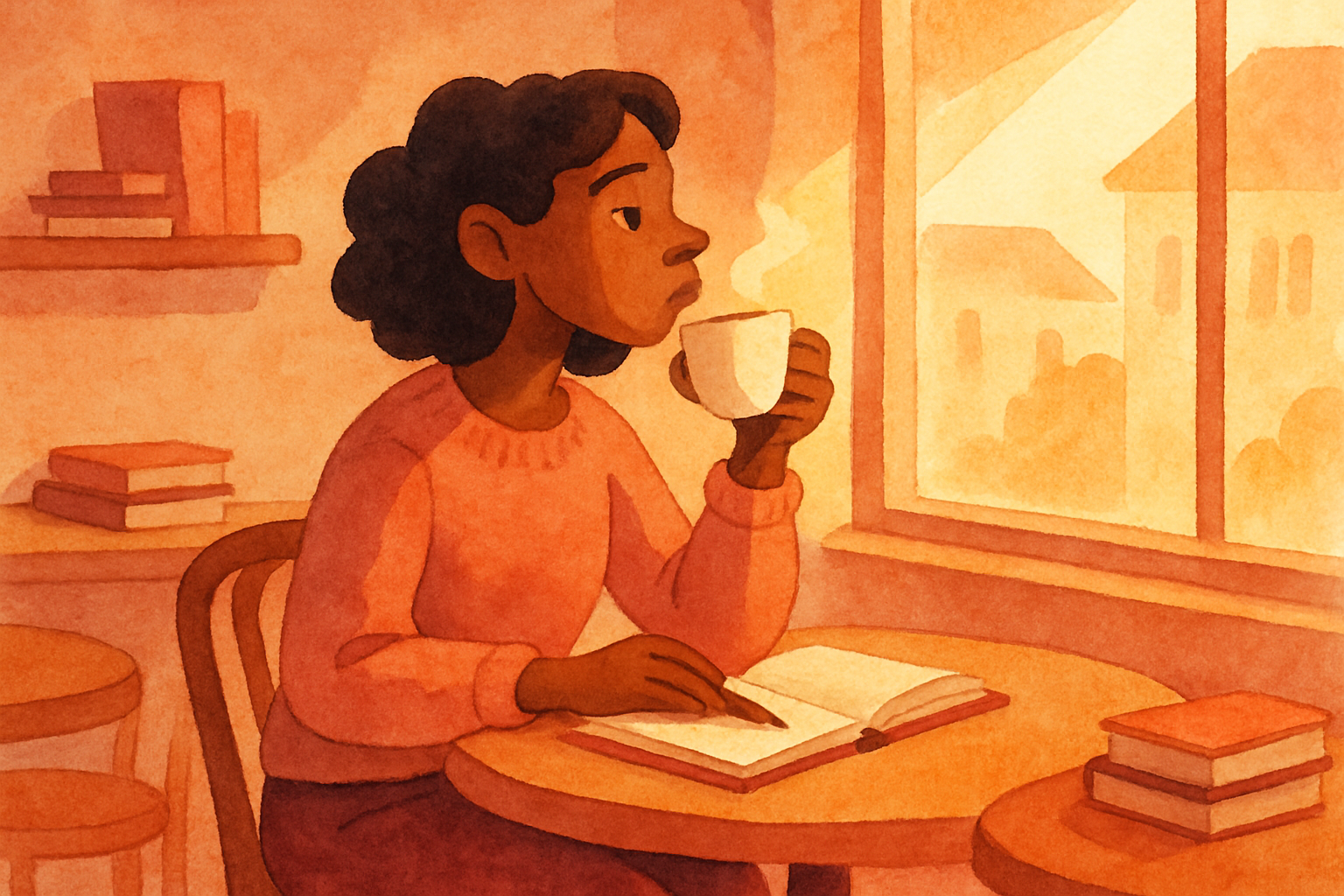
There's a version of wanting a relationship that comes from a genuinely open, curious place — a readiness to share your life, grow alongside someone, and build something real. And then there's a version that's mostly just the ache of a quiet apartment, the third time you've seen a couple holding hands this week, or the gnawing fear that everyone else is moving forward and you're getting left behind.
Both of those feelings are human. But they lead you to very different places, and confusing one for the other is one of the most common — and quietly painful — mistakes people make in dating. This is where self-awareness in dating becomes less of a therapy buzzword and more of a genuinely useful survival skill.
So how do you actually tell the difference?
Why This Question Is Harder Than It Sounds
Most of us would like to think we know our own motivations. Ask anyone on a dating app why they're there, and they'll say something like "I'm looking for something real." And they probably mean it — in that moment. But wanting connection and being ready for connection are two separate things that tend to look identical from the inside.
The honest truth is that loneliness is a powerful driver of behavior, and it's not always honest with us about what it's doing. Research in social psychology has consistently shown that people in states of loneliness tend to overestimate how connected they are to strangers, project compatibility where little exists, and make quicker, less-considered decisions about who they want to be with. In other words, loneliness doesn't just make you want a relationship — it can make any relationship look like the right one.
That's not a character flaw. It's neurobiology. But it does mean that a little intentional self-examination can save you (and the people you date) a lot of unnecessary turbulence.
What Does "Ready for a Relationship" Actually Mean?
Let's set aside the Hollywood version of readiness — the lightning bolt, the perfect timing, the fully healed person with zero baggage who simply opens their heart and lets love flood in. That person doesn't exist, and waiting for that version of yourself is its own kind of avoidance.
Real readiness is quieter and a little messier. It looks more like:
- Knowing what you actually value in a partner (not just "tall, funny, kind" but specifically why those things matter to you)
- Having enough self-knowledge to recognize your patterns — the things you do when you're scared, the way you pull back or push forward when intimacy gets real
- Being able to sit with discomfort in a relationship without immediately fleeing or escalating
- Wanting to be with someone specific and real, rather than wanting to fill a general Partner-Shaped Hole in your life
- Genuinely enjoying your own company at least some of the time
None of this requires you to be perfectly at peace with your past, free from anxiety, or fully certain about the future. It just requires a baseline of self-awareness in dating — enough to recognize yourself in the process.
How to Tell If Loneliness Is Driving the Car
Here are some honest signals worth sitting with. These aren't judgments — they're just patterns worth noticing.
You date in waves tied to social triggers. You feel fine being single until someone announces an engagement, your friends all get coupled up, or you go home for the holidays and field the same questions at dinner. Suddenly you're downloading apps with real urgency. That urgency is worth examining. Is it about a genuine desire for partnership, or is it about social comparison?
You skip the getting-to-know-you phase. When loneliness is driving, people tend to rush toward the feeling of being in a relationship rather than toward an actual person. You might find yourself going very deep very fast — the talking stage compressing into days rather than weeks, emotional intimacy escalating quickly, or planning a future before you've really seen who someone is when they're stressed, tired, or in disagreement with you.
Your type keeps shifting. One week you're swiping on outdoorsy adventurers, the next you want a homebody artist. It's not that preferences can't evolve — of course they can. But if your "type" tends to be whoever seems most available and warm toward you right now, that's a sign that the need for connection is outrunning any actual compatibility assessment.
Rejection hits harder than it probably should. Being rejected by someone you went on two dates with genuinely derailing your week? That's not a sign that they were "the one." It's often a sign that you were already investing them with the weight of your loneliness, and the loss of them was really the loss of the hope they represented.
You're more excited about the relationship status than the actual person. "Being someone's girlfriend/boyfriend" sounds better to you than the specific reality of being with this specific individual — their quirks, their schedule, the life they actually lead.
Signs You're Genuinely Ready (Even If It's Messy)
Ready doesn't mean comfortable. Ready often means nervous in a different way — curious rather than desperate, open rather than grasping. Here's what that tends to feel like:
You can articulate your dealbreakers without being defensive about them. You know what you need and you're not ashamed of it — whether that's someone who wants kids, who shares your spiritual values, or who can handle a partner with a demanding career. Understanding your dealbreakers in a relationship is a sign you're thinking about actual partnership rather than just proximity.
You're interested in the other person's inner world. You want to know how they think, what shaped them, what they're afraid of and what they dream about. You ask questions to ask your partner not because you're checking boxes, but because you're genuinely curious.
You can tolerate ambiguity. The early stages of dating involve a lot of not-knowing. Can you sit with that without immediately forcing a label or pushing for certainty? Tolerance for ambiguity is one of the quieter markers of emotional readiness.
You've noticed your own patterns. You can say something like: "I tend to get distant when I feel criticized" or "I usually pull away right when things start going well." This isn't the same as having fixed those patterns. It just means you can see yourself, which is the starting point for everything else. Understanding your attachment styles in dating — whether you tend toward anxious, avoidant, or secure patterns — can be enormously clarifying here.
You have a life you're not trying to escape. The relationships that tend to work are the ones where two people bring their lives together, rather than one person fleeing their life and landing in someone else's. If you can look at your friendships, your interests, your work, and your relationship with yourself and see something worth protecting — rather than something you desperately want to leave — that's a genuinely good sign.
The Role of Self-Awareness in Dating (And Why It's Not the Same as Overthinking)
There's a version of this conversation that can tip into paralysis — the idea that you need to be perfectly self-actualized before you're allowed to date, which is just another flavor of avoidance dressed up in self-help language.
Self-awareness in dating isn't about achieving some impossible inner clarity before you let anyone close. It's about staying curious about yourself while you're in the process. It's noticing, mid-date, that you're performing rather than connecting. It's recognizing, after a third argument about something small, that there might be something larger underneath it. It's being willing to be honest with yourself about whether you're excited about this person or just relieved that someone chose you.
The goal isn't to stop feeling lonely or scared or eager. The goal is to not let those feelings make your decisions for you without your knowledge.
One of the most practical ways to build this skill? Conversation. Not the analytical, navel-gazing kind — just genuine, exploratory dialogue with another person that helps you discover what you actually think and feel. That's something tools like Pairloom are quietly good at: creating structured prompts and games that invite you and a potential partner (or a current one) to dig into real territory without it feeling like an interview. Sometimes you don't know what you think about vulnerability or conflict or your vision of a shared life until someone asks, and you hear yourself answer.
A Few Honest Questions Worth Sitting With
Not a quiz. Not a compatibility test. Just questions worth taking seriously:
- When you imagine being in a relationship, what specifically do you imagine? Is it a feeling, a scene, a person, or a status?
- What are you not dealing with right now that a relationship might let you not deal with?
- How do you feel about yourself when no one is interested in you? Is that tolerable?
- What would you need to be true about yourself to feel like you were bringing something real to another person?
- When you've ended things before — or when things ended — what was your part in it?
These questions aren't meant to be answered perfectly. They're meant to be answered honestly, which is usually harder.
On the Situationship Trap
One specific pattern worth naming: the situationship. It's the undefined, emotionally involved, somewhere-between-friends-and-a-relationship dynamic that's become almost a rite of passage in modern dating. And while they're not inherently bad, situationships often thrive specifically in the gap between "ready for a real relationship" and "terrified to be alone."
They offer the warmth and closeness of connection without the commitment or clarity that comes with actually choosing someone. If you find yourself in a recurring situationship pattern — always just below the surface of something real — it's worth asking whether the ambiguity is working for you because it keeps intimacy close while keeping vulnerability safely at arm's length.
That's not a flaw. It's information about where you are. And where you are is a perfectly valid starting point.
The Bottom Line
You don't have to be fearless or fully healed or completely certain to be ready for a relationship. But you do have to be honest — with yourself, first, and eventually with another person. The difference between wanting a relationship and wanting to not be alone isn't always obvious, and it doesn't always stay fixed. Sometimes you're one, sometimes you're the other, and sometimes you're both in the same week.
What matters is that you keep asking. That you stay curious about your own motivations rather than just running on autopilot. That you notice when loneliness is making decisions on your behalf, and that you choose — as often as you can — to make them yourself instead.
That's what self-awareness in dating actually looks like. Not a perfect diagnosis. Just an honest look.
Stop wondering. Start playing.
Pairloom turns the conversations that matter into games you'll actually enjoy. Invite your partner and discover how you really connect — in minutes, not months.
Stop wondering. Start playing.
Pairloom turns the conversations that matter into games you'll actually enjoy. Invite your partner and discover how you really connect — in minutes, not months.