Picture this: You're having a perfectly reasonable conversation with your partner about weekend plans when suddenly, their tone shifts slightly. Your chest tightens. Your mind races. Are they mad at me? Did I say something wrong? Within seconds, you're either shutting down completely or scrambling to fix whatever invisible problem you've created.
Sound familiar? Welcome to the fascinating (and sometimes frustrating) world of family-of-origin patterns playing out in your adult relationships.
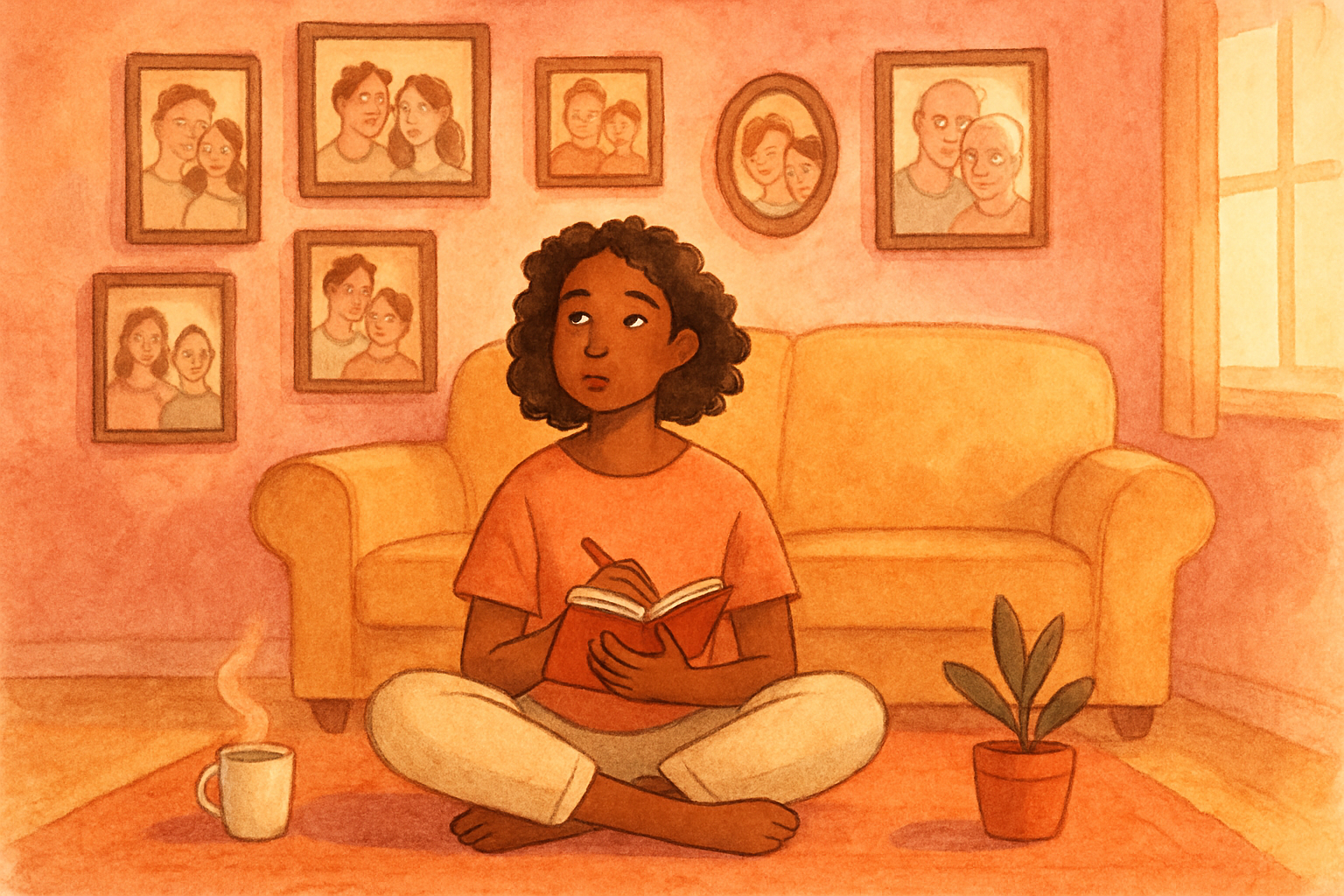
The truth is, long before you swiped right or said "I do," your family was already writing the blueprint for how you'd navigate love, conflict, and intimacy. Those early lessons—some helpful, others not so much—become the invisible operating system running in the background of every romantic relationship you'll ever have.
But here's the good news: understanding these patterns isn't just academic navel-gazing. It's the first step toward what psychologists call "earned security"—the ability to consciously choose how you show up in relationships, regardless of what you learned growing up.
Why does childhood have such a lasting impact on adult relationships?
Your family didn't just teach you how to ride a bike or tie your shoes—they taught you how relationships work. From birth to roughly age seven, your brain is in what neuroscientists call a "hypnotic state," absorbing everything around you as fundamental truth about how the world operates.
During these crucial years, you weren't just learning that mom gets cranky when she's tired or that dad doesn't like to talk about feelings. You were forming what attachment researchers call "internal working models"—mental templates that answer big questions like:
- Am I worthy of love and care?
- Can I count on others to be there for me?
- Is it safe to express my needs?
- What happens when people disagree?
These templates become so automatic that by adulthood, they feel like personality traits rather than learned behaviors. The person who always apologizes first learned somewhere that keeping peace equals safety. The partner who struggles to ask for help absorbed the message that neediness equals rejection.
Research from the University of Minnesota's landmark 30-year study found that the quality of our earliest relationships predicts relationship satisfaction well into our thirties and forties. But—and this is crucial—it doesn't doom us to repeat the same patterns forever.
What are the most common inherited relationship patterns?
While every family is unique, certain patterns show up so frequently that researchers have identified distinct categories. Recognizing your pattern isn't about blame—it's about awareness that leads to choice.
The Conflict Avoider: "Keep the peace at all costs"
If your family treated conflict like a natural disaster to be avoided at all costs, you likely learned that disagreement equals danger. Maybe your parents never fought (at least not in front of you), or perhaps one parent consistently gave in to keep things calm.
The adult pattern: You'd rather say "fine" than risk an argument. You agree to things you don't actually want, then build resentment. When your partner brings up an issue, your first instinct is to smooth it over quickly rather than dig into what's really going on.
The hidden cost: Avoiding conflict means avoiding intimacy. Real connection requires the ability to disagree, repair, and come out stronger on the other side.
The People-Pleaser: "Love is earned through performance"
Growing up in a family where affection felt conditional—based on grades, behavior, or achievements—teaches a powerful but exhausting lesson: love must be earned through perfect performance.
The adult pattern: You're the partner who always says yes, even when you're overwhelmed. You anticipate needs before they're expressed and feel anxious when you can't make your partner happy. Your self-worth fluctuates based on how well you think you're "doing" in the relationship.
The hidden cost: When love feels earned rather than given freely, you never truly relax into being yourself. Instead, you're constantly performing the version of yourself you think will be most lovable.
The Emotional Island: "Independence equals safety"
Some families, whether through trauma, cultural norms, or simple emotional unavailability, teach that depending on others is risky business. If expressing needs was met with dismissal or if caregivers were physically present but emotionally absent, you learned to be your own emotional support system.
The adult pattern: You're comfortable giving support but struggle to receive it. You pride yourself on not being "needy," but your partner sometimes feels shut out of your inner world. Intimacy feels simultaneously desired and threatening.
The hidden cost: While self-reliance is valuable, relationships require interdependence. Creating an emotional island might feel safe, but it also prevents the deep connection you're probably craving.
The Anxious Attacher: "Will you be there when I need you?"
If your early caregivers were inconsistent—sometimes responsive and loving, other times distracted or overwhelmed—you learned that love is unpredictable. This creates what psychologists call "anxious attachment": a deep desire for closeness coupled with fear that it won't last.
The adult pattern: You might find yourself seeking constant reassurance, reading into your partner's moods, or feeling panicked when they need space. You want to be close but worry that wanting too much will push them away.
The hidden cost: The very behaviors meant to secure love—checking in frequently, seeking reassurance, monitoring your partner's emotional temperature—can create the distance you're trying to prevent.
How can you identify your own inherited patterns?
Self-awareness is tricky because these patterns feel so normal to us. It's like trying to see your own eyeballs—the very thing you use to see everything else. But there are reliable ways to spot your inherited relationship programming.
Notice what triggers you disproportionately
Pay attention to moments when your emotional response feels bigger than the situation warrants. If your partner being ten minutes late sends you into a spiral of abandonment fears, or if a minor criticism feels like a complete rejection, you're likely touching an old wound from childhood.
These outsized reactions aren't character flaws—they're information. Your nervous system is responding to current events through the lens of old learning. A partner who's running late isn't just late; they're activating your childhood fear of being forgotten or unimportant.
Examine what feels "normal" in relationships
We're often blind to our patterns because they feel like the natural order of things. Ask yourself:
- What did conflict look like in my family? How do I handle disagreement now?
- How was affection expressed (or not expressed) growing up? What feels most natural to me?
- What messages did I receive about needing help or support from others?
- How did my family handle big emotions like anger, sadness, or fear?
Sometimes what feels "normal" to you might surprise your partner—and vice versa. One person's healthy boundary might feel like rejection to someone who grew up with enmeshed family dynamics.
Notice what you're afraid to ask for
The things you want most but feel least comfortable requesting often point directly to your core wounds. If you desperately want reassurance but feel "too needy" asking for it, you probably learned early that emotional needs were burdensome. If you crave space but feel guilty taking it, you might have absorbed the message that independence hurts others.
Is it possible to change these deeply ingrained patterns?
The beautiful truth about human psychology is that we're not prisoners of our past. While our early experiences create powerful templates, our brains remain plastic throughout our lives. What researchers call "earned security" is absolutely possible—even for those who experienced significant childhood trauma or dysfunction.
Understanding neuroplasticity and relationships
Every time you choose to respond differently than your automatic pattern, you're literally rewiring your brain. Neuroscientist Rick Hanson explains it simply: "Neurons that fire together, wire together." This means that new, healthier relationship behaviors become easier with practice.
The key is conscious awareness. When you can catch your pattern in action—Oh, I'm doing that thing where I apologize before I even know what's wrong—you create a moment of choice. In that pause between trigger and reaction, transformation becomes possible.
The role of safe relationships in healing
While individual insight is valuable, research consistently shows that healing happens in relationship. A partner who responds with curiosity rather than defensiveness when you share your triggers creates space for new experiences to overwrite old programming.
This doesn't mean your partner becomes your therapist, but rather that you both commit to approaching each other's patterns with compassion rather than criticism. When the conflict avoider finally expresses disagreement and isn't met with anger or abandonment, their nervous system starts learning that conflict can be safe.
How does recognizing these patterns improve your relationships?
Once you understand your inherited patterns, everything changes—not overnight, but gradually and powerfully. Instead of being mystified by your own reactions, you develop what psychologists call "metacognition"—awareness of your own thinking and feeling processes.
Moving from reaction to response
When you understand why your partner's need for alone time triggers your abandonment fears (because dad used to withdraw when he was upset), you can choose how to respond rather than react automatically. You might still feel that initial pang of anxiety, but you don't have to let it drive your behavior.
This creates space for curiosity: I notice I'm feeling scared that you don't want to be with me. Can you help me understand what alone time means for you? Instead of accusations or withdrawal, you're creating opportunities for deeper understanding.
Building conscious intimacy
Relationships become significantly more intimate when both partners understand their patterns and triggers. Instead of dancing around each other's sensitivities or trying to avoid setting each other off, you can address patterns directly and compassionately.
This might sound like: I can feel myself starting to shut down right now. It's not about you—this is my old pattern when things feel intense. Can you give me a few minutes to breathe, and then let's come back to this?
Creating new experiences together
Understanding your patterns allows you to consciously create new experiences that challenge old programming. The people-pleaser might practice saying no to small requests and discover that their partner doesn't actually withdraw love. The conflict avoider might bring up a minor disagreement and find that talking through differences actually increases closeness.
These corrective experiences don't happen by accident—they require intentional effort from both partners to create safety for growth and change.
How can games and activities help reveal relationship patterns?
Sometimes the most profound insights come not from deep analysis but from simple play. Games have a unique ability to reveal our automatic patterns because they create low-stakes scenarios that mirror real relationship dynamics.
When you're playing a game that requires communication, negotiation, or vulnerability, your inherited patterns show up naturally. The person who learned to prioritize others' needs might consistently defer to their partner's strategy. The conflict avoider might struggle with competitive elements. The anxious attacher might seek frequent reassurance about how they're doing.
But here's what makes games powerful: they create a safe container for experimentation. You can practice new behaviors—being more assertive, tolerating disagreement, asking for what you need—in a context that feels playful rather than threatening.
Through engaging with different scenarios and questions, couples often discover patterns they couldn't see directly. Maybe you realize you both avoid talking about money because it was a source of tension in your families. Or you notice that one of you shuts down when discussing future plans because commitment felt suffocating growing up.
Games also reveal strengths and positive patterns you might take for granted. Perhaps you discover that despite your family history of poor communication, you've actually developed excellent skills for working through disagreement together.
Stop wondering. Start playing.
Pairloom turns the conversations that matter into games you'll actually enjoy. Invite your partner and discover how you really connect — in minutes, not months.
Stop wondering. Start playing.
Pairloom turns the conversations that matter into games you'll actually enjoy. Invite your partner and discover how you really connect — in minutes, not months.