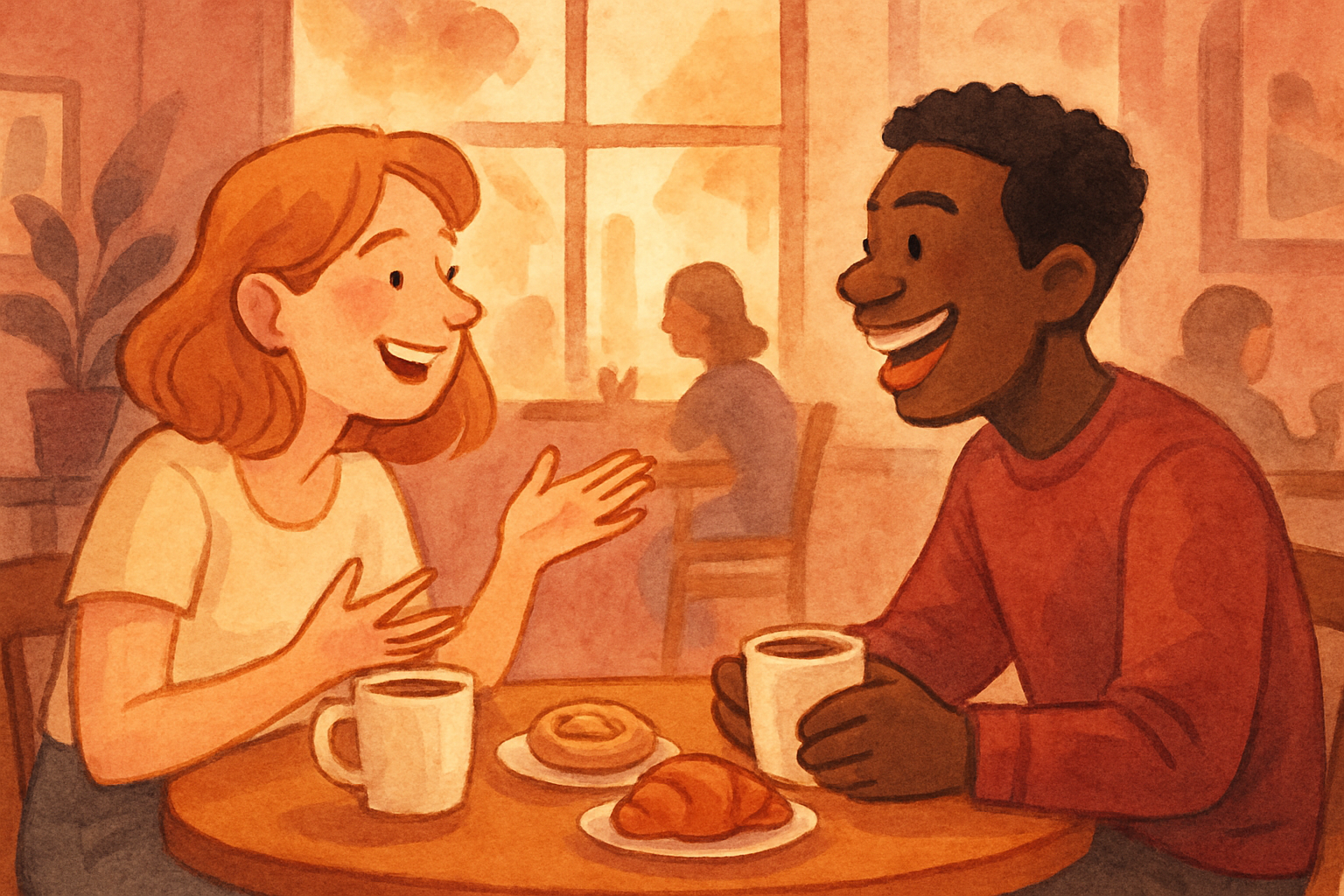
There's a moment most of us recognize — usually somewhere around the third or fourth month of dating someone — where you think you've got them pretty well figured out. You know their coffee order, their childhood nickname, their opinion on pineapple pizza. You've met a friend or two. You've survived your first disagreement. You feel... comfortable.
And then they say something that stops you completely. A fear you didn't know they had. A dream they've never told anyone. A dealbreaker they've been quietly holding. And you realize: I don't know this person as well as I thought.
Here's the thing — that realization isn't a red flag. It's actually the beginning of something much more interesting.
Getting to know your partner is not a phase that ends. It's an ongoing practice, and the couples who thrive long-term are the ones who treat it that way.
## Why We Rush the "Getting to Know You" Phase
Modern dating culture has a bit of a speed problem. Between the talking stage, situationship dynamics, and the general exhaustion of dating app fatigue, there's enormous pressure to figure out quickly whether someone is "the one" before investing too much time or emotional energy.
The irony? Rushing this process often means missing the most important information.
Relationship researchers have long noted that people tend to present curated versions of themselves early in dating — not necessarily dishonestly, but naturally. We lead with our best qualities, our most coherent stories, our smoothest edges. It takes time, shared experiences, and a genuine sense of psychological safety before people start showing up fully.
One of the foundational frameworks for understanding this is attachment theory. Your attachment style in dating — whether you tend toward secure, anxious, or avoidant patterns — shapes how quickly you open up, how you handle closeness, and what triggers discomfort in a budding relationship. Someone with an avoidant attachment style may seem emotionally distant for months before they soften. Someone with an anxious attachment style might feel like they're being vulnerable early on, but actually be performing vulnerability rather than experiencing it.
None of this is manipulation. It's just human. But it does mean that the first few months of a relationship are often not when you're seeing the full picture.
## So How Long Does It Actually Take?
Researchers and couples therapists often cite anywhere from one to two years before partners feel they truly know each other's core patterns — not just preferences, but values, conflict styles, and emotional rhythms.
This doesn't mean you should suspend judgment for two years before investing. It means you should stay curious, stay observant, and resist the urge to "file" someone under a fixed category too early.
Signs you are compatible with someone often reveal themselves slowly, through repeated small moments: how they handle a stressful week, how they treat people who can't do anything for them, whether their actions and words tend to align over time. A compatibility test for couples can give you useful vocabulary and a starting framework — but it's the accumulation of real shared experience that confirms or complicates those early impressions.
The getting-to-know-you phase also has distinct layers. Most people move through them roughly in this order:
Surface layer: Hobbies, routines, lifestyle, humor, aesthetics Values layer: What they prioritize, what they believe, what they need to feel respected Wound layer: Their fears, their triggers, the places where old pain still shows up Integration layer: How all of the above operates under stress, not just on good days
A lot of couples skip straight from the surface layer to assuming they've reached the integration layer. They confuse familiarity with depth. The getting-to-know-you phase is actually about moving through all four layers — and that takes longer than we're often told.
## What You Should Actually Be Paying Attention To
Rather than running through a checklist of facts about someone, the most useful thing you can do in the early stages of a relationship is shift your focus from information gathering to pattern noticing.
Here's what that looks like in practice:
How do they handle conflict? You don't need a dramatic blowout to learn this. Watch how they respond when a small thing goes wrong — a restaurant gets your order wrong, plans fall through, you say something they disagree with. Healthy conflict in relationships is less about avoiding disagreement and more about how both people navigate it. Someone who goes completely silent for days over minor friction is showing you a pattern, even if they're wonderful the rest of the time.
How do they talk about past relationships? This is one of the most revealing windows into someone's self-awareness in dating. If every ex is a villain and every breakup was entirely the other person's fault, that's worth noting. Not because it's an automatic dealbreaker, but because it suggests they may not have done the reflection work that leads to genuine growth.
Do they ask you questions? Curiosity about you is one of the clearest early signs of a person who values connection over performance. People who are genuinely interested in you will ask follow-up questions, remember what you've said, and return to it later.
Do their stories stay consistent? Not in a lie-detector sense, but in a character sense. Do they present themselves one way to you and another way to their friends? Does their self-description match the behavior you observe? Consistency over time — especially across different contexts — is one of the most reliable indicators of someone's actual character.
## The Questions That Actually Move Things Forward
One of the most practical tools you have in the getting-to-know-your-partner process is something almost embarrassingly simple: asking better questions.
Most early dating conversation orbits around the same familiar territory — careers, family background, travel, favorite shows. These aren't bad topics, but they rarely get to anything that matters for long-term compatibility.
The questions to ask your partner that actually reveal depth tend to be ones that invite reflection rather than recitation. Instead of "where did you grow up?" try "what's something about where you grew up that still influences how you live now?" Instead of "do you want kids?" try "what does family actually mean to you, and how do you think about building one?"
These aren't interview questions — the goal isn't to extract data. The goal is to create a conversation where both people are genuinely thinking rather than performing. That's when you start to see who someone really is.
Vulnerability in relationships grows in both directions when questions create real space for reflection. When one person opens up honestly, it usually invites the other to do the same. This is part of why intentional conversation — rather than just spending lots of time together — is so effective at deepening connection.
If you're not sure where to start, Pairloom's question-based games are designed exactly for this: structured conversations that feel playful rather than therapeutic, pulling out the kinds of answers that three months of dinner dates might not surface on their own.
## How to Communicate Better in a Relationship During This Phase
The getting-to-know-you phase is also a critical window for establishing communication patterns. The habits you build early tend to calcify — both the good ones and the problematic ones.
One of the most important skills to practice is what relationship researchers call "bids for connection" — the small, often mundane moments where one person reaches out for emotional engagement. A comment about something they saw, a joke, a question, a touch. How the other person responds to these bids matters enormously. Turning toward them (engaging), turning away (ignoring), or turning against them (dismissing) each creates a pattern that accumulates over time.
Learning how to communicate better in a relationship isn't just about the big conversations. It's about developing the reflex to stay present and engaged in the small ones.
This is also the phase where love languages become relevant — not as a personality quiz to complete and forget, but as a practical framework for understanding how you and your partner each give and receive care. If your primary love language is words of affirmation and theirs is acts of service, you'll likely feel chronically under-appreciated unless you both understand the translation gap. That's not incompatibility — it's a vocabulary mismatch that can be solved.
For a deeper look at how love languages interact with attachment styles in real relationships, check out our guide to love languages beyond the basics.
## Relationship Red Flags vs. Differences: Knowing the Difference
A huge source of confusion in the early stages of dating is distinguishing between genuine dealbreakers in a relationship and simply the friction of two different people learning to coexist.
Not everything uncomfortable is a red flag. Some of the most meaningful relationships require navigating genuine differences in personality, communication style, background, or needs. The question isn't whether differences exist (they always do) — it's whether both people are capable of curiosity about those differences rather than just frustration.
True relationship red flags tend to involve patterns: consistent disrespect, dishonesty, the inability to take responsibility, contempt for your emotions, or a fundamental mismatch in core values (not just preferences). The person who's occasionally clumsy with their words but genuinely tries to repair after conflict is different from the person who is routinely dismissive and never acknowledges impact.
The getting-to-know-you phase is where you gather enough data to tell the difference. One incident rarely tells you much. A pattern tells you a great deal.
## Long Distance, Situationships, and Other Complications
The getting-to-know-you process gets more complicated — and more important — in some modern relationship configurations.
For those navigating long distance relationship dynamics, the getting-to-know-you phase can actually be both compressed and extended at the same time. You may have profound conversations much earlier because you're forced to rely on communication more than proximity. But you'll also be missing huge amounts of real-world observation — how someone lives their day, how they handle ordinary stress, how they exist in physical space with you.
If you're in a situationship or still in the talking stage of dating, the challenge is different: how do you get to know someone deeply when the relationship itself hasn't been defined? The answer, often, is to create intentional structure — regular conversations, agreed-upon time, and enough emotional safety that both people can speak honestly about where they are and what they want. Ambiguity is rarely fertile ground for genuine knowing.
## Practical Ways to Keep Learning Your Partner (Even After Years)
For those already in committed relationships, here's something worth sitting with: the getting-to-know-your-partner process doesn't end at the altar or at the two-year mark. People change. Values evolve. New life stages introduce new versions of the person you're with.
Couples who stay genuinely curious about each other over time tend to share a few habits:
- Regular conversation that goes beyond logistics. Not "did you pay the electricity bill?" but "what's been on your mind this week?"
- Date night ideas at home that create space for something other than screens — couples games to play together, intentional check-ins, or taking turns choosing something new to share with each other.
- A willingness to be surprised. Assuming you already know what your partner thinks or feels is one of the quickest ways to stop actually knowing them.
The research on what makes couples last points consistently toward this quality of mutual curiosity and continued investment. Trust in a relationship is built not in a single dramatic gesture, but in thousands of small moments of showing up, asking, and listening.
If you're looking for a low-friction way to build that habit, Pairloom's couples games are designed to make the getting-to-know-you conversation feel less like homework and more like something you'd actually want to do on a Friday night.
The "getting to know you" phase doesn't have a graduation date. It's a posture — one of staying open, staying curious, and resisting the temptation to think you've fully arrived at understanding another person. The couples who do it well aren't the ones who figured each other out fastest. They're the ones who kept asking.
Stop wondering. Start playing.
Pairloom turns the conversations that matter into games you'll actually enjoy. Invite your partner and discover how you really connect — in minutes, not months.
Stop wondering. Start playing.
Pairloom turns the conversations that matter into games you'll actually enjoy. Invite your partner and discover how you really connect — in minutes, not months.