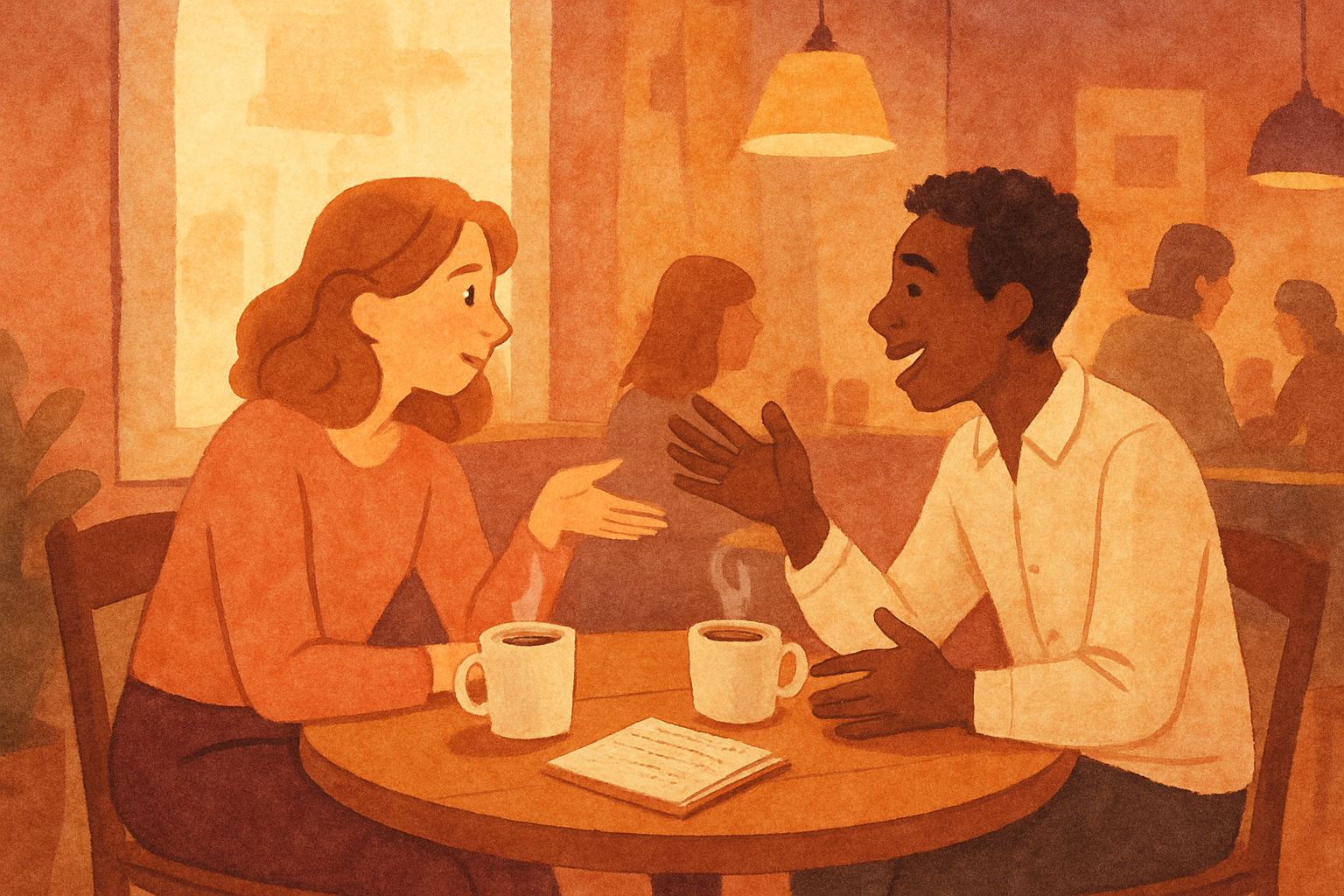
There's a moment most of us have experienced: you're getting to know someone new, things are going well, and then — that thing. Maybe they're more introverted than you. Maybe they handle stress by going quiet. Maybe they have a completely different relationship with money, or family, or how often they need to text back.
And somewhere in the back of your mind, a voice whispers: Is this a red flag?
Here's the honest answer: sometimes yes, sometimes no — and the difference between the two matters enormously. Relationship red flags vs differences is one of the most misunderstood distinctions in modern dating, and confusing the two can lead you to walk away from genuinely compatible people, or worse, stay in situations that are actually harmful because you rationalized a real warning sign as "just a difference."
Let's untangle this.
Why We've Gotten So Good at Spotting (the Wrong) Red Flags
Dating culture right now is swimming in red flag content. Social media has made it almost reflexive to scan for warning signs, and while self-awareness in dating is genuinely valuable, there's a side effect: we've started pathologizing normal human differences.
The reality is that no two people are wired identically. Research on long-term relationship satisfaction consistently shows that what makes couples last isn't sameness — it's the ability to navigate differences with curiosity and respect. A 2022 meta-analysis published in Psychological Bulletin found that similarity in values (not personality traits or habits) was the stronger predictor of relationship quality over time.
That's a crucial distinction. Values vs. traits. Differences in personality, communication style, or lifestyle? Often workable. Differences in core values — what you believe matters, how you treat people, what kind of life you want to build? Those are the ones that deserve scrutiny.
So before you label something a red flag, it's worth asking: is this a character issue, or just a difference in wiring?
## "Hidden" Red Flags That Are Actually Just Differences
They Need More Alone Time Than You
If someone recharges by being alone, that's not a sign they don't care about you. It's introversion — a stable personality trait that roughly half the population shares to varying degrees. Needing space isn't the same as being emotionally unavailable.
The confusion often comes from attachment styles in dating. If you have an anxious attachment style, a partner who needs solitude might trigger feelings of rejection or insecurity. But that's information about your dynamic — not necessarily evidence that something is wrong with them.
The actual red flag version: someone who uses "I need space" as a way to avoid all emotional intimacy, refuses any conversation about how their behavior affects you, or disappears completely without communication.
Their Communication Style Looks Different From Yours
Some people process feelings out loud. Others need to sit with things before they can articulate them. Some people want to resolve conflict immediately; others need 20 minutes to cool down before they can have a productive conversation. These are differences in emotional processing — they don't mean someone is stonewalling you or doesn't care.
Learning how to communicate better in a relationship often starts with understanding that your partner's style isn't a defect. It's just different from yours. The goal isn't to communicate identically — it's to communicate effectively, which requires learning each other's rhythms.
The actual red flag version: someone who shuts down and refuses to ever engage with difficult conversations, dismisses your feelings as overreactions, or consistently uses silence as punishment.
They Have Different Love Languages
If your partner expresses love through acts of service and you feel most loved through words of affirmation, it can feel like you're being emotionally neglected — even when your partner is trying their hardest. This mismatch is incredibly common and incredibly fixable.
Dr. Gary Chapman's love languages framework, while not a clinical model, has real practical value in helping partners understand why they feel loved differently. A mismatch here isn't a dealbreaker in a relationship. It's a conversation.
The actual red flag version: a partner who knows what you need, is explicitly told what you need, and repeatedly chooses not to try.
They Had a Different Kind of Childhood
People from different family backgrounds often have wildly different defaults around things like how often to say "I love you," how to handle disagreements, what counts as quality time, or whether emotions are discussed openly. These aren't character flaws — they're learned patterns.
What matters isn't the background itself, but whether someone has the self-awareness to recognize their patterns and the willingness to grow. Someone who grew up in a family that didn't discuss feelings openly but who is actively working on that? That's a person doing the work.
The actual red flag version: someone who uses their background to justify harmful behavior indefinitely — who treats "this is just how I am" as a permanent excuse for things that hurt you.
They're Not Sure What They Want (Yet)
The talking stage and situationship culture has made ambiguity feel automatically suspicious. But there's a difference between someone who is genuinely processing a life transition — a recent move, job change, or past heartbreak — and someone who is deliberately stringing you along.
Dating app fatigue is real. Many people are entering connections more cautiously than previous generations did, not because they're emotionally unavailable, but because they've been burned by rushing. A reasonable timeline for clarity is not the same as chronic avoidance.
The actual red flag version: someone who actively resists any conversation about where things are going, keeps you secret, or is clearly dating multiple people while telling you otherwise.
So What ARE Actual Red Flags?
Now that we've cleared some space, let's name what genuinely warrants concern. Real red flags tend to share certain qualities: they're patterns (not one-off moments), they involve a dismissal of your feelings or wellbeing, and they often escalate over time rather than resolve.
Actual dealbreakers in a relationship to take seriously:
- Consistent dishonesty, especially about things that directly affect you
- Contempt — not just frustration, but a pattern of belittling, mocking, or dismissing you
- An inability to take any accountability (everything is always someone else's fault)
- Pressure to move faster than you're comfortable with, especially around commitment, finances, or physical intimacy
- Controlling behavior disguised as care ("I just worry about you" while monitoring your whereabouts)
- Extreme reactions to reasonable requests or boundaries
- A history of patterns across relationships that they've never examined
Researcher John Gottman famously identified contempt — not conflict — as the number-one predictor of relationship breakdown. The presence of disagreement isn't a warning sign. The presence of contempt is.
How Do You Actually Tell the Difference?
This is where self-awareness in dating becomes essential. Here's a framework that can help:
Ask yourself:
- Is this about their character, or their style?
- Does this person take responsibility when they've hurt me?
- Do I feel safe bringing up concerns with them?
- Does the thing that bothers me cross a line I've been clear about?
- Is this pattern getting better with time, or worse?
The answers won't always be clear immediately. That's okay. But paying attention to how someone responds to conflict — not just how they behave when things are easy — tells you a huge amount about long-term compatibility.
Healthy conflict in relationships isn't the absence of disagreement. It's what happens during the disagreement that matters: do you both stay curious? Does someone always have to win? Can you find your way back to each other?
If you want a structured way to explore this with someone you're dating or already in a relationship with, having guided conversations — the kind that go deeper than surface-level questions — can reveal a lot quickly. Pairloom's Getting to Know You game is designed for exactly this: prompts that surface values, communication styles, and what you each actually need, in a format that feels like play, not an interrogation.
The Role of Attachment Styles in What You Flag
It's worth being honest about this: your own attachment style shapes what you perceive as threatening.
If you have an anxious attachment style, you may read neutral behavior — a slow text response, a quiet mood — as signs of rejection and escalate them into red flags. If you have an avoidant attachment style, you might label intimacy bids as "clingy" or "needy" rather than recognizing them as normal attachment behavior.
Neither response is a moral failing. But it's worth knowing your own patterns before you issue a verdict on someone else's.
Understanding your attachment style isn't about diagnosing yourself or your partner — it's about developing enough self-awareness to recognize when your nervous system is reacting to the past rather than the present. That kind of clarity is one of the most useful tools you can bring to any relationship.
The Compatibility Question Underneath Everything
Here's the deeper truth beneath all of this: the question isn't really "is this a red flag?" The question is "are we compatible?"
And compatibility isn't a static thing you either have or don't. It's something you discover through honest conversations, shared experiences, and the willingness to be curious about each other. Some differences enhance a relationship — they bring new perspectives, balance each other out, keep things interesting. Others create genuine friction that neither person can sustain long-term.
The goal isn't to find someone with zero friction. It's to find someone whose friction you can live with, whose differences you can respect, and whose values align with yours where it really counts.
A compatibility test for couples or a set of intentional questions to ask your partner isn't about grading each other — it's about gathering information. The more honestly you can see each other, the better equipped you are to make a real decision, rather than one driven by fear or fantasy.
If you're in the early stages and trying to figure out whether what you have is genuinely workable, check out our piece on what science actually says about signs you are compatible — it goes deeper into the research on what predicts long-term connection.
A Final Word: Trust Yourself, But Check Your Assumptions
You are allowed to have dealbreakers. You are allowed to walk away from relationships that don't feel right, even if you can't fully articulate why. Intuition is data too.
But it's worth doing the small audit: is this instinct, or is it anxiety? Is this a pattern, or an incident? Is this incompatibility, or discomfort with something unfamiliar?
The people who tend to build the healthiest relationships aren't the ones who were best at identifying red flags early. They're the ones who learned to be honest about what they actually need, curious about who their partner actually is, and brave enough to have the conversations that matter — even when it feels vulnerable.
That kind of clarity doesn't come from a checklist. It comes from real connection, built one honest exchange at a time.
Stop Wondering. Start Playing.
Pairloom turns the conversations that matter into games you'll actually enjoy. Invite your partner and discover how you really connect — in minutes, not months.
Stop wondering. Start playing.
Pairloom turns the conversations that matter into games you'll actually enjoy. Invite your partner and discover how you really connect — in minutes, not months.