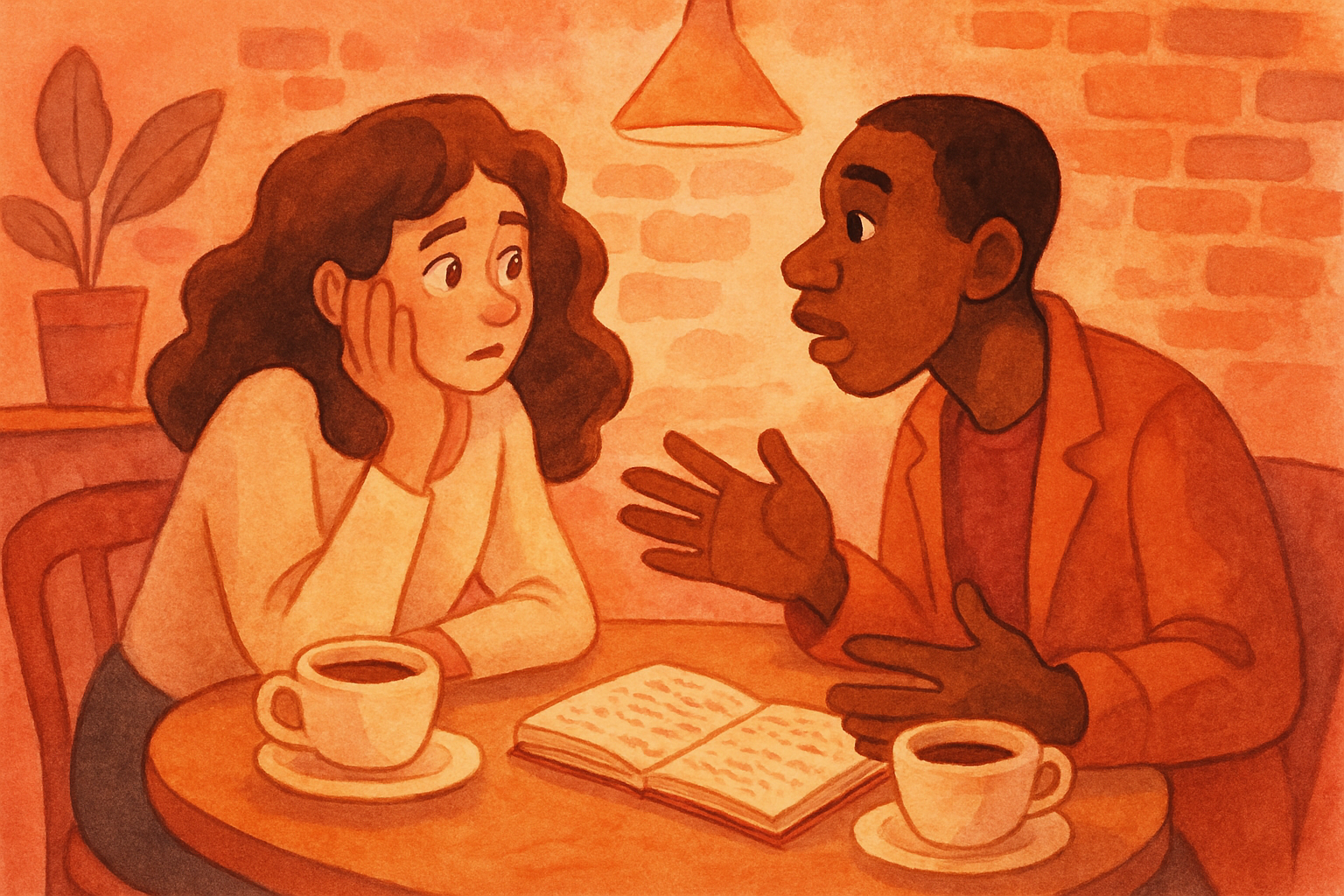
If you've ever found yourself refreshing someone's profile at midnight wondering what exactly you two are — you've probably been in a situationship. And if that word just made your stomach drop a little, you're definitely not alone.
The situationship has become one of the defining relationship dynamics of the 2020s. It lives in the space between "just talking" and "actually together" — and for many people in the 25-40 age range, it's become as common as dating app fatigue itself. You spend time together. You text constantly. You might even meet each other's friends. But the label? The future? Those feel untouchable — like bringing them up would shatter the whole thing.
Here's the uncomfortable truth: the anxiety of not knowing is usually worse than whatever conversation you're avoiding. So let's talk about how to actually define the relationship without nuking it in the process.
What Is a Situationship, Really?
At its core, a situationship is a romantic connection that has most of the emotional and physical characteristics of a relationship — but none of the explicit commitment or clarity. It's the talking stage that never graduates. It's "we're not putting a label on it" as a permanent state, not a temporary one.
What makes situationships genuinely complicated is that they're not always the result of one person being cold or avoidant. Sometimes both people drift into one organically — enjoying the warmth and connection while silently hoping the other person will make the first move toward clarity. Before long, weeks turn into months, and the longer it goes, the higher the emotional stakes of "the conversation."
Research on attachment styles in dating helps explain why situationships stick around. Anxiously attached people may stay because some connection feels better than none. Avoidantly attached people may prefer the low-commitment structure. And people with secure attachment? They often name what they want earlier — which can feel almost startlingly direct if you're not used to it.
The tricky part is that situationships often feel like relationships. You're building shared experiences, developing inside jokes, maybe even navigating conflict together. That emotional investment is real — even if the commitment hasn't been named.
Why Does Defining the Relationship Feel So Scary?
The fear of having "the talk" is so common it's practically its own genre of anxiety. But where does it actually come from?
Fear of rejection. If things are going well in an ambiguous, comfortable way, naming what you want feels like a gamble. What if they don't want the same thing? At least in uncertainty, you can keep hoping.
Fear of pressure. Nobody wants to feel like they're giving someone an ultimatum, especially early on. There's a cultural narrative that caring too much, too soon, is a relationship dealbreaker — so people perform indifference to seem low-maintenance.
Fear of ruining it. This is probably the most universal one. "What if asking for clarity makes them pull away?" The irony is that staying silent to protect the connection often corrodes it from the inside.
Understanding your fear is actually the first step toward having a better conversation. Vulnerability in relationships — the real kind, not just emotional disclosure but honest expectation-setting — requires knowing what you're actually afraid of losing.
How Do You Know When It's Time to Have the Conversation?
There's no perfect moment. But there are some clear signs that the situationship is no longer serving you.
You're editing yourself. If you're calculating every text, avoiding certain topics, or downplaying how much you actually like this person just to seem casual — that's a sign the ambiguity is costing you.
You feel anxious between interactions. A little excitement is normal. Persistent anxiety about where you stand is not. If you're frequently second-guessing whether plans will be kept or whether silence means something bad, the uncertainty is doing real harm.
You've been at this for more than a few months. The "talking stage" of dating is a real and useful phase. But it shouldn't be indefinite. If several months have passed and the structure of your connection hasn't evolved at all, someone needs to bring it up.
You've started lying to your friends. If you're softening the situation when you describe it to people who know you — saying "it's fine, we're fine" when internally it's anything but — that's a signal worth paying attention to.
If any of those feel familiar, it's probably time. And the good news is that this conversation doesn't have to be an ultimatum, a dramatic confrontation, or a tearful late-night phone call.
How to Define the Relationship Without Making It a Courtroom
The reason DTR (defining the relationship) conversations go badly is usually not the content — it's the framing. When one person feels cornered or interrogated, they get defensive. When someone leads with insecurity or pressure, the other person pulls away. Here's how to approach it differently.
Come from curiosity, not desperation
There's a huge difference between "I need to know where this is going or I can't do this anymore" and "Hey, I've really been enjoying this and I'd love to talk about what we both want from it." Both are honest. One invites dialogue; the other forces a verdict.
Framing the conversation as collaborative — we're figuring this out together — reduces the pressure on both sides. You're not a prosecutor; you're a person who likes someone and wants to be on the same page.
Pick your moment
Not right after sex. Not in the middle of an argument. Not over text. Find a relaxed, low-stakes setting where you both feel comfortable and there's time to actually talk. A walk, a casual dinner at home, a drive somewhere — all of these work better than a couch face-off.
Be specific about what you actually want
Vague questions get vague answers. "What are we?" is harder to answer than "I've been thinking about us, and I think I'd like for us to be exclusive — is that something you're open to?" The second version gives the other person something concrete to respond to, rather than leaving them to guess what you're hoping to hear.
Listen to what they actually say — not just what you hoped they'd say
This is where self-awareness in dating becomes critical. If they give you a hedge ("I don't know, maybe, I'm not great at labels"), that's information. If they're enthusiastic and clear, that's information too. The conversation should tell you something true, not just confirm what you already wanted to believe.
What If They Don't Want the Same Thing?
This is the fear underneath the fear. And it's worth sitting with honestly: the purpose of this conversation is to find out the truth, not to engineer a particular outcome.
If they're not in the same place as you, that's genuinely painful — but it's also genuinely useful. Knowing means you can make a real decision about your own life, rather than staying in emotional limbo indefinitely. It's the difference between a relationship red flag vs differences: a red flag is someone who isn't willing to engage at all; a difference is two people who simply want different things and need to figure out if they can meet in the middle.
Healthy conflict in relationships — and yes, this conversation can involve some friction — doesn't mean two people never disagree. It means two people who care enough to be honest and stay at the table even when it's uncomfortable.
And if they are in the same place? You'll wonder why you waited so long.
The Role of Communication Before the Big Talk
One of the most underrated relationship skills is learning how to communicate better in a relationship before big conversations. If you've built a pattern of lightness and avoidance, a sudden heavy conversation can feel jarring and out-of-character. You can shift that pattern gradually.
Ask real questions. Not "how was your day" but the kind of questions to ask your partner — or the person you might want to become your partner — that reveal something true. What do you want your life to look like in five years? What's something you've changed your mind about? What does commitment mean to you?
These kinds of conversations build the emotional architecture that makes relationship-defining discussions feel like a natural next step rather than a confrontation. If you're already in the habit of going deeper with each other, "so, what are we?" stops feeling like a bomb and starts feeling like a continuation.
This is actually something Pairloom was built for. Its conversation-based games are designed to help two people — whether they're in a situationship, a new relationship, or years in — actually get to know each other in a way that feels fun rather than clinical. The kind of getting to know your partner that makes the scary questions feel a lot less scary. It's worth exploring if you feel like you and your person need a low-pressure way to go deeper before the big talk.
What Makes Couples Last Through the Ambiguity Phase
Research on what makes couples last consistently points to one thing above all others: shared meaning and mutual understanding. Couples who build a strong foundation of knowing each other — values, fears, quirks, dealbreakers in a relationship — tend to navigate the defining moments better.
That's not built in a single conversation. It's built through dozens of smaller ones. And it requires both people to practice trust in a relationship — trust that honesty won't be punished, that asking for what you want isn't needy, that being known is safe.
The situationship is often a failure of that trust — not because either person is bad, but because neither person has taken the risk of being fully transparent yet. And sometimes, all it takes is one person going first.
A Final Note on Timing and Self-Compassion
If you've been in a situationship and you're scared to have the conversation — that's okay. It's genuinely hard. You're navigating real feelings with real stakes and there's no perfect script.
But remember: the goal isn't to "win" the relationship conversation. The goal is to find out whether this person and this connection can actually become what you're hoping for. If yes, wonderful. If not, you get to stop spending emotional energy on something that was never going to give you what you need.
You deserve clarity. And so, honestly, does the other person — even if they don't realize it yet.
Want to explore more about navigating the early stages of dating? Check out our pieces on attachment styles and dating and how to communicate better with someone you're falling for.
Stop wondering. Start playing.
Pairloom turns the conversations that matter into games you'll actually enjoy. Invite your partner — or whoever they are to you right now — and discover how you really connect in minutes, not months. Sometimes the best way to figure out what you have is to actually show up for each other, one question at a time.
Stop wondering. Start playing.
Pairloom turns the conversations that matter into games you'll actually enjoy. Invite your partner and discover how you really connect — in minutes, not months.