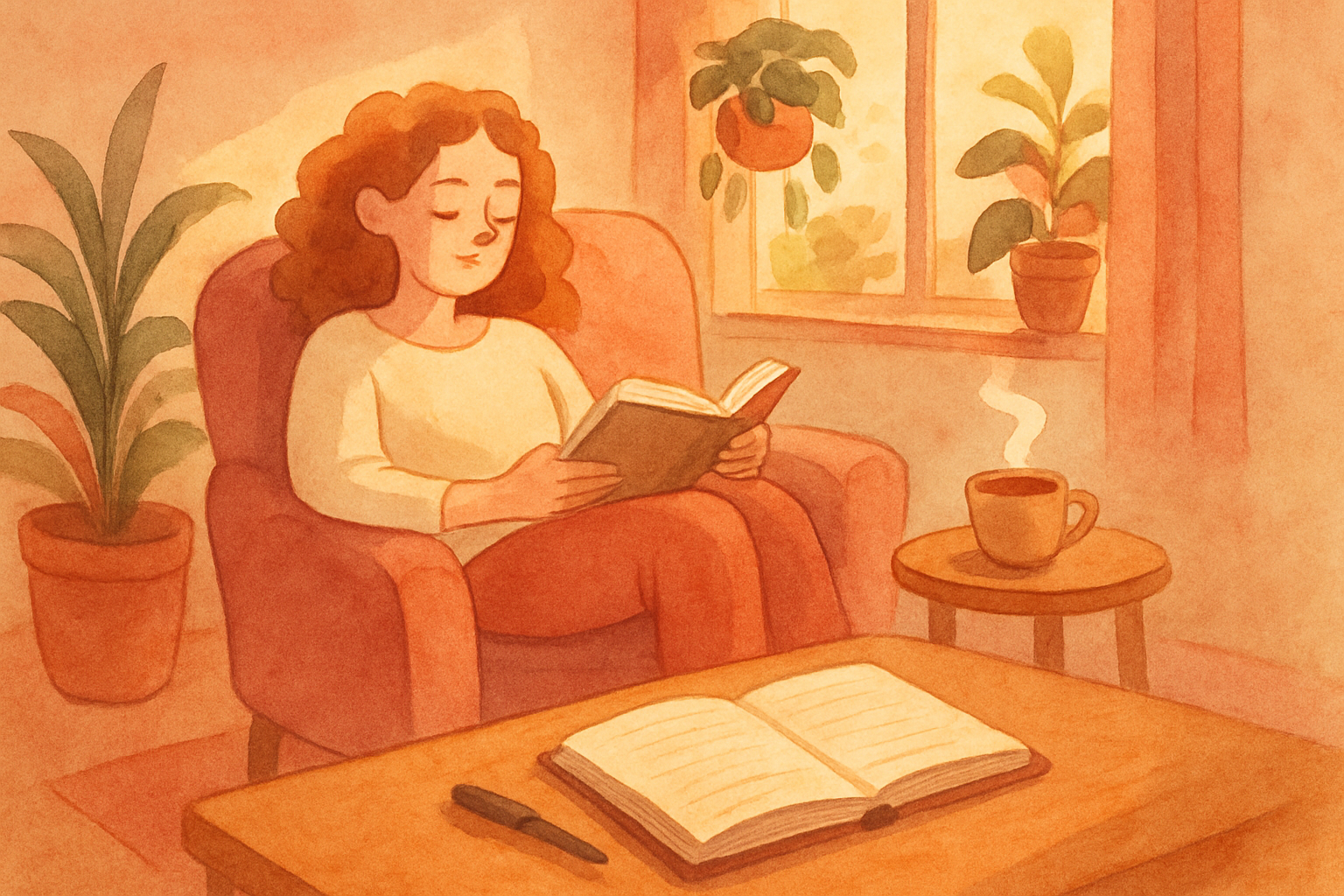
You've heard it a thousand times: "You have to love yourself before you can love someone else." It's become such a dating cliché that it feels almost meaningless — another self-help platitude that sounds wise but leaves you wondering what it actually means in practice. How do you "love yourself first"? And why does it seem like the people who need this advice most are the ones rolling their eyes at it?
Here's what most people miss: the relationship you have with yourself isn't just important for your own well-being — it's the blueprint for every romantic relationship you'll ever have. The way you treat yourself, the boundaries you set, the stories you tell yourself about your worth — all of this becomes the foundation for how you show up in love. And unlike those vague "love yourself" mantras, building a healthy relationship with yourself involves specific, learnable skills.
What does it actually mean to have a relationship with yourself?
Think about your closest friendships. What makes them work? You probably know your friend's values, understand their triggers, respect their boundaries, and enjoy their company. You don't expect them to complete you or fix your problems, but you do support each other through challenges.
Now imagine applying that same intentionality to your relationship with yourself. It's not about narcissistic self-obsession or thinking you're perfect. It's about developing the kind of self-awareness and self-respect that makes you a secure, grounded partner.
A healthy self-relationship involves several key components: knowing your core values (and actually living by them), understanding your emotional triggers and patterns, having interests and a life that fulfill you independently, and being able to comfort and regulate yourself during difficult times. When you can do these things, you enter relationships from a place of wholeness rather than need.
Why do people who need love least often attract the healthiest relationships?
There's a fascinating paradox in dating: the people who are least desperate for a relationship often end up in the best ones. This isn't because the universe is cruel or because playing hard to get is some master strategy. It's because people who are content with themselves radiate a different energy entirely.
When you're not looking to a partner to fill emotional voids, validate your worth, or provide meaning to your life, you can actually see them clearly. You're not projecting your needs onto them or overlooking red flags because you're afraid of being alone. You can appreciate who they really are rather than who you need them to be.
This doesn't mean being cold or uninterested. It means being selective from a place of self-respect rather than settling from a place of fear. Healthy people are drawn to this energy because it signals that you're capable of being a true partner — someone who chooses to be with them rather than someone who needs to be with anyone.
How do you know if you're outsourcing your self-worth to dating?
The signs are often subtle but significant. Maybe you feel incomplete when you're single, like you're just marking time until you find "the one." Perhaps your mood depends heavily on dating app matches or how quickly someone texts you back. You might find yourself changing core parts of yourself to match what you think potential partners want, or staying in relationships that don't feel right because being with someone feels better than being alone.
One of the biggest red flags is when your sense of worth becomes dependent on relationship status. If being single feels like failure or if you define yourself primarily through your romantic relationships, it's a sign that you're looking to others to provide something that needs to come from within.
Another warning sign is when you consistently attract partners who are emotionally unavailable, controlling, or otherwise problematic. Often, this happens because we unconsciously seek relationships that mirror our internal relationship dynamics. If you don't respect your own boundaries, you'll attract people who don't respect them either.
What values actually mean beyond Instagram quotes
Everyone talks about knowing your values, but most people confuse values with vague aspirations. Saying you value "honesty" or "adventure" doesn't mean much if you can't articulate what those look like in practice or if your actions don't align with them.
Real values are specific and actionable. Instead of "honesty," maybe your value is "I communicate directly about problems rather than hoping they'll resolve themselves." Instead of "adventure," perhaps it's "I prioritize new experiences and learning, even when they're uncomfortable."
The key is moving from abstract concepts to concrete behaviors. When you know your values at this level, you can recognize when potential partners share them — and when they don't. This kind of clarity prevents you from wasting time in relationships where you're fundamentally incompatible.
Understanding your triggers isn't therapy-speak — it's practical dating wisdom
Everyone has emotional triggers — situations, words, or behaviors that send us into fight-or-flight mode. Maybe it's feeling ignored, being criticized, or sensing someone pulling away. The problem isn't having triggers (we all do), but being unconscious of them.
When you understand your triggers, you can communicate about them instead of just reacting. You can say, "When you don't respond to my texts for hours, I start feeling anxious because my last partner used silent treatment as punishment. Can we talk about communication expectations?" This is far more effective than getting defensive or accusatory when you feel triggered.
Understanding triggers also helps you recognize when your reactions are more about your past than your present situation. This doesn't mean your feelings aren't valid, but it does give you the space to respond thoughtfully rather than reactively.
Why having a life outside of dating makes you more dateable
People often think that being available and flexible makes them more attractive to potential partners. In reality, the opposite is usually true. Having interests, friendships, goals, and activities that fulfill you independently makes you far more interesting and attractive as a partner.
When your life is rich and full without a romantic relationship, you bring more to the table. You have stories to tell, passions to share, and experiences that have shaped you. You're not looking to a partner to be your entertainment, your social circle, or your source of meaning.
This also creates natural boundaries that are healthy for relationships. When you have commitments and interests outside of dating, you can't drop everything for every potential romance. This selectivity actually increases your value and helps you attract people who respect your autonomy.
The art of self-soothing: your most important relationship skill
Perhaps the most crucial aspect of a healthy self-relationship is the ability to comfort and regulate yourself when things get difficult. This means being able to calm your own anxiety, process your emotions without immediately turning to others for rescue, and bounce back from disappointments without losing your sense of self.
Self-soothing doesn't mean never needing support from others — healthy relationships involve mutual support. But it does mean not expecting your partner to be your primary emotional regulator. When you can manage your own emotional state, you can be present for your partner's emotions without getting overwhelmed or defensive.
This skill is especially important during the early stages of dating, when uncertainty and anxiety are high. If you can stay grounded during the inevitable ups and downs of getting to know someone, you'll make better decisions and be more attractive as a partner.
Practical steps to build your self-relationship
Building a healthy relationship with yourself requires the same intentionality as building one with another person. Start with solo dates — actual planned activities you do alone because you enjoy your own company. This might feel awkward at first, but it's practice for being comfortable with yourself.
Journaling about your relationship patterns can provide valuable insights. What types of people do you consistently attract? What behaviors do you tolerate that you shouldn't? What fears drive your dating decisions? This kind of self-reflection helps you make conscious choices rather than repeating unconscious patterns.
Consider therapy not as a sign of brokenness, but as a tool for growth. Just as you might hire a trainer to improve your physical fitness or a coach to advance your career, a therapist can help you develop emotional fitness and relationship skills. In our culture, therapy is becoming increasingly normalized as a form of self-investment rather than crisis management.
How understanding yourself transforms compatibility
When you truly know yourself — your values, triggers, needs, and patterns — you can recognize compatibility more quickly and accurately. You're not trying to force connections that aren't there or overlooking important differences because you're afraid of being alone.
This self-knowledge becomes the foundation for deeper intimacy. When you understand your own emotional landscape, you can navigate your partner's with greater skill and empathy. You can communicate about complex feelings, work through conflicts constructively, and build the kind of relationship that actually enhances both of your lives.
This is where tools for relationship exploration become invaluable. Understanding yourself is just the first step — the real magic happens when you can share that understanding with a partner and explore how your different perspectives and experiences complement each other.
Stop wondering. Start playing.
Pairloom turns the conversations that matter into games you'll actually enjoy. Invite your partner and discover how you really connect — in minutes, not months.
Stop wondering. Start playing.
Pairloom turns the conversations that matter into games you'll actually enjoy. Invite your partner and discover how you really connect — in minutes, not months.