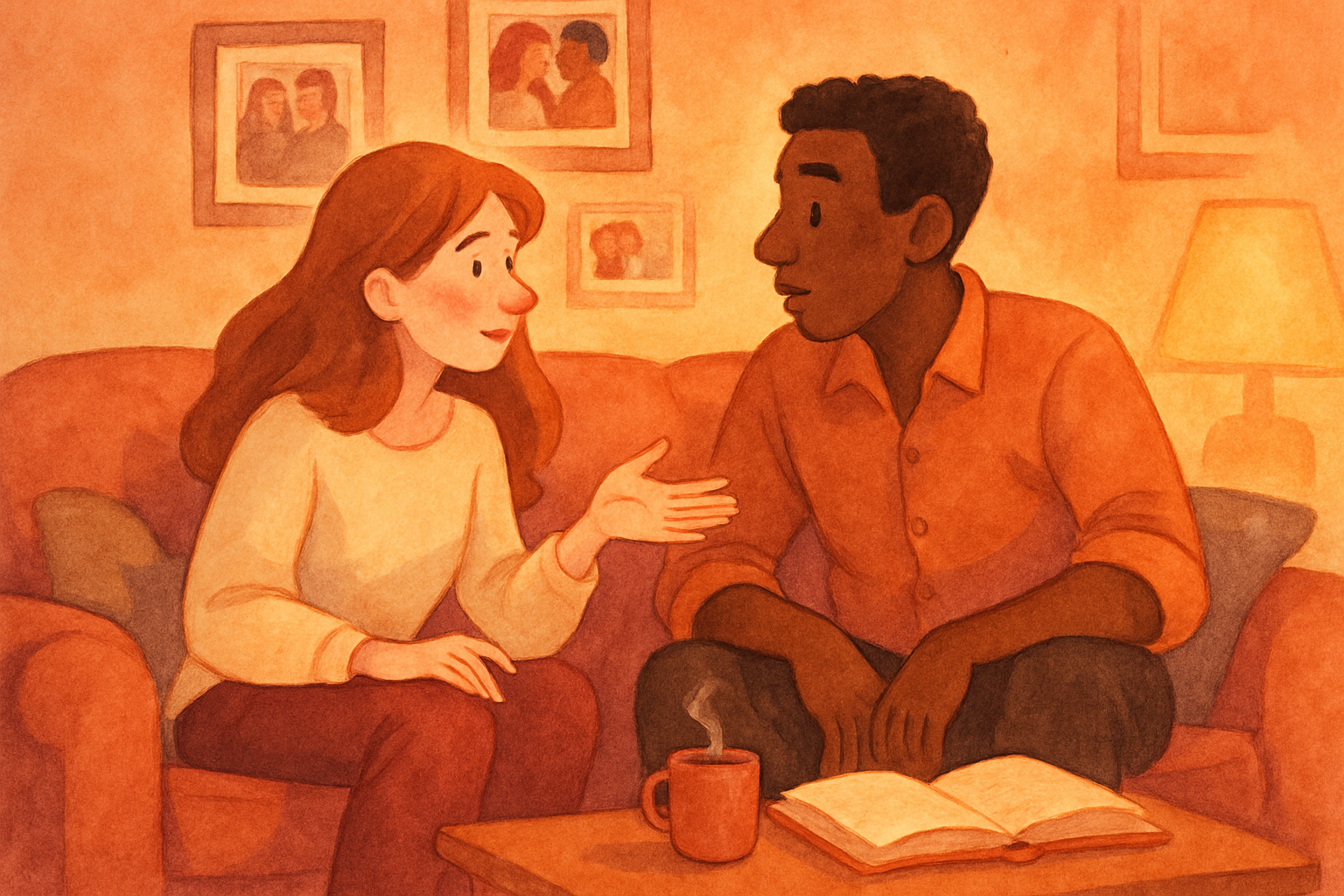
There's a moment most long-term couples can describe, even if they struggle to put words to it. It's not a big fight or a dramatic turning point — it's quieter than that. A realization that somewhere along the way, you and your partner started feeling more like roommates than lovers. Or, on the flip side, that you've somehow gotten closer over the years in ways you didn't quite plan for.
What separates those two trajectories? What actually makes couples last? Researchers have been asking that question for decades, and the answers are both more nuanced and more hopeful than most of us expect.
Is Growing Together Just About Luck — Or Is There a Formula?
Spoiler: it's not luck. It's not even really about compatibility in the traditional sense — the idea that you either "match" someone or you don't.
Psychologist John Gottman, whose decades of research at the University of Washington produced some of the most robust findings in relationship science, identified what he called the "Four Horsemen" — communication patterns that reliably predict relationship breakdown. Criticism, contempt, defensiveness, and stonewalling. The couples who avoided those patterns and replaced them with genuine curiosity, repair attempts, and emotional attunement? They didn't just survive. They thrived.
What's striking about that research is that it has almost nothing to do with how similar two people are on paper. You can share all the same interests and still chip away at each other with contempt. You can seem completely mismatched on the surface and build something remarkable through how you treat each other during hard moments.
So the science of what makes couples last isn't really about finding the right person. It's about becoming the right kind of partner — and building the right kind of environment together.
What Does "Growing Together" Actually Mean?
Let's be real: people change. Constantly. The person you are at 27 is genuinely different from who you'll be at 37. Your values may shift. Your career might take unexpected turns. What you need emotionally evolves.
The couples who grow together don't avoid that change — they adapt to it. Researchers call this concept relationship maintenance, and it refers to the ongoing behaviors that keep a partnership feeling close and satisfying over time. Things like sharing new experiences, expressing appreciation, being genuinely interested in each other's inner lives.
One concept that shows up repeatedly in the research is what psychologist Arthur Aron called self-expansion — the idea that people are naturally drawn to experiences (and partners) that help them grow and become more capable versions of themselves. Couples who provide each other with genuine opportunities for self-expansion — new skills, new perspectives, new challenges — tend to maintain higher relationship quality over time.
In practical terms? It's less about grand romantic gestures and more about staying genuinely curious about who your partner is becoming, not just who they were when you met.
How Do Attachment Styles Shape the Trajectory of a Relationship?
This is where it gets really interesting. Attachment styles in dating and long-term relationships are one of the strongest predictors of whether couples grow together or drift apart — not because your style is fixed forever, but because it shapes how you respond to stress, conflict, and intimacy.
Broadly, attachment theory describes three main patterns:
- Secure attachment: Comfortable with closeness, able to communicate needs, relatively resilient in conflict
- Anxious attachment: Hypervigilant to signs of rejection, tends toward reassurance-seeking and emotional intensity
- Avoidant attachment: Pulls back under emotional pressure, values independence highly, can struggle with vulnerability in relationships
Here's the thing — two securely attached people in a relationship have a statistical advantage. But two people with anxious and avoidant styles, known in research as the "anxious-avoidant trap," can find themselves in a painful cycle: the more one reaches for closeness, the more the other withdraws, and vice versa.
The good news? Attachment styles aren't destiny. Relationship research consistently shows that secure relationships — even between people who aren't individually secure — can shift attachment patterns over time. A consistent, emotionally safe partnership actually rewires how both people engage. This is sometimes called "earned security."
Understanding your own attachment patterns is one of the most underrated acts of self-awareness in dating. If you want to explore where you and your partner land, talking through hypothetical scenarios and real past experiences together is incredibly revealing. It's one of the things the Pairloom relationship games are specifically designed to surface — without turning it into a therapy session.
Why Conflict Isn't the Enemy of a Long-Lasting Relationship
Here's a counterintuitive truth: healthy conflict in relationships is not just normal — it's necessary.
The goal isn't to never disagree. It's to disagree in ways that don't erode trust or make your partner feel unseen. Gottman's research actually found that the ratio of positive to negative interactions during conflict was one of the key differentiators between thriving and struggling couples. Specifically, a 5:1 ratio of positive to negative moments — even during arguments — was associated with stable, satisfied relationships.
Knowing how to argue without fighting — meaning how to raise concerns without triggering defensiveness, how to stay regulated when the conversation gets heated — is a learnable skill. It's not about suppressing emotion. It's about expressing it in ways the other person can actually receive.
Some practical markers of healthy conflict:
- Complaints focus on specific behaviors, not character ("You forgot the groceries" vs. "You're so irresponsible")
- Both people feel heard before solutions are discussed
- There's a willingness to take accountability, even partially
- The relationship can return to warmth after a rupture
Couples who master repair — the ability to come back together after tension — tend to feel safer taking emotional risks with each other. And that safety is the soil that long-term intimacy grows in.
For couples who want to practice how to communicate better in a relationship in a low-stakes way, conversation-based games are a surprisingly effective on-ramp. Check out our piece on how structured questions can change the way couples connect for more on why this works.
Does Relationship Compatibility Matter More Than We Think?
Yes — but probably not in the way you imagine it.
Relationship compatibility is often talked about as though it's a static thing: you're either compatible or you're not. But researchers increasingly understand compatibility as dynamic. It's less about overlapping preferences and more about shared values, complementary needs, and aligned visions for how you want to live.
Two people can love completely different music, have wildly different social energy levels, and still be deeply compatible — because they both want the same things from their lives together: financial stability or adventure or deep community or parenthood or creative freedom.
And then there are the dealbreakers in a relationship — the non-negotiables that no amount of chemistry or commitment can bridge. These aren't small differences. They're the fundamental misalignments in values or life direction that tend to either blow up early or quietly hollow out a relationship over years.
Being honest about your own dealbreakers — and curious enough to surface your partner's — is an act of genuine respect. It's also where questions to ask your partner come in. Not as interrogation, but as genuine exploration. The couples who have explicit conversations about what they want, what they fear, and what they won't compromise on tend to build on a much sturdier foundation than those who quietly hope everything will just work out.
Related: if you're earlier in the relationship journey and trying to figure out where things stand, our post on navigating the talking stage and situationships covers the murky early terrain a lot of people find themselves in right now.
What Role Does Vulnerability Play in Long-Term Connection?
Brené Brown has made vulnerability in relationships a mainstream concept, and the research backs her up. The couples who maintain deep emotional intimacy over time are the ones who keep taking the risk of being seen — imperfections, fears, disappointments, and all.
But vulnerability is tricky. It requires trust, and trust takes time to build. It also requires that both people are creating a space where honesty is met with warmth rather than judgment.
The reciprocal nature of vulnerability is worth noting here. When one partner shares something real, something difficult, something they've never said out loud — and the other person receives it with care — that moment does more for trust in a relationship than almost any other interaction. It's the relational equivalent of compound interest: small deposits of openness, made consistently, that build into profound closeness.
This is also why the early, performative stages of dating — where everyone's showing their highlight reel — can be such a poor foundation for understanding long-term fit. It's only when you've seen each other stressed, scared, or wrong that you start to know whether you can actually build something together.
The Practical Habits That Research Says Actually Matter
So what does the science ultimately say about what makes couples last? A few things that consistently appear across different research traditions:
1. Prioritize knowing each other, continuously. People change. Couples who stay curious — who keep asking questions to ask your partner even years in — don't wake up one day feeling like strangers.
2. Make connection a practice, not a milestone. It's not the big anniversary trip that holds couples together. It's the daily check-in, the inside joke, the date night ideas at home that become rituals. Consistency beats intensity in the long run.
3. Develop a shared language for navigating hard things. Couples who have talked about their conflict styles, their love languages, their attachment patterns — even casually — navigate hard moments better. They're not starting from scratch when things get difficult.
4. Keep doing new things together. Remember Arthur Aron's self-expansion theory? It also explains why couples games to play together or new shared experiences consistently show up in research as relationship boosters. Novelty, shared laughter, and mild challenge all create the neurochemical conditions for bonding. (Yes, even a silly card game counts.)
5. Repair quickly and repair often. Every couple has ruptures. The difference is in how fast and how sincerely they're addressed.
Growing Apart Isn't Inevitable — But It Is a Choice
Here's the most important thing the science tells us: couples don't grow apart because they're wrong for each other. They grow apart because of accumulated neglect — small moments of not showing up, not staying curious, not choosing each other in the ordinary moments that eventually add up to a life.
The inverse is also true. Growing together isn't something that just happens to lucky couples. It's built — slowly, imperfectly, intentionally — through the choices both people make every single day.
That's actually hopeful. Because choices can change.
Stop wondering. Start playing.
Pairloom turns the conversations that matter into games you'll actually enjoy. Invite your partner and discover how you really connect — in minutes, not months.
Stop wondering. Start playing.
Pairloom turns the conversations that matter into games you'll actually enjoy. Invite your partner and discover how you really connect — in minutes, not months.