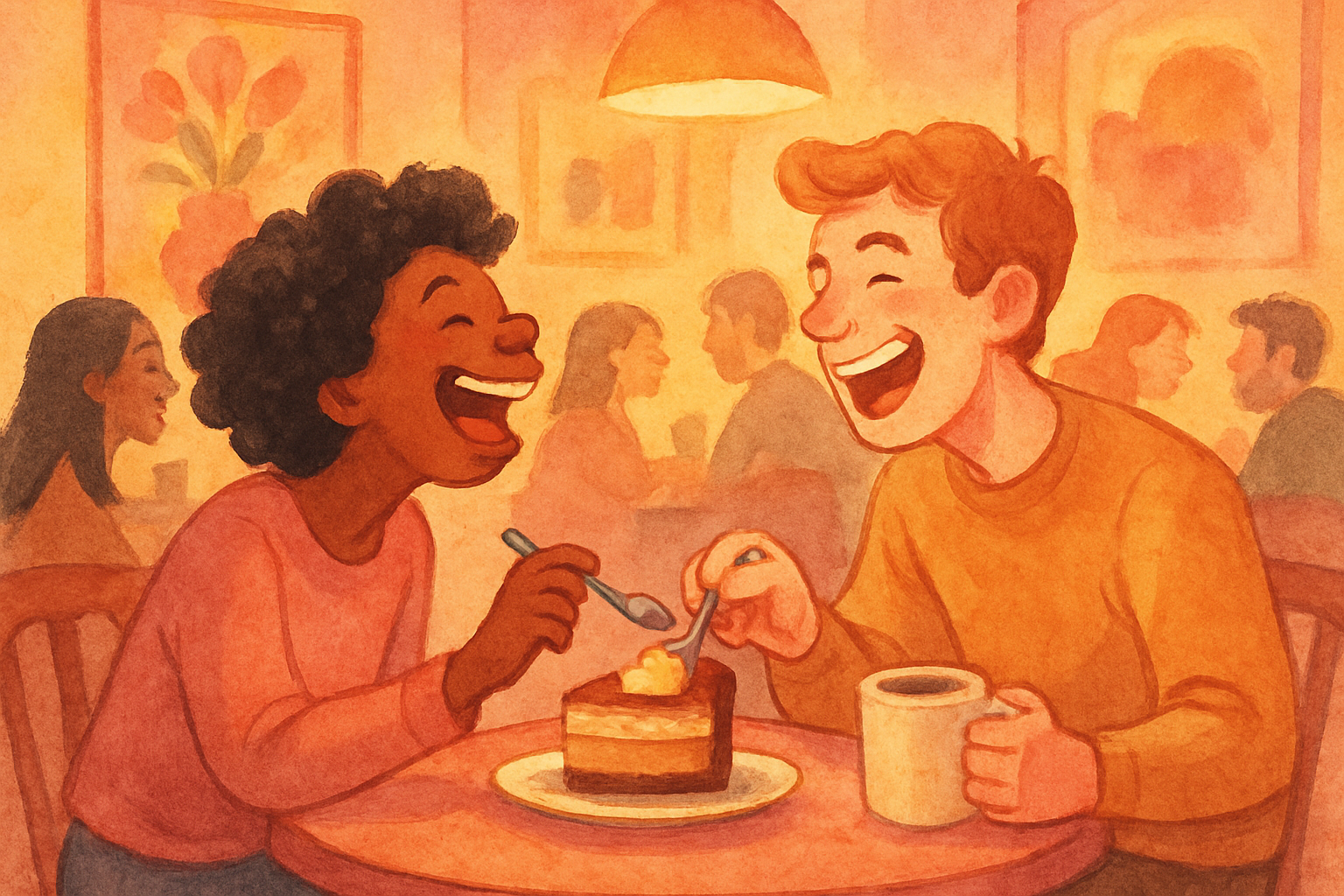
You've probably been told that attraction is mysterious — that love just "happens" or that opposites attract. But decades of psychological research reveal something far more fascinating: attraction follows surprisingly predictable patterns. Most of what draws us to others operates below our conscious awareness, driven by evolutionary programming and cognitive biases we barely recognize.
The science of attraction isn't just academic curiosity. Understanding these forces can help explain why we're drawn to certain people over others, why some relationships spark while others fizzle, and why the person we think we want on paper might not be who we actually connect with in real life.
The Geography of Love: Why Proximity Predicts Romance
Here's the most surprising finding from attraction research: the strongest predictor of who you'll date isn't shared interests, physical beauty, or even personality compatibility. It's proximity — how geographically close you are to someone.
This discovery comes from Leon Festinger's famous MIT dormitory study, which found that students were most likely to become friends (and romantic partners) with people who lived closest to them. Not just in the same building — we're talking about being more likely to date someone two doors down versus someone at the end of the hall.
The proximity effect explains why so many people meet their partners at work, school, or in their neighborhood. Physical closeness creates opportunities for repeated interaction, which leads to our next principle: the mere exposure effect.
Research by Robert Zajonc demonstrated that we tend to like things more the more we're exposed to them — including people. This means that coworker you initially found unremarkable might become more attractive simply through daily interaction. It's not that you're settling; your brain is literally rewiring its attraction response based on familiarity.
This has profound implications for modern dating. Apps promise to expand our options globally, but they might be working against our psychology. The person perfect for you on paper who lives across town might never feel as naturally attractive as someone less "ideal" who you bump into regularly at your coffee shop.
The Mirror Effect: How Reciprocity Shapes Attraction
We like to think we're attracted to people based on their inherent qualities, but psychologist Arthur Aron's research reveals something more self-referential: we're most attracted to people who are attracted to us.
This reciprocity principle creates a fascinating feedback loop. When someone shows interest in us — through eye contact, active listening, or simply remembering details from past conversations — our brains interpret this as a signal of their value. After all, if this person has good enough judgment to be interested in us, they must be worth our interest in return.
Aron's famous "36 questions" study, which explored whether strangers could fall in love through structured vulnerability, worked partly because of reciprocity. Each person's willingness to share created safety for the other to share, building mutual attraction through mutual investment.
This explains why pickup artist techniques that focus solely on appearing disinterested often backfire. While some mystery can intrigue, clear signals of reciprocal interest are far more powerful for building genuine attraction.
The reciprocity effect also reveals why unrequited attraction is so psychologically difficult. When our interest isn't returned, we're not just facing rejection — we're confronting evidence that challenges our own self-worth assessment.
The Beautiful Mess Effect: Why Vulnerability Attracts
One of psychology's most counterintuitive findings about attraction is the "beautiful mess effect," discovered by researcher Anna Bruk. We consistently underestimate how attractive our vulnerabilities are to others while overestimating how attractive others' vulnerabilities are to us.
In studies, people predicted they'd be judged harshly for sharing embarrassing stories or admitting mistakes. But listeners rated vulnerable storytellers as more likeable, trustworthy, and attractive than the storytellers predicted. Meanwhile, when roles reversed, people found others' vulnerabilities endearing and humanizing.
This asymmetry exists because we experience our own vulnerabilities from the inside — feeling the shame, awkwardness, and fear of judgment. But we observe others' vulnerabilities from the outside, where they appear as authenticity and courage.
The beautiful mess effect explains why perfect-seeming dating profiles often fall flat. A bio that mentions struggling with parallel parking or having an irrational fear of butterflies can be more attractive than one listing only accomplishments. Vulnerability signals emotional availability and creates space for genuine connection.
This research challenges the cultural narrative that we need to present our best selves to attract partners. Sometimes our realest selves — complete with quirks and imperfections — are more magnetic than our polished versions.
Beyond Being Funny: Humor as a Compatibility Compass
Humor's role in attraction goes far deeper than simply "being funny." Research by psychologist Jeffrey Hall found that shared humor style — not just appreciating someone's jokes, but finding the same things amusing — serves as a powerful compatibility indicator.
Hall identified four humor styles: affiliative (bringing people together through inclusive jokes), self-enhancing (finding humor in life's absurdities), aggressive (humor that puts others down), and self-defeating (making yourself the joke's target). Partners with matching humor styles reported higher relationship satisfaction and felt more understood by each other.
This makes evolutionary sense. Humor requires sophisticated cognitive processing — understanding context, timing, and social dynamics. When someone "gets" our jokes and we get theirs, it signals cognitive compatibility and shared worldview.
The humor-attraction connection also explains why comedy is such a popular first-date activity. Shared laughter doesn't just create positive associations; it reveals whether you find the same things meaningful, absurd, or worth celebrating.
Importantly, this research suggests that trying to be funnier isn't the goal — finding someone whose sense of humor naturally aligns with yours is. The person who laughs at your weirdest jokes might be signaling deeper compatibility than someone who politely chuckles at your crowd-pleasers.
The Chemistry We Can't Smell: MHC and Scent Compatibility
Perhaps the most fascinating frontier in attraction research involves major histocompatibility complex (MHC) genes and scent. These genes, crucial for immune system function, produce subtle odors that influence attraction below our conscious awareness.
Studies show we're typically attracted to people whose MHC genes differ from ours — a biological mechanism that promotes genetic diversity in offspring. In famous "sweaty t-shirt" experiments, women consistently preferred the scents of men with dissimilar MHC profiles, rating them as more attractive and pleasant.
This genetic compatibility operates entirely through unconscious scent detection. We don't consciously think "this person smells compatible" — we just find ourselves drawn to them or not. It's one reason why chemistry can feel instant and inexplicable.
The MHC research also reveals why hormonal birth control can influence attraction. The pill can alter scent preferences, potentially making women attracted to genetically similar partners — the opposite of what typically happens. Some researchers theorize this might contribute to relationship dissatisfaction when women stop taking birth control after committing to partners they met while on it.
While we can't consciously control or optimize for MHC compatibility, this research reminds us that attraction involves biological factors operating far below our awareness.
What This Means for Modern Dating
Attraction research reveals a humbling truth: we think we're making rational choices about partners, but unconscious factors dominate our decisions. Proximity, reciprocity, vulnerability, humor compatibility, and genetic chemistry all influence attraction more than the conscious criteria we think we're using.
This doesn't mean attraction is arbitrary or that we're helpless. Instead, it suggests we should pay attention to different signals. Instead of focusing solely on shared interests or physical appearance, we might notice: Do I feel naturally drawn to spend time with this person? Do they seem genuinely interested in me? Do I feel safe being imperfect around them? Do we laugh at the same things?
These unconscious compatibility factors often reveal themselves through behavior and interaction patterns rather than stated preferences. The person who remembers small details about your day, who makes you feel comfortable sharing embarrassing stories, or whose presence simply feels easy might be signaling deeper compatibility than someone who checks all your conscious boxes.
Understanding attraction science can also help us be more patient with the process. If proximity matters, meaningful connections might take time to develop. If vulnerability attracts, showing up authentically — imperfections and all — might serve us better than trying to impress. If reciprocity builds attraction, both people need space to show and receive interest.
Modern dating apps, for all their convenience, often work against these psychological principles. They emphasize conscious selection criteria over unconscious compatibility, photos over proximity, and quick decisions over the repeated exposure that builds attraction. The matches that work might be succeeding despite the medium, not because of it.
The most profound insight from attraction research might be this: the factors that create lasting connection often differ from those that create initial selection. Learning to recognize and trust these deeper compatibility signals — the behavioral patterns that indicate genuine fit — might be more valuable than optimizing our profiles or expanding our options.
Rather than trying to hack attraction, we might benefit from creating conditions where natural chemistry can emerge: spending time in proximity to potential partners, showing genuine interest and vulnerability, sharing experiences that reveal humor compatibility, and trusting our unconscious responses alongside our conscious preferences.
Stop wondering. Start playing.
Pairloom turns the conversations that matter into games you'll actually enjoy. Invite your partner and discover how you really connect — in minutes, not months.
Stop wondering. Start playing.
Pairloom turns the conversations that matter into games you'll actually enjoy. Invite your partner and discover how you really connect — in minutes, not months.