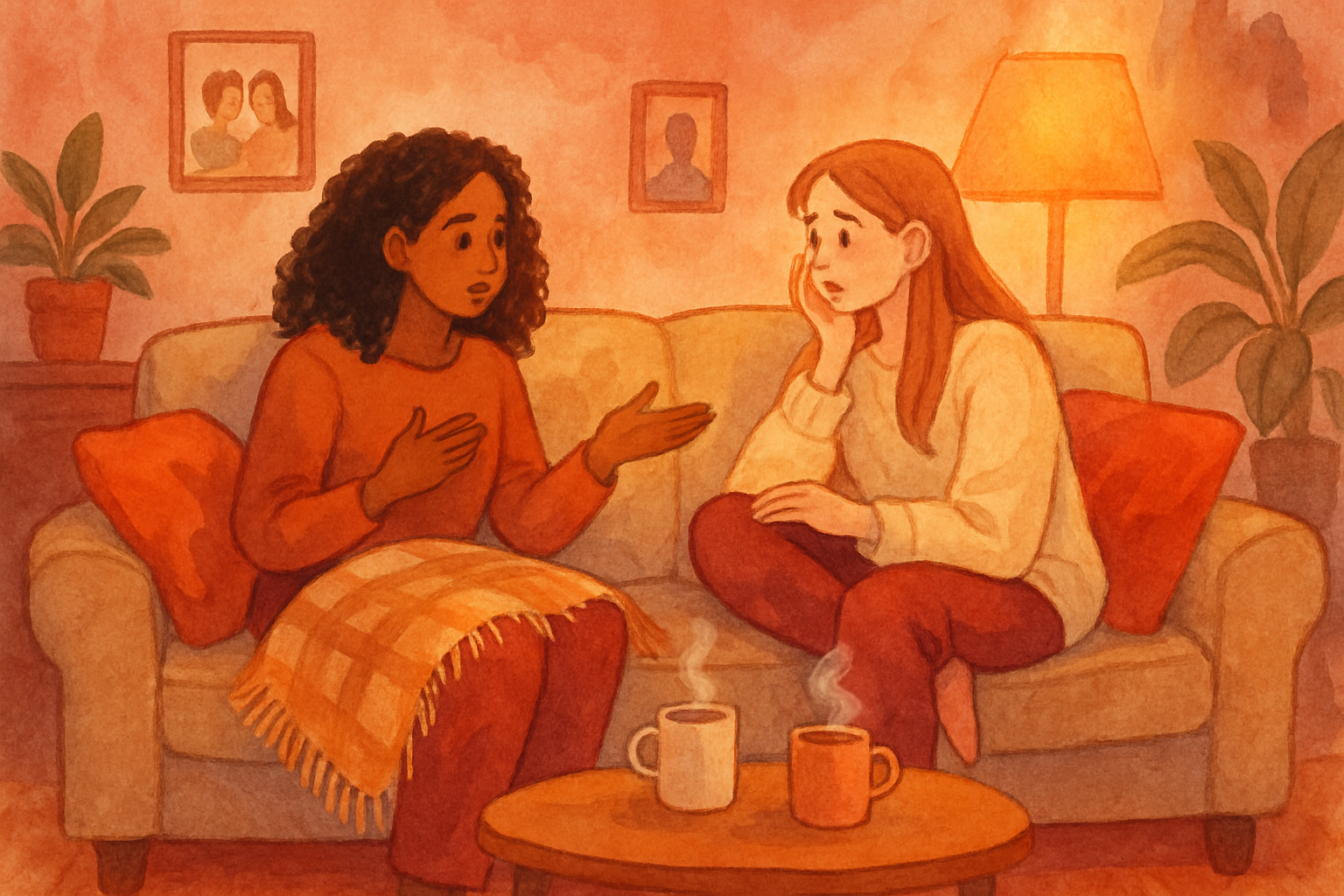
There's a moment most of us have felt — sitting across from someone we genuinely like, maybe even someone we're falling for — and something stops us from saying the real thing. We give the edited version. The safe version. The one that won't scare them off or make us look needy or weird.
That moment? It has a name. It's the absence of emotional safety. And according to decades of relationship research, it might be the single biggest barrier to building the kind of intimacy that actually lasts.
Trust in a relationship isn't just about whether your partner will cheat or lie to you. That's a narrow definition — and honestly, a pretty low bar. The deeper form of trust is emotional: Can I be fully myself here? Can I say the thing I'm afraid to say and still be accepted? That's where real connection either takes root or quietly withers.
Let's talk about what emotional safety actually is, why it's so hard to build (and easy to break), and what the science says about couples who manage to get it right.
What Does Emotional Safety Actually Mean?
Emotional safety is the felt sense that you can express your true thoughts, feelings, fears, and desires with another person without fear of judgment, ridicule, withdrawal, or retaliation. It's not just the absence of conflict — it's the presence of consistent, reliable reassurance that you are accepted as you are.
Dr. John Gottman's research at the University of Washington, spanning over four decades, consistently found that what separates stable, happy couples from those who eventually split isn't whether they fight — it's whether they can repair after conflict and whether they approach each other with what he calls "positive sentiment override." In other words, emotionally safe couples give each other the benefit of the doubt, even under stress.
Emotional safety is also closely tied to vulnerability in relationships. Brené Brown's research on shame and vulnerability reinforces this: genuine connection requires risk. You can't feel truly close to someone if you're always managing how you appear to them. The armor has to come off eventually — and that only happens when you trust it's safe to do so.
Why Attachment Styles Shape Your Capacity for Safety
Here's where it gets personal. The way we experience emotional safety — or struggle to — is deeply influenced by our early attachment experiences. Attachment styles in dating aren't just a trendy concept from therapy TikTok. They're rooted in decades of developmental psychology research, beginning with John Bowlby and Mary Ainsworth in the 1960s and 70s.
There are four main attachment patterns most researchers work with:
- Secure: Comfortable with closeness, generally trusts that partners are reliable and caring
- Anxious/Preoccupied: Craves closeness but fears abandonment; can read threats in ambiguous situations
- Avoidant/Dismissive: Values independence, tends to pull back when intimacy deepens
- Disorganized/Fearful: Both wants and fears closeness; often linked to early trauma or unpredictable caregiving
If you have an anxious attachment style, emotional safety can feel perpetually out of reach — like a bar that keeps moving. If you're avoidant, closeness itself might trigger a pull toward distance, because vulnerability was never modeled as safe.
The good news? Attachment patterns aren't destiny. Research on "earned security" — particularly work by Mary Main and colleagues — shows that people can develop more secure attachment through consistent experiences with responsive, trustworthy partners. But it requires self-awareness first.
Knowing your attachment style is one of the most useful things you can do before (or during) a serious relationship. It helps you understand why you do what you do when things get emotionally intense — and it helps you communicate that to a partner instead of just acting it out.
If you want to dig into this more, our piece on attachment styles and modern dating explores how these patterns show up in everything from the talking stage to long-term commitment.
The Trust Architecture: What It's Built From
Trust doesn't show up fully formed. It's built — incrementally, through repeated small moments where someone does what they said they'd do, shows up when it matters, or responds to vulnerability with care rather than criticism.
Relationship researcher Brené Brown describes trust using the acronym BRAVING, which breaks trust down into seven components: Boundaries, Reliability, Accountability, Vault (confidentiality), Integrity, Non-judgment, and Generosity. It's a useful framework because it gets specific. It's not just "do I trust this person" — it's which dimensions of trust are present or missing.
For emotional safety, the most critical elements tend to be:
Consistency over time. Trust is a pattern, not a proclamation. Your partner saying "you can always talk to me" means far less than them actually responding with warmth when you do. Over time, these consistent responses become the data points your nervous system uses to determine whether this is a safe relationship.
Non-punitive responses to honesty. When you share something difficult and your partner responds with defensiveness, stonewalling, or contempt — even once — it plants a seed of hesitation. You'll be more guarded next time. Gottman's research identifies contempt (eye-rolling, mockery, dismissiveness) as the single greatest predictor of relationship failure, precisely because it destroys the emotional safety that allows for repair.
Confidentiality and discretion. Knowing your vulnerabilities stay between you and your partner — not brought up later in arguments, not shared with friends as amusing anecdotes — is foundational. Betrayal of this kind is one of the fastest ways to collapse the emotional safety you've built.
Repair attempts that land. All couples have ruptures. The question is whether they repair. And repair has to feel genuine, not performative. A grudging "fine, I'm sorry" doesn't restore safety — it just papers over the crack.
Healthy Conflict Is Part of the Architecture, Not the Enemy
One of the most persistent myths about emotionally safe relationships is that they're conflict-free. They're not. In fact, conflict avoidance is often a sign of low emotional safety — one or both partners are suppressing their real feelings to keep the peace.
Healthy conflict in relationships — what researchers sometimes call "productive disagreement" — is actually a trust-building exercise. When you can raise something difficult, stay in the conversation without either person shutting down or escalating, and come out the other side with a better understanding of each other, that's a deposit in the emotional safety account.
The key is how you argue. Research from the Gottman Institute consistently shows that it's not the presence of conflict but the presence of contempt, stonewalling, criticism (as opposed to complaints), and defensiveness — the "Four Horsemen," as Gottman calls them — that predicts relationship breakdown.
How to argue without fighting — in the truly damaging sense — comes down to a few core practices:
- Attack the issue, not the person. "I feel unheard when decisions get made without me" is different from "You never listen to me."
- Stay curious, not combative. Even in conflict, treating your partner's perspective as worth understanding rather than defeating changes everything.
- Take breaks before flooding. When either partner hits emotional overwhelm (elevated heart rate, tunnel vision), the conversation stops being productive. Gottman's research suggests taking at least a 20-minute break before returning.
- Repair early and often. Small repair attempts — humor, a touch, acknowledging the other's point — don't signal weakness. They signal that the relationship matters more than winning.
Why Getting to Know Your Partner Deeply Is a Safety Practice
There's a reason that questions to ask your partner is one of the most searched phrases in the relationship space. People are hungry for meaningful connection, but often don't know how to get there past surface-level small talk.
Arthur Aron's famous "36 Questions That Lead to Love" study, published in 1997, found that pairs of strangers who asked each other progressively more personal questions reported significantly higher feelings of closeness than those who made small talk. The mechanism isn't magic — it's mutual self-disclosure. When both people share something real and are met with genuine interest (not judgment), trust builds.
Getting to know your partner — truly, not just their job and favorite movies — is an ongoing process, not a one-time event. Couples who've been together for decades can still discover new things about each other. The couples who do this intentionally tend to report higher relationship satisfaction. It keeps the relationship feeling alive, and it reinforces the message: I'm still curious about you. You still matter to me.
This is exactly the spirit behind Pairloom's conversation-based games. Instead of another night scrolling separately on the couch, you're actually talking — about things you might never think to bring up organically. That shared discovery is one of the most underrated forms of intimacy-building there is.
Emotional Safety for Singles: It Starts Before You're "In" Something
If you're in the talking stage of dating or navigating a situationship, emotional safety is already in play — it just looks different. The question you're asking, consciously or not, is: Is this person safe enough for me to show more of myself?
And here's the tricky part: dating app fatigue is real, and it erodes the kind of open-hearted openness that emotional safety requires. When you've been through enough disappointing dates and ambiguous conversations, it's natural to protect yourself. You share less. You stay cooler. You wait for them to show their hand first.
The problem is that emotional safety is built through mutual vulnerability, not sequential. If both people are waiting for the other to go first, nobody goes. And the connection never deepens past the surface.
Self-awareness in dating — knowing your own patterns, knowing what you're protecting yourself from — is what allows you to take calibrated risks with new people. Not reckless vulnerability, but intentional openness. Sharing something a little real and seeing how they respond. That's the data.
Relationship red flags vs differences matter here too. Some behaviors that feel unsafe actually are — withdrawal, inconsistency, hot-and-cold behavior — but some are just unfamiliarity or difference in communication style. Knowing the distinction saves you from either staying too long in genuinely unsafe dynamics or fleeing good connections that feel unfamiliar.
For more on reading those early signals clearly, check out our post on how to tell the difference between dealbreakers and differences.
The Compounding Effect of Safety
Here's what the research ultimately tells us about what makes couples last: it's not chemistry, compatibility tests, or shared hobbies (though those help). It's the accumulation of safety. It's the thousand small moments where someone chose honesty over performance, chose repair over pride, chose curiosity over contempt.
Emotional safety is compounding. The more of it you build, the more you can reveal. The more you reveal, the more known you become. The more known you become, the more real the love is — because it's not being offered to a curated version of you. It's being offered to the actual you.
That's what we're all really after, isn't it? Not just to be loved, but to be known and loved.
The science just confirms what most of us feel in our bones: you can't get there without trust. And trust is built in the quiet, consistent, brave moments — not the grand gestures.
Stop wondering. Start playing.
Pairloom turns the conversations that matter into games you'll actually enjoy. Invite your partner and discover how you really connect — in minutes, not months.
Stop wondering. Start playing.
Pairloom turns the conversations that matter into games you'll actually enjoy. Invite your partner and discover how you really connect — in minutes, not months.