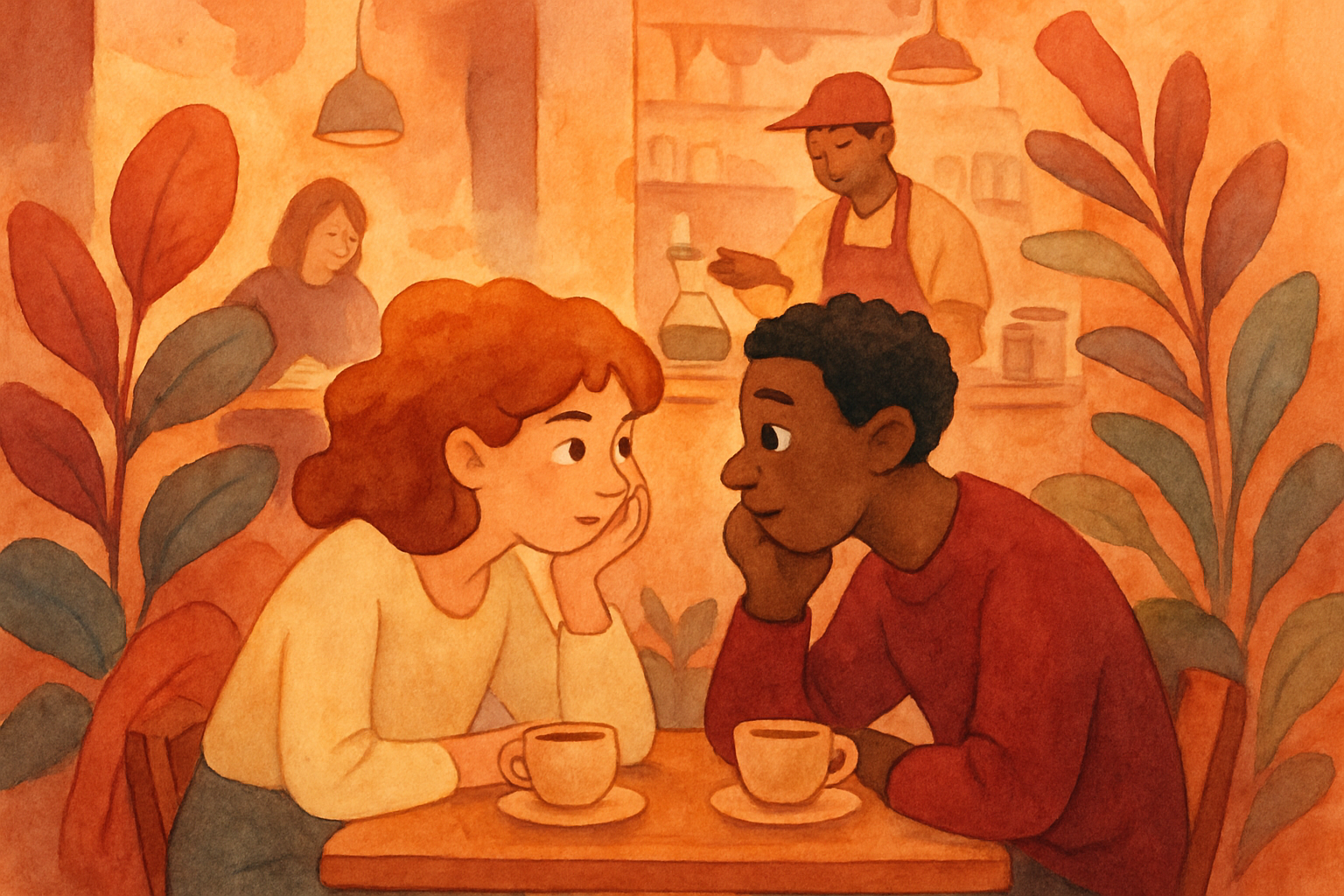
You've probably made the list. Maybe it was mental, maybe it was written down, but at some point you've cataloged your "must-haves" in a partner: funny, ambitious, tall, shares your love of hiking, has a college degree. It feels logical, right? Know what you want, find someone who checks the boxes, live happily ever after.
Except research reveals something fascinating: the person you think you want and the person you actually connect with might be completely different people.
Does your relationship checklist actually work?
Psychologists Paul Eastwick and Eli Finkel conducted a groundbreaking study that should make anyone with a dating checklist pause. They recruited speed daters and asked them beforehand to rate how important various traits were to them in a partner—things like physical attractiveness, earning potential, humor, and ambition.
Then came the actual speed dating event. Participants met potential matches face-to-face for a few minutes each, rating their interest in seeing each person again.
The results were startling: people's stated preferences had virtually zero correlation with who they actually wanted to date. The woman who insisted she needed someone over 6 feet tall found herself smitten with a 5'7" guy who made her laugh until her sides hurt. The man who prioritized career success was drawn to the artist who barely scraped by but had an infectious passion for life.
This wasn't a fluke. Multiple studies have replicated these findings, revealing what researchers call the "preference-matching fallacy"—our belief that we can predict what will attract us by thinking about it abstractly.
Why your brain tricks you about attraction
The disconnect between what we think we want and what actually sparks chemistry isn't a personal failing—it's how human psychology works. When we create our ideal partner checklist, we're engaging in "affective forecasting," trying to predict our future emotional reactions. And we're notoriously bad at it.
Here's why: attraction and compatibility emerge from the dynamic interaction between two specific people in a specific moment. It's not just about individual traits but how those traits combine, clash, and create something entirely new between you.
Think about your closest friendships. Did you become friends because they met your predetermined criteria for a good friend? Probably not. Something clicked in conversation, in shared experiences, in the way they responded to your terrible joke or offered comfort during a rough day.
Romantic chemistry works similarly. It's emergent, contextual, and often surprising.
The checklist trap in modern dating
Dating apps have amplified our reliance on checklists by design. Profiles reduce complex human beings to a series of filterable attributes: age, height, job, education level, interests. Swipe, sort, eliminate. It's efficient, but it's also eliminating potential connections based on irrelevant criteria.
Consider the research on online dating behavior. Studies show that people are incredibly picky when browsing profiles online but much more open when meeting the same people in person. We use our mental checklists as a screening tool, filtering out people we might genuinely connect with if given the chance.
One study found that people's initial preferences based on photos and profiles had little relationship to their actual romantic interest after meeting face-to-face. The "wrong" person on paper often became the right person in reality.
What actually matters in real relationships?
If traditional compatibility markers aren't reliable predictors, what does create lasting attraction and satisfaction? Research points to several factors that emerge through interaction rather than inspection:
Responsiveness tops the list. How does someone react to your thoughts, feelings, and experiences? Do they listen actively, ask follow-up questions, and make you feel heard and understood? This quality can't be assessed from a profile but becomes immediately apparent in conversation.
Emotional warmth matters more than specific personality traits. Some people create a sense of comfort and safety that transcends whether they're introverted or extroverted, outdoorsy or bookish. You feel like yourself around them—maybe even a better version of yourself.
Shared sense of humor doesn't mean loving the same comedians. It's about the rhythm of your banter, whether you can make each other laugh, and if you find the same moments absurd or delightful. Humor compatibility is deeply personal and impossible to predict without experiencing it.
Comfortable silence reveals something profound about two people's ease with each other. Can you sit together without feeling compelled to fill every moment with chatter? This comfort level often predicts relationship success better than shared hobbies.
Behavioral chemistry emerges in how you navigate activities together. Do you complement each other's decision-making styles? Handle stress in compatible ways? Find a natural rhythm in everything from choosing a restaurant to planning a trip?
The experience over introspection approach
So how do you discover what you actually want in a partner instead of what you think you want? The answer is surprisingly simple: through experience, not introspection.
This means being open to dates with people who don't check all your boxes. It means paying attention to how you feel during and after interactions rather than just evaluating someone's resume. It means noticing what kinds of conversations energize you, what types of humor make you laugh, and which personality traits bring out your best self.
Research supports this approach. Studies show that people who go on more diverse dates—meeting people outside their usual "type"—report higher satisfaction with their eventual long-term partners. They've learned through experience what actually matters to them rather than relying on theoretical preferences.
This doesn't mean abandoning all standards or dating randomly. It means expanding your definition of compatibility beyond superficial markers to include deeper patterns of interaction and connection.
Moving beyond the profile picture
Traditional dating approaches—whether online or through setups—frontload information about someone's background while providing little insight into behavioral compatibility. You know where they went to school and what they do for work, but you have no idea how they handle disagreement, whether they're generous with praise, or if they can laugh at themselves.
This is backwards. The surface-level information that dominates dating profiles has minimal impact on relationship satisfaction, while behavioral patterns that strongly predict compatibility remain hidden until much later in the dating process.
Some couples report feeling more connected after navigating a stressful situation together—getting lost while traveling, dealing with a restaurant mix-up, or collaborating on a challenging task—than they did during months of traditional dates. These experiences reveal character and compatibility in ways that dinner conversation cannot.
The key is creating opportunities to observe and experience these deeper compatibility factors earlier in the dating process, before significant time and emotional investment have been made.
What games reveal that profiles hide
This is where Pairloom's approach becomes particularly relevant. Rather than asking what kind of partner you want, it shows you what kind of partner you connect with through shared experiences and behavioral observation.
When you play games together—whether they're thoughtful conversation starters, collaborative challenges, or creative activities—you're seeing someone's authentic responses, decision-making style, sense of humor, and way of handling both success and failure. You're observing the behavioral compatibility factors that actually matter for long-term satisfaction.
Consider the difference between reading on someone's profile that they're "adventurous" versus seeing how they approach a new challenge in a game. Or between someone listing "good sense of humor" versus experiencing their actual comedic timing and style. The game reveals truth that the profile can only claim.
These micro-interactions provide data about macro-compatibility. How someone responds to your ideas, builds on your suggestions, or handles competitive moments offers insight into how they might navigate the collaborative project of a relationship.
The paradox of choice in modern dating
Dating apps present us with seemingly unlimited options, but this abundance often leads to what psychologist Barry Schwartz calls "the paradox of choice." With so many potential matches, we become increasingly picky about superficial criteria while missing genuine connections.
The checklist mentality exacerbates this problem. We dismiss potentially compatible partners for failing to meet arbitrary requirements while pursuing people who look perfect on paper but leave us feeling empty in person.
Research on successful long-term relationships reveals something counterintuitive: many happy couples report that their partner wasn't their "usual type" or didn't meet their initial criteria. They connected despite their preconceptions, not because of them.
This suggests that the path to finding a compatible partner might involve less filtering and more experiencing—fewer eliminated options based on theoretical preferences and more actual interactions with diverse people.
Stop wondering. Start playing.
Pairloom turns the conversations that matter into games you'll actually enjoy. Invite your partner and discover how you really connect — in minutes, not months.
Stop wondering. Start playing.
Pairloom turns the conversations that matter into games you'll actually enjoy. Invite your partner and discover how you really connect — in minutes, not months.