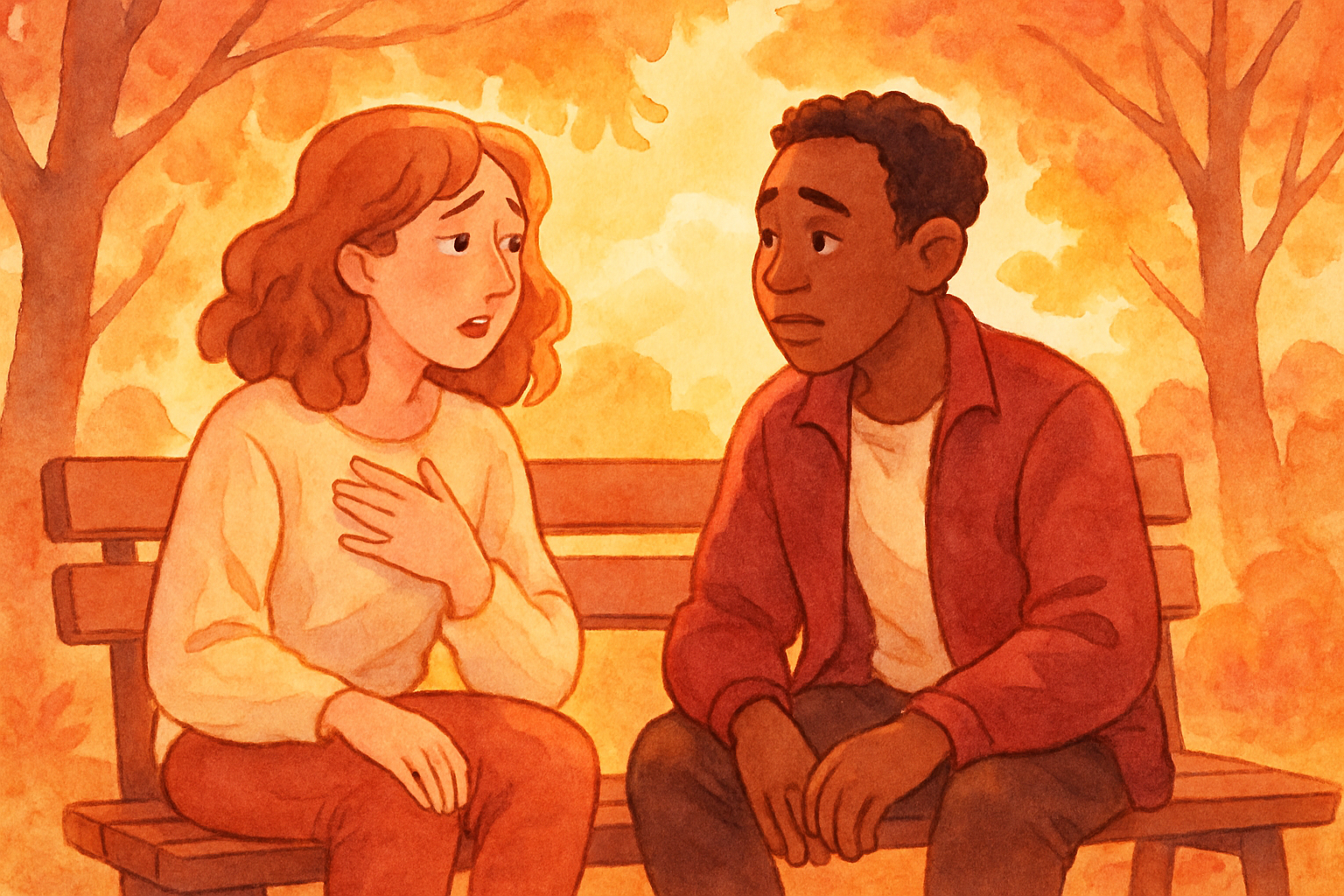
Trust is the invisible foundation of every meaningful relationship—and one of the most misunderstood forces in human connection. We talk about trust as if it's binary: you either have it or you don't. But relationship research reveals a far more complex truth: trust operates more like a savings account than a light switch, built through countless micro-deposits and vulnerable to catastrophic withdrawals.
The math of trust is brutally asymmetric. Psychologists estimate it takes approximately 100 positive interactions to build meaningful trust, while a single betrayal can obliterate years of careful relationship building. This isn't relationship pessimism—it's relationship realism, backed by decades of research that can actually help us build stronger, more resilient bonds.
What exactly is trust, and why is it so fragile?
Trust isn't just about big promises and major commitments. Dr. John Gottman's research reveals that trust operates through what he calls "trust metrics"—tiny, seemingly insignificant moments that either build or erode confidence in our partner. These micro-moments happen dozens of times per day: Do you put your phone down when your partner starts talking? Do you remember the meeting they mentioned worrying about? Do you follow through on small commitments, like picking up milk on the way home?
Gottman's famous "emotional bank account" metaphor captures this perfectly. Every positive interaction makes a deposit: active listening, keeping promises, showing up emotionally when it matters. Every negative interaction—dismissiveness, broken commitments, emotional unavailability—makes a withdrawal. The account balance determines how much goodwill and resilience your relationship can weather during conflict or stress.
But here's where the asymmetry becomes stark: positive deposits are small and accumulate slowly, while negative withdrawals can be massive and instantaneous. A single moment of betrayal, dishonesty, or deep dismissal can wipe out months or even years of positive deposits. It's not fair, but it's how human psychology works.
Why does broken trust hurt so much more than built trust feels good?
The answer lies in evolutionary psychology and neurochemistry. Our brains are wired with what researchers call a "negativity bias"—we're evolutionarily programmed to pay more attention to threats than rewards because, historically, missing a threat could be fatal while missing a reward was just disappointing.
When trust is broken, our brain's threat detection system floods us with stress hormones. The amygdala—our brain's alarm system—treats betrayal as a survival threat, triggering fight-or-flight responses that can last for hours, days, or even months. Meanwhile, positive trust-building moments activate our reward systems more quietly, creating pleasant but less intense neurochemical responses.
This neurochemical reality means that one harsh criticism during an argument can overshadow weeks of daily kindness. One broken promise can eclipse months of kept commitments. It's not that we're ungrateful—it's that our brains prioritize threat detection over appreciation as a matter of survival.
What do those 100 trust-building moments actually look like?
Trust isn't built through grand romantic gestures or expensive gifts. Research consistently shows that trust accumulates through consistent, reliable, small-scale interactions. These moments fall into several categories:
Emotional attunement moments: When your partner shares something important, do you stop what you're doing and give them your full attention? Do you ask follow-up questions that show you're truly listening? Do you remember details from conversations and check in later?
Reliability moments: Do you consistently follow through on small commitments? If you say you'll be home by 7, are you home by 7? If you promise to handle a household task, does it get done without reminders?
Vulnerability moments: Do you share your own struggles and concerns? Do you admit when you're wrong or uncertain? Do you ask for help when you need it, showing that you trust your partner enough to be imperfect around them?
Prioritization moments: When you have competing demands for your attention, do you consistently choose your partner when it matters? Do you protect your relationship time from work intrusions, social media, or other distractions?
Support moments: During your partner's difficult times, do you show up emotionally? Do you offer comfort without trying to immediately fix or dismiss their feelings? Do you remember their ongoing stresses and check in regularly?
Each of these micro-moments makes a small deposit in the trust account. Individually, they seem insignificant. Collectively, over months and years, they create the bedrock of relationship security.
Can broken trust actually be repaired?
Despite the brutal math of trust erosion, research shows that broken trust can be repaired—but only through specific, sustained efforts that acknowledge the unique challenge of rebuilding what was lost.
Dr. Shirley Glass, whose research focused on affair recovery, identified several crucial elements of trust repair. First comes acknowledgment: the trust-breaker must fully understand and validate the impact of their actions without minimizing or deflecting. This isn't a one-time conversation but an ongoing willingness to hear their partner's pain without becoming defensive.
Next comes accountability: taking full responsibility without excuses, explanations, or blame-shifting. This means saying "I chose to break our agreement and I understand how much that hurt you" rather than "I made a mistake because I was stressed."
The most crucial element is changed behavior over time. Words alone can't rebuild trust—only consistent, different actions can slowly begin to restore confidence. This typically requires months or years of patient, reliable behavior, with the understanding that the betrayed partner will likely have difficult days, setbacks, and ongoing triggers.
Research suggests that successfully rebuilt trust can actually become stronger than original trust because both partners have worked through a major relationship challenge together. However, this requires both partners to be fully committed to the repair process, which can be emotionally exhausting and requires professional support in many cases.
Why consistency matters more than grand gestures
When trust is damaged, our instinct is often to make dramatic gestures of apology or love. While these gestures can be meaningful, research shows that trust rebuilding happens through consistent small actions, not occasional big ones.
The brain learns to trust again through pattern recognition. If someone broke trust through unpredictable behavior, the brain needs to see new, reliable patterns before it will feel safe again. Daily check-ins matter more than expensive apologies. Consistently kept small promises rebuild confidence more effectively than occasional grand romantic gestures.
This principle applies to trust building in healthy relationships too. The couples who report the highest levels of trust aren't those with the most dramatic love stories—they're the ones with the most consistent daily kindness, reliability, and emotional availability.
How can couples actively work on trust together?
Understanding trust dynamics intellectually is different from experiencing them emotionally. Many couples find it helpful to practice trust-building behaviors in structured ways that make the usually invisible process more concrete and measurable.
One approach involves regularly discussing trust explicitly: What actions made you feel trusted this week? When did you feel most secure in our relationship? What small things would help you feel more confident in us? These conversations help partners understand each other's specific trust languages and blind spots.
Another effective strategy involves creating "trust experiments"—small, low-stakes opportunities to practice reliability and vulnerability. This might involve setting micro-commitments (like texting when you arrive somewhere safely) and following through consistently, or taking turns sharing something slightly vulnerable and responding supportively.
The key insight from relationship research is that trust building works best when both partners actively participate and understand the process. It's not just about avoiding betrayals—it's about actively creating positive experiences of safety, reliability, and emotional connection.
Games and structured activities can provide a safe space to explore trust dynamics without the high stakes of real-world relationship challenges. When couples can practice recognizing trust patterns and responding to trust breaks in a playful context, they build skills and awareness that transfer to their daily interactions.
Stop wondering. Start playing.
Pairloom turns the conversations that matter into games you'll actually enjoy. Invite your partner and discover how you really connect — in minutes, not months.
Stop wondering. Start playing.
Pairloom turns the conversations that matter into games you'll actually enjoy. Invite your partner and discover how you really connect — in minutes, not months.