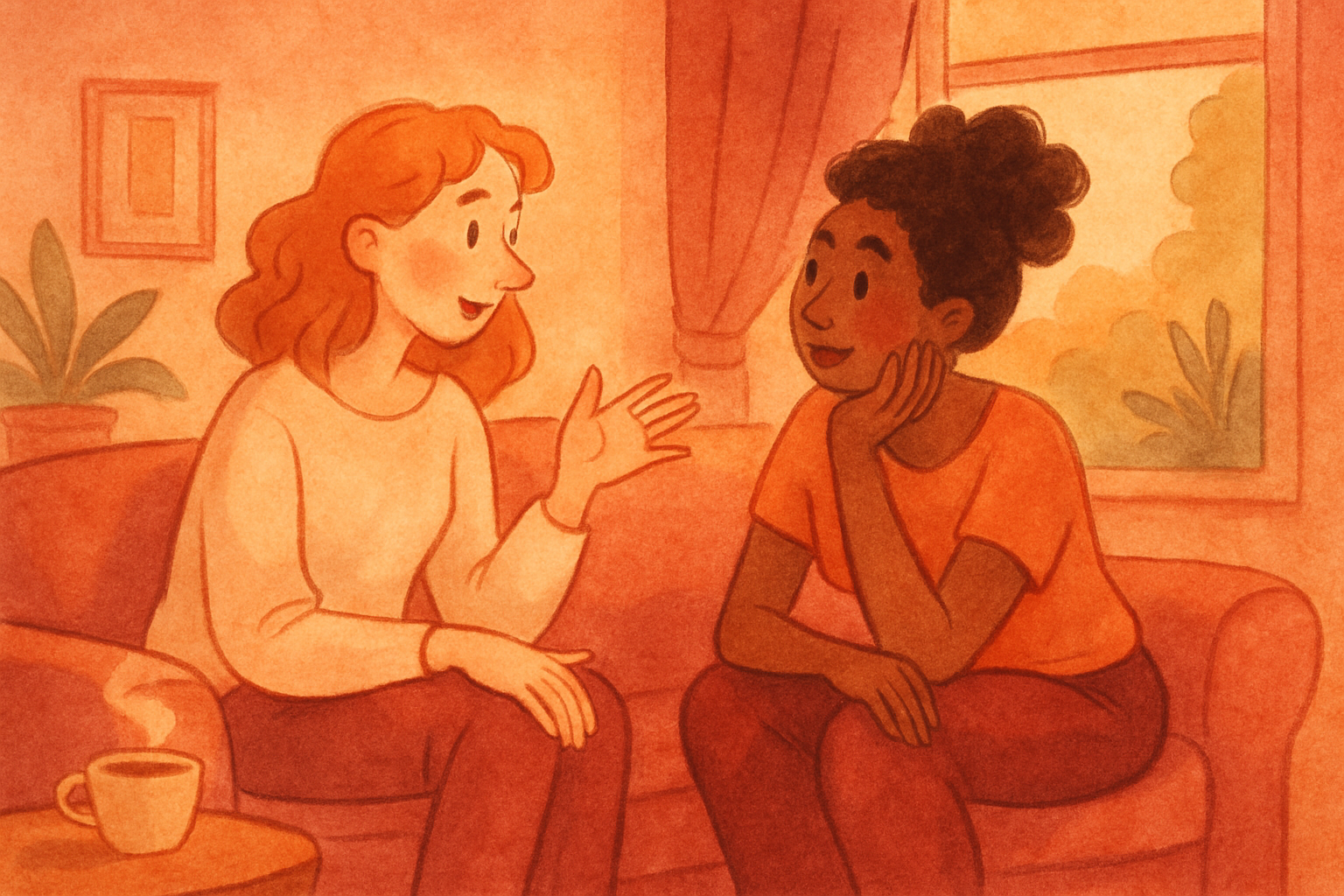
Most of us have it backwards when it comes to building deep connections. We think we need to be perfect, polished, and put-together to attract someone special. But here's the counterintuitive truth that relationship researchers have discovered: the very thing we're most afraid to share—our vulnerabilities, uncertainties, and imperfections—is often what creates the most profound bonds between two people.
This isn't just feel-good advice. It's backed by decades of research showing that vulnerability is the fastest route to genuine intimacy. Yet most of us still approach dating like we're interviewing for a job, presenting only our highlight reel while keeping our real selves carefully hidden behind a wall of "fine" and "everything's great."
What if there was a better way? What if the shortcut to real connection wasn't through perfection, but through the courage to be imperfectly human?
What does vulnerability actually mean in relationships?
Let's start by clearing up what vulnerability actually means, because it's one of the most misunderstood concepts in modern dating. Thanks to researcher Brené Brown's groundbreaking work, we know that vulnerability isn't about oversharing your deepest traumas on a first date or using emotional disclosure as a manipulation tactic.
True vulnerability is about emotional courage. It's the willingness to show up authentically when you can't control the outcome. In relationships, this might look like admitting you're nervous on a first date, sharing a fear that keeps you up at night, or confessing that you don't have all your life figured out yet.
The vulnerability paradox is real: the very thing that makes us feel most exposed and afraid of rejection is often what draws people closer to us. When you admit you're anxious about something, you're not showing weakness—you're demonstrating emotional intelligence and creating space for the other person to be human too.
Research consistently shows that people are drawn to authenticity over perfection. A study published in the Journal of Experimental Social Psychology found that people actually liked others more when they made small mistakes or showed minor flaws, a phenomenon researchers call the "pratfall effect." The perfectly polished person feels distant and unrelatable; the person who spills coffee on themselves and laughs about it feels approachable and real.
Why are we so afraid to be vulnerable?
If vulnerability creates connection, why does it feel so terrifying? The answer lies in our evolutionary wiring and modern conditioning. Our brains are designed to keep us safe, and for our ancestors, rejection from the tribe could literally mean death. Even though getting rejected on a dating app won't actually kill us, our nervous system doesn't know the difference.
We've also been conditioned by a culture that celebrates strength and success while shaming struggle and uncertainty. Social media amplifies this effect, showing us everyone else's highlight reels while we're intimately familiar with our own behind-the-scenes struggles. No wonder we feel like we need to have it all together before we're worthy of love.
But here's what's fascinating: research shows that what we perceive as our most shameful, unlovable qualities are often the most universal human experiences. That fear that you're not successful enough? The worry that you're somehow fundamentally flawed? The imposter syndrome that makes you feel like a fraud? These aren't unique character defects—they're part of the shared human experience.
When you dare to voice these common fears, something magical happens. Instead of running away, people often respond with relief and recognition. "Oh my god, I thought I was the only one who felt that way." Suddenly, you're not alone in your struggle—you're connected through it.
How does structured vulnerability create instant connection?
One of the most famous studies on accelerated intimacy comes from psychologist Arthur Aron's lab. In 1997, Aron and his colleagues wanted to see if they could create closeness between strangers in a laboratory setting. They developed a series of 36 questions that gradually escalate in intimacy and vulnerability.
The questions start relatively surface-level: "What would constitute a perfect day for you?" But they gradually deepen: "When did you last cry in front of another person?" The final question asks participants to share a personal problem and ask their partner for advice on how to handle it.
The results were remarkable. After just 45 minutes of structured question-asking, followed by four minutes of eye contact, participants reported feeling significantly closer to their partner than control groups who spent the same time in small talk. Some pairs developed lasting friendships, and at least one couple from the original study got married.
What made this work wasn't magic—it was the structure. The questions created what researchers call a "permission structure" for vulnerability. Both people knew they were in an exercise designed to create closeness, which made it feel safer to open up. The gradual escalation meant nobody had to jump into the deep end all at once.
This research reveals something crucial about vulnerability: timing and context matter enormously. The same disclosure that creates intimacy in the right setting can feel overwhelming or inappropriate in the wrong one.
What's the difference between vulnerability and oversharing?
This brings us to one of the biggest misconceptions about vulnerability in dating: the idea that more disclosure always equals deeper connection. Not all vulnerability is created equal, and the difference between healthy vulnerability and oversharing can make or break a budding relationship.
Healthy vulnerability is:
- Contextually appropriate: Sharing something personal that fits the depth of your current relationship
- Boundaried: You share from a place of self-awareness, not desperation for validation
- Reciprocal: You're paying attention to how the other person responds and adjusting accordingly
- Present-focused: You're sharing to deepen your current connection, not to process past trauma
Oversharing, on the other hand, often looks like:
- Trauma-dumping: Unloading heavy, unprocessed emotional content without checking if the other person has capacity for it
- Validation-seeking: Sharing with the primary goal of getting reassurance or fixing your emotional state
- One-sided: Dominating the conversation with your own disclosures without creating space for reciprocity
- Boundary-less: Sharing intimate details that are inappropriate for your level of relationship
The key difference is intention and awareness. Healthy vulnerability is about connection; oversharing is often about emotional regulation. Both come from real needs, but only one builds sustainable intimacy.
How do you calibrate vulnerability in new relationships?
So how do you find that sweet spot—vulnerable enough to create real connection, but not so much that you overwhelm someone you've just met? The answer lies in learning to calibrate your disclosure level based on several key factors.
Match their disclosure level: This is the most important rule of thumb. If they share something moderately personal, you can share something at a similar level. If they're keeping things light and surface-level, respect that boundary and don't dive deeper until they do.
Escalate gradually: Think of vulnerability like turning up the temperature in a hot tub. If you crank it to maximum heat immediately, everyone jumps out. But if you raise it degree by degree, everyone stays comfortable as you reach greater depths together.
Pay attention to their responses: Are they leaning in when you share something personal, asking follow-up questions, or sharing something back? Green light. Are they changing the subject, looking uncomfortable, or giving minimal responses? Time to dial it back.
Consider the setting: A quiet coffee date creates space for deeper conversation in a way that a loud bar or activity-focused date might not. Match your vulnerability to the environment you're in.
Trust your gut: Sometimes you'll feel a natural opening for deeper sharing, even early in a relationship. Other times, something will feel off about going deeper. Learning to trust these intuitions is part of developing emotional intelligence.
Respect the aftermath: Not every vulnerable moment needs to be processed to death. Sometimes sharing something meaningful and then naturally moving on to lighter topics actually helps both people integrate the deeper connection you've just created.
Why do games and structured activities make vulnerability easier?
Remember Arthur Aron's 36 questions? The genius wasn't just in the questions themselves, but in the structure they provided. When vulnerability has a container—a game, an exercise, or a clear framework—it feels safer for everyone involved.
This is why activities like "Two Truths and a Lie" remain popular at parties, or why couples therapists use structured exercises rather than just saying "now be vulnerable with each other." The game creates psychological safety by establishing that everyone is participating in something together, rather than one person taking a risk alone.
Games also add an element of playfulness that can defuse some of the intensity around vulnerability. When you're laughing together while sharing something meaningful, it doesn't feel as scary. The play creates distance from the fear while still allowing for genuine connection.
This is part of why Pairloom's relationship games are so effective at building intimacy. Instead of staring at each other over dinner wondering what to talk about, you're engaged in a structured activity that naturally creates opportunities for deeper sharing. The game gives you permission to ask questions you might not otherwise dare to ask, and to share things you might not otherwise reveal.
When vulnerability has a playful container, it stops feeling like emotional labor and starts feeling like discovery. You're not interviewing each other or conducting therapy—you're playing together while getting to know each other more deeply.
What happens when vulnerability goes right?
When you get vulnerability right—when you share something real at the right time in the right way—something almost magical happens in relationships. The other person doesn't run away or judge you. Instead, they often respond with their own vulnerability, creating what researchers call "reciprocal self-disclosure."
This back-and-forth sharing creates a positive feedback loop. Each person's vulnerability gives the other permission to be more authentic, which deepens trust, which creates space for even more authentic sharing. Before you know it, you've moved from surface-level small talk to meaningful conversation about your hopes, fears, dreams, and struggles.
But the benefits go beyond just creating connection with others. Research shows that people who practice healthy vulnerability also experience greater self-compassion, emotional resilience, and overall life satisfaction. When you stop hiding parts of yourself, you stop carrying the exhausting weight of pretending to be someone you're not.
In romantic relationships specifically, vulnerability creates the foundation for genuine intimacy. You can't truly love someone you don't really know, and you can't really know someone who never lets their guard down. Vulnerability is how we move from attraction and compatibility into deep, lasting love.
How can you practice vulnerability safely?
If you've spent years keeping your cards close to your chest, learning to be vulnerable can feel daunting. The good news is that vulnerability is a skill that can be developed with practice. Here are some ways to start building your vulnerability muscle:
Start small: You don't need to share your deepest fears on a first date. Practice sharing minor uncertainties, admitting when you don't know something, or expressing genuine enthusiasm about things you care about.
Practice with safe people: Build your vulnerability skills with friends, family members, or a therapist before taking bigger risks in dating situations.
Get curious about your fears: What specifically are you afraid will happen if you're vulnerable? Often our catastrophic predictions are much worse than reality.
Notice when others are vulnerable: Pay attention to how you respond when someone shares something personal with you. Chances are, you respond with kindness and appreciation—and others are likely to respond to your vulnerability the same way.
Use structured prompts: Whether it's Pairloom's relationship games, conversation starter cards, or even Arthur Aron's famous 36 questions, structured activities can make vulnerability feel less risky.
Practice self-compassion: Vulnerability requires treating yourself with the same kindness you'd show a good friend. If you're constantly self-critical, it's much harder to let others see your real self.
Remember, the goal isn't to become someone who overshares everything with everyone. It's to develop the emotional courage to be authentically yourself in appropriate contexts, especially in relationships that matter to you.
What does this mean for modern dating?
In a world of dating apps and carefully curated online personas, choosing vulnerability is almost revolutionary. It means showing up as your real self rather than your marketing self. It means having conversations about things that matter instead of just surface-level compatibility factors.
This doesn't mean abandoning all boundaries or sharing your life story with every person you match with. Instead, it means creating space for authentic connection within appropriate limits. It means being willing to admit when you're nervous, excited, confused, or uncertain. It means choosing curiosity over judgment, both for yourself and others.
The beautiful irony is that when you're willing to be vulnerable about your imperfections, you become more attractive, not less. People are drawn to authenticity because it gives them permission to be authentic too. In a dating landscape full of people trying to be impressive, simply being real makes you stand out.
Stop wondering. Start playing.
Learning to be vulnerable isn't something you can figure out by reading about it—it's something you have to practice. And practice is always easier (and more fun) when you have the right tools and structure to support you.
Pairloom turns the conversations that matter into games you'll actually enjoy. Invite your partner and discover how you really connect — in minutes, not months.
Stop wondering. Start playing.
Pairloom turns the conversations that matter into games you'll actually enjoy. Invite your partner and discover how you really connect — in minutes, not months.